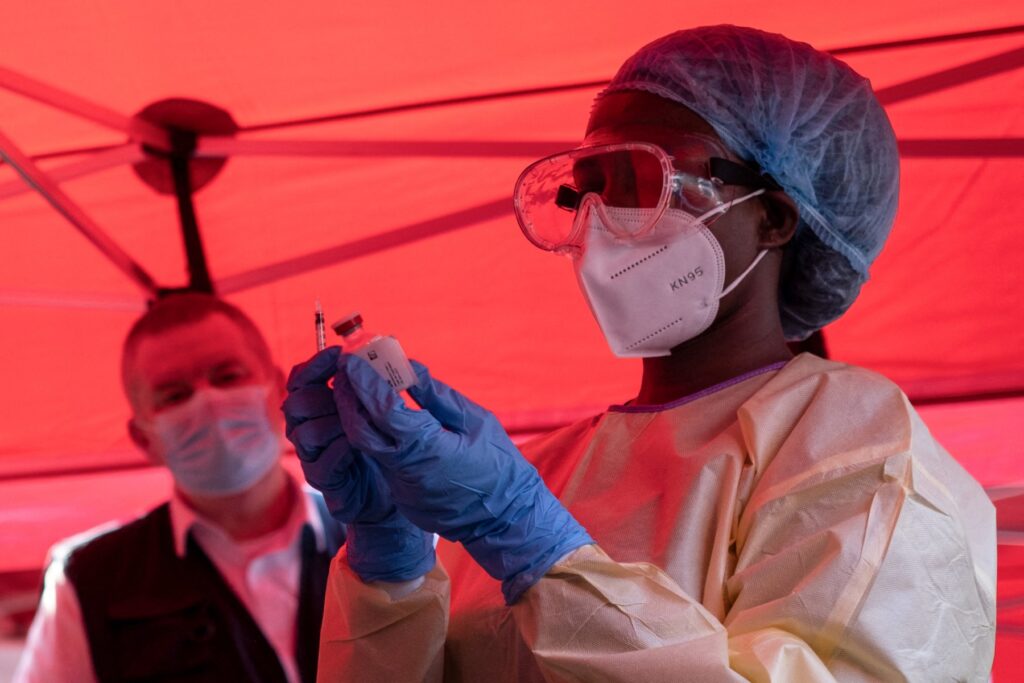
GENEVA, Switzerland – The World Health Organization (WHO) announced Tuesday it is actively evaluating all available experimental vaccines and treatment candidates to counter a rapidly spreading Ebola outbreak in the Democratic Republic of the Congo, which officials warn could stretch on for months or longer. The UN health agency has already formally designated the surge of the highly contagious viral haemorrhagic fever as a Public Health Emergency of International Concern, after the virus was linked to 131 suspected deaths and more than 500 confirmed and suspected infections across the affected region.
Anne Ancia, WHO’s representative to the DRC, told reporters in a briefing connecting from Bunia, the capital of Ituri province, that the global body is working urgently to map out all available candidate medical countermeasures and determine their suitability for deployment in the ongoing response. “At the international level, we are looking at what candidate vaccines or treatment are available and if any could be of use in this outbreak,” Ancia stated.
WHO Director-General Tedros Adhanom Ghebreyesus reinforced the severity of the situation Tuesday, saying he was “deeply concerned about the scale and speed of the epidemic” and confirming that he would convene a high-level emergency meeting of the agency’s independent crisis committee later the same day to coordinate the global response.
A key complication facing response teams is that the current outbreak is driven by the Bundibugyo strain of Ebola, a viral variant for which no pre-approved, widely deployable vaccine or targeted therapeutic treatment currently exists. Over the past 50 years, Ebola outbreaks across Africa have claimed more than 15,000 lives total. The only licensed Ebola vaccines available to date are formulated to target the Zaire strain, which was first identified in 1976. Currently, international public health experts agree that these prequalified Zaire strain vaccines are not approved for use against the current Bundibugyo outbreak, though Ancia noted that further research is ongoing to explore all potential options.
The WHO’s technical advisory group for outbreak response met Tuesday to outline priority guidelines for evaluating candidate vaccines, to determine which experimental candidates should move forward for accelerated testing and deployment. Among the candidates under review is Ervebo, one of the most advanced existing Ebola vaccine candidates that is being assessed for its ability to deliver additional preventive protection for at-risk communities in the DRC. Even if Ervebo is cleared for use, however, Ancia warned that it would take a minimum of two months to deliver the vaccine to affected areas. This timeline still aligns with the expected trajectory of the outbreak, she noted: “I don’t think that in two months we will be done with this outbreak,” she said, referencing a previous large-scale Ebola outbreak in the region that took two full years to fully contain.
The current outbreak, formally declared last Friday, marks the 17th recorded Ebola outbreak ever to hit the DRC. Public health officials have repeatedly warned that the outbreak carries a high risk of regional spread, and the 2018–2020 Ebola outbreak in the DRC remains the deadliest in the country’s history, claiming nearly 2,300 lives. To ramp up the on-the-ground response, the WHO has already deployed more than 40 international experts to join Congolese national response teams working in affected areas. The agency has also shipped 12 tonnes of critical emergency supplies, including personal protective equipment (PPE) for frontline health workers, from the Congolese capital Kinshasa and Nairobi, Kenya. The WHO is also partnering with global medical and humanitarian organizations, including the medical charity Doctors Without Borders, to construct dedicated Ebola treatment centres and expand local laboratory testing capacity to speed up case detection and isolation.