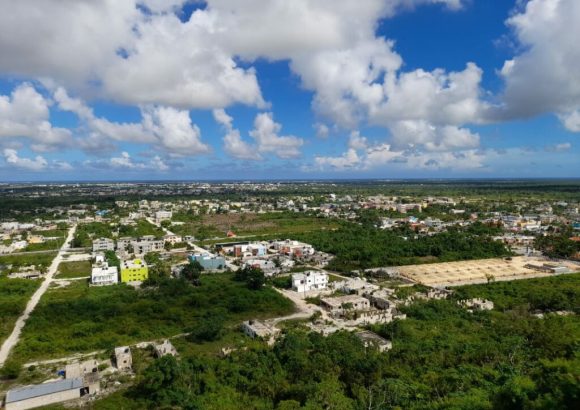
The booming tourism hubs of Punta Cana and Bávaro have brought significant economic attention to the Dominican Republic’s La Altagracia province, but this rapid expansion has come at a steep cost, according to local Senator Rafael Barón Duluc. During a recent plenary session of the national Senate, the legislator laid out a stark picture of systemic dysfunction plaguing the province, arguing that La Altagracia has been “punished by its own success” — a surge in tourism and development that has never been matched by proactive government planning or targeted public investment.
Duluc emphasized that despite the province’s global reputation as a top travel destination, it holds the unenviable title of having the Dominican Republic’s highest rate of accumulated poverty. What growth has occurred, he explained, has been chaotic, unregulated, and deeply unequal, with large swathes of the local population pushed into marginalized, informal settlement with limited access to basic public resources.
The senator’s remarks came as he advocated for a recently Senate-approved resolution that calls for a one-of-a-kind special population census to be conducted exclusively across La Altagracia. Per reporting from local outlet Diario Libre, the measure formally asks the Dominican President to direct the National Statistics Office (ONE) to carry out this targeted data-gathering effort, a step Duluc frames as the foundational first step to solving the province’s mounting crises.
Current official demographic figures drastically undercount La Altagracia’s actual population, Duluc explained. While unofficial estimates place the province’s total resident population above one million, thousands of people who have settled in high-growth areas including Verón, Punta Cana, Bávaro, and Higüey have not updated their official residential or electoral registration. This massive data gap, he argued, is the root cause of widespread underprovision of critical public services from education to infrastructure.
As a pressing example, Duluc pointed to ongoing classroom shortages across Verón, noting that thousands of school-aged children in the area are locked out of access to formal education each year due to a lack of learning facilities, a problem that has never been properly addressed because official population counts do not reflect the actual number of residents. Beyond education, the senator warned that unplanned growth has gutted regional mobility, with traffic congestion in Punta Cana and Verón now regularly outpacing gridlock in the capital city of Santo Domingo during peak periods. Where a trip from Punta Cana International Airport to local resort hotels once took just 10 minutes, Duluc said commuters and travelers now face 40-minute to hour-long delays on a regular basis.
The senator’s assessment echoes recent warnings from prominent Dominican tourism leader Frank Rainieri, who recently labeled the unregulated, unplanned expansion of real estate and tourism development across Punta Cana fundamentally unsustainable. Duluc noted that Rainieri’s assessment was actually a prudent framing of the crisis, adding that on-the-ground conditions in La Altagracia are far more severe than the entrepreneur has described.
In closing, Duluc made an urgent plea to national authorities, stressing that the special census is the single most critical priority for the province right now — even more pressing than building new roads, hospitals, or other traditional infrastructure projects. Without accurate, up-to-date demographic data, he argued, no government intervention can effectively address the province’s deep-seated inequalities and growing systemic pressures that threaten both local residents and the long-term sustainability of the region’s core tourism economy.