BELIZE CITY — May 15, 2026 — A decades-long battle over Indigenous land rights in Belize has entered a tense new phase, with senior government officials and Maya community leaders offering starkly different accounts of the state of negotiations over long-awaited land rights legislation.
Indigenous Affairs Minister Dr. Louis Zabaneh has pushed back against recent claims from Maya leadership that talks have reached a complete deadlock, saying he remains optimistic that a mutually acceptable agreement can be reached. The disagreement centers on the most contentious core issue: how to legally define and formally map the collective customary lands that the Maya community has held and used for generations.
In comments shared during an evening broadcast this week, Zabaneh outlined the current state of negotiations, noting that while sharp differences remain, open disagreement is a normal part of diplomatic negotiation, not evidence of a total breakdown. He reaffirmed the Belizean government’s commitment to reaching a middle ground and delivering the landmark legislation needed to resolve one of the country’s longest-running territorial disputes.
Zabaneh explained the two competing approaches on the table: The government’s draft bill proposes a formula that would allocate five acres of land to every village member, with the village community itself responsible for deciding the exact layout of those parcels, rather than imposing a fixed geometric structure such as a circular boundary. However, Maya leaders have rejected this framework entirely, calling it unworkable.
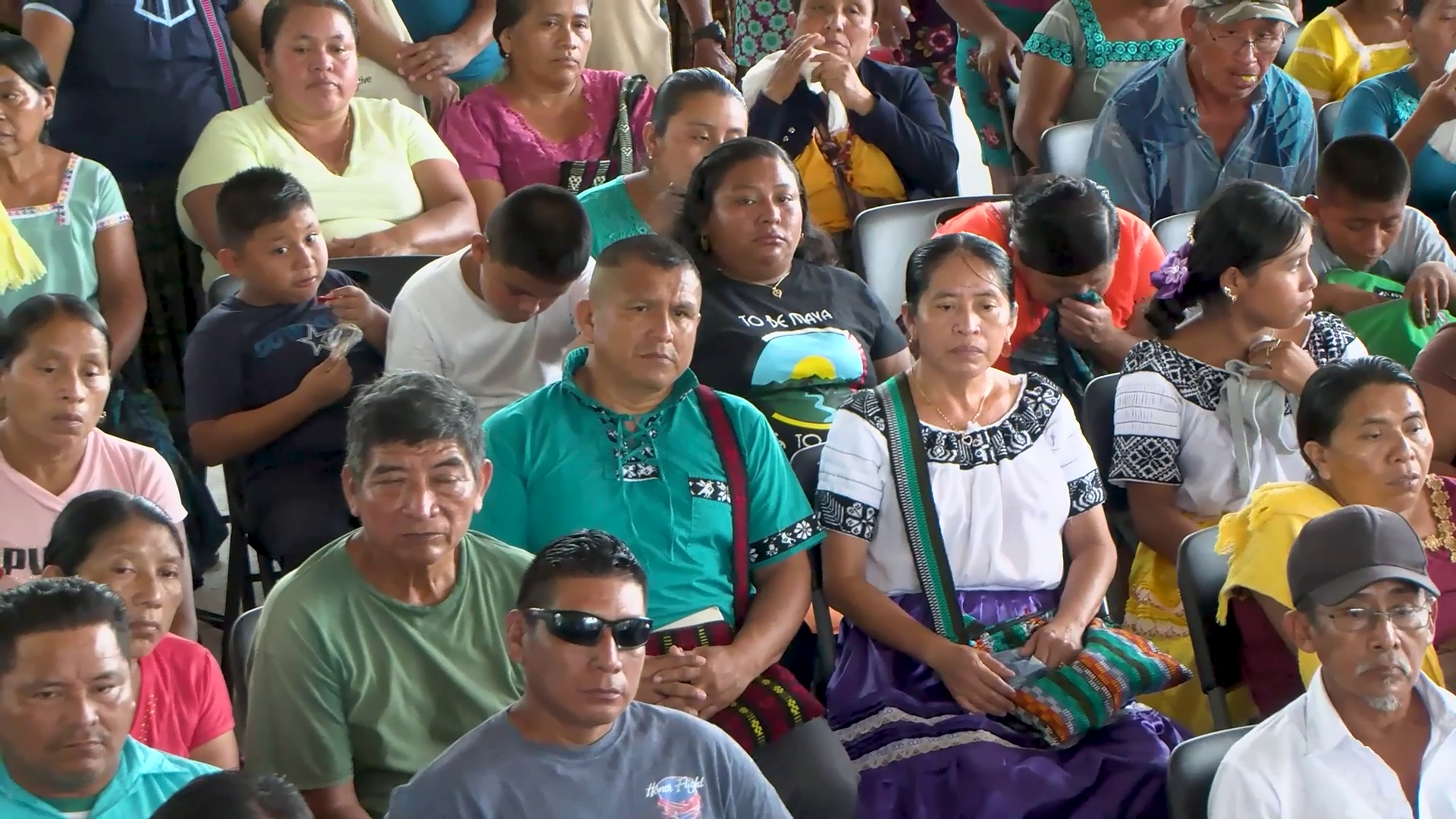
From the Maya community’s perspective, their land boundaries must be defined according to long-standing customary land tenure practices, which center on traditional use of the land for critical resources including medicinal plants, drinking water sources, forest harvesting, and other cultural uses that extend far beyond individual five-acre allocations. Maya leaders argue their mapping methodology is non-negotiable, rooted in centuries of communal connection to the territory.
Rather than accepting a stalemate, Zabaneh said the government has proposed a compromise: a hybrid model that combines elements of both approaches. “We’re in a negotiation so we all can’t get everything that we’re asking for in totality,” he noted, adding that what Maya leaders have labeled a deadlock is simply the messy work of finding common ground.
Just days before Zabaneh’s comments, Maya Leaders Alliance representative Cristina Coc announced the group would return to the Caribbean Court of Justice to seek clarity on the court’s original 2015 ruling recognizing Maya communal land rights. The alliance says a wide unbridgeable gap remains on core procedural questions around how to identify and demarcate customary land, prompting the court application for formal clarification on the 2007 and 2015 CCJ judgments.
This report is a transcript of an evening television broadcast, with all Kriol language content transcribed using a standardized spelling system.