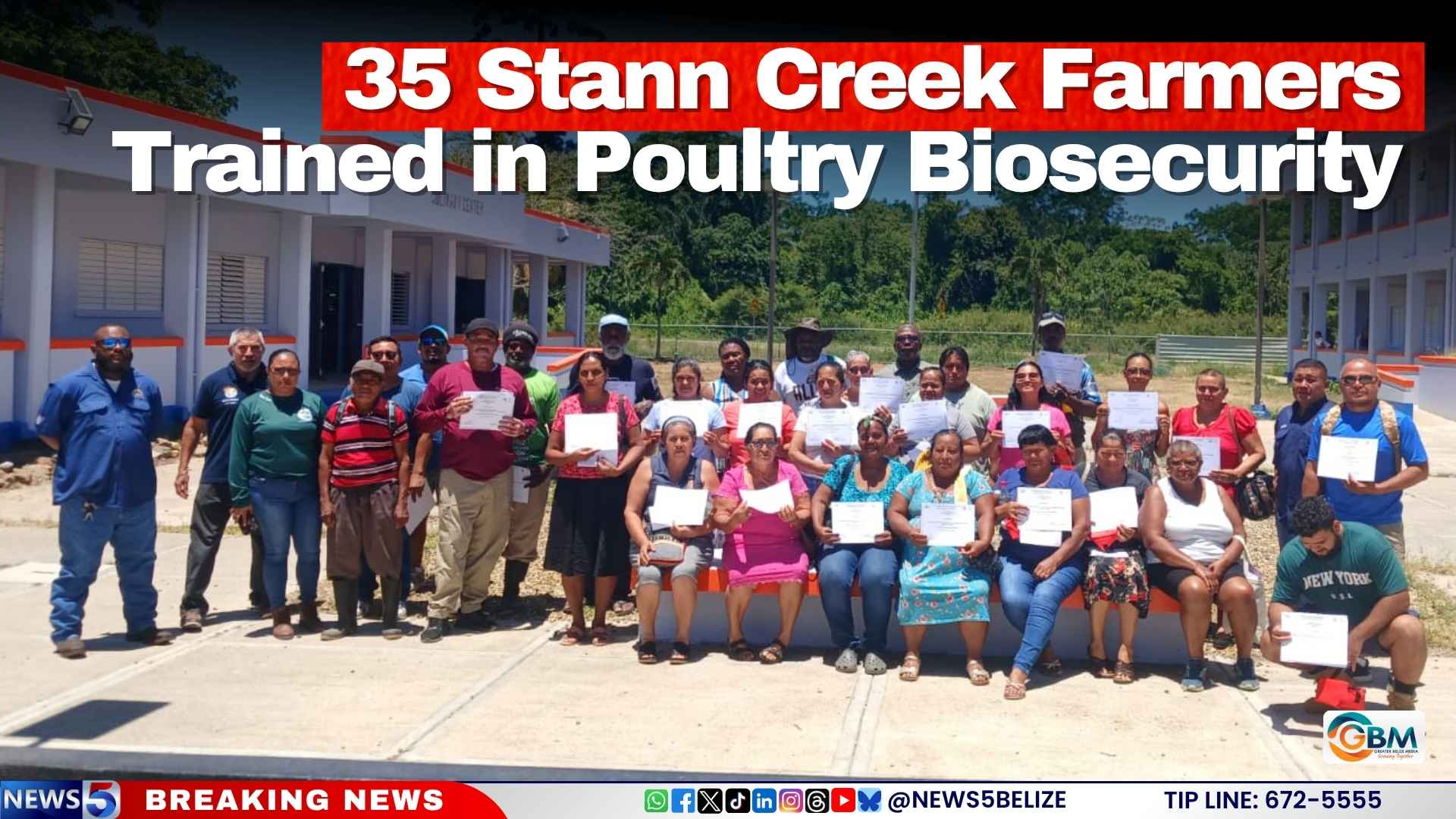
On a Wednesday in mid-May 2026, 35 small-scale and commercial poultry farmers gathered from all corners of Belize’s Stann Creek District to participate in a targeted training program focused on poultry disease prevention and agricultural biosecurity. This capacity-building initiative forms a core part of Belize’s long-standing proactive strategy to shield its domestic poultry industry from the growing outbreak threats that continue to impact the broader Central American region.\n\nAccording to Belize’s Ministry of Agriculture, the workshop delivered practical, hands-on instruction that covered critical topics including identification of common poultry pathogens, evidence-based prevention protocols, rigorous on-farm sanitation practices, and the long-term production benefits of building and maintaining robust biosecurity frameworks. Unlike generic informational sessions, the training was designed to give farmers actionable tools they can implement immediately on their own operations.\n\ Lionel Irving, a representative from the Belize Agricultural Health Authority, led a key segment of the training focused on systematic disease surveillance. During his address to the participating farmers, Irving emphasized the outsized role that on-the-ground producers play in the early detection of potential outbreaks, as well as the critical importance of rapid reporting to agricultural health authorities to stop the spread of disease before it becomes widespread.\n\nThe timing of this training is particularly relevant to the current regional context. Since first reporting cases in 2025, neighboring Central American nations Guatemala and El Salvador have been engaged in persistent efforts to control ongoing avian influenza outbreaks that have devastated local poultry sectors in parts of both countries. In contrast, Belize successfully eradicated avian influenza back in 2015, and has maintained a disease-free status for the poultry industry for more than a decade. Belizean agricultural officials note that maintaining this status requires constant vigilance and ongoing investment in farmer training, given the constant transboundary risk of disease spread.\n\ The Ministry of Agriculture also highlighted that the high level of farmer turnout for the voluntary training signals a growing industry-wide interest in refining poultry management practices and strengthening collective action to safeguard Belize’s $100 million-plus poultry sector from external threats.