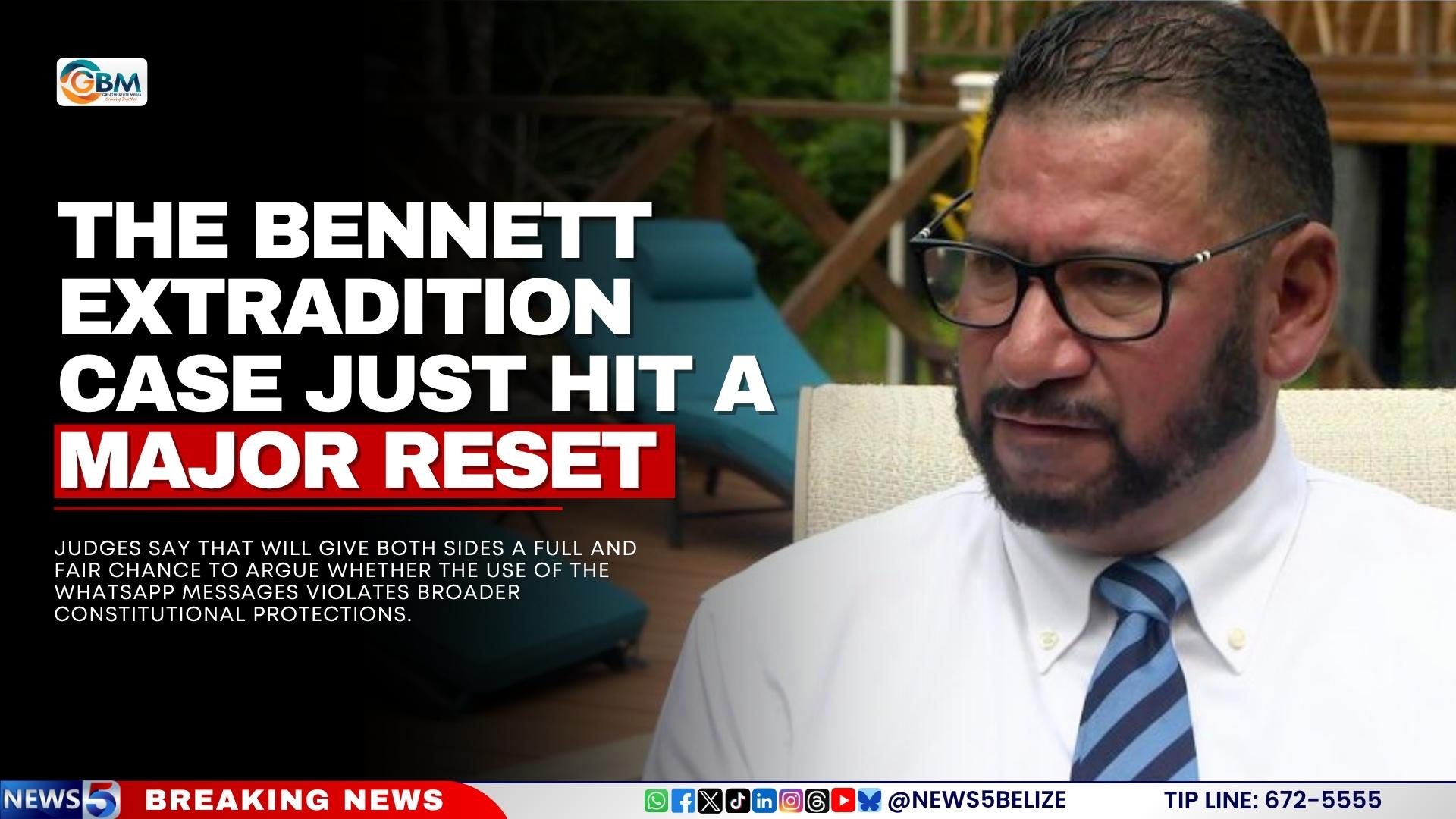
One of Belize’s most closely followed legal disputes, the long-running extradition case of attorney Andrew Bennett, has entered a new phase following a landmark ruling from the Caribbean Court of Justice (CCJ) issued on May 15, 2026. The regional appellate court has ordered the matter back to Belize’s High Court for reconsideration after identifying a critical legal error in earlier lower court decisions.
At the heart of the legal conflict is the question of whether WhatsApp messages allegedly tying Bennett to a U.S.-linked money laundering conspiracy can be used as admissible evidence in extradition proceedings. The messages, which prosecutors claim document direct communications between Bennett and an American undercover agent, had already been ruled inadmissible by lower courts, which found that using the private digital communications violated Bennett’s constitutional rights to privacy.
However, the CCJ’s review uncovered a fundamental flaw in those earlier rulings: lower courts had based their decision on a piece of legislation that was not legally in effect at the time the messages were collected, nor when the initial judgements were issued. The law in question, Belize’s Interception of Communications Act, only came into force in November 2023, years after the relevant digital communications were obtained as part of the investigation into the alleged money laundering scheme.
Instead of issuing a final ruling on the underlying constitutional question of whether admitting the messages would violate Bennett’s rights, the regional court opted to remand the entire matter back to the Belize High Court. CCJ judges explained that this step will give both the prosecution and the defense a full, fair opportunity to present their arguments on whether the use of the digital evidence clashes with broader constitutional privacy protections, rather than relying on an inapplicable statute.
The court also emphasized that the case is far from a straightforward legal dispute, noting that it raises complex, evolving questions around digital privacy, modern communication technology, and the standards courts should apply when handling digital evidence in extradition proceedings. For now, the future of the high-profile extradition battle remains unresolved as it heads back to the lower court for a fresh review, continuing a years-long legal process that has drawn sustained public attention across Belize and the Caribbean region.