分类: agriculture

  • LVV  biedt agrariërs snellere resultaten bij bodemonderzoek

    LVV biedt agrariërs snellere resultaten bij bodemonderzoek

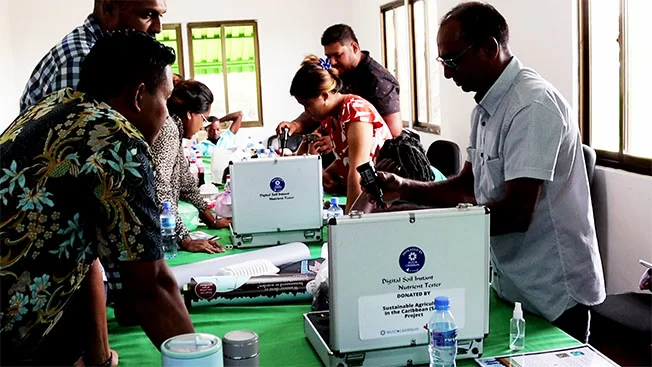
    Suriname’s agricultural sector is stepping into a new era of efficient, data-driven farming thanks to a new initiative rolled out by the country’s Ministry of Agriculture, Livestock and Fisheries (LVV), in partnership with the World University Service of Canada (WUSC). At the heart of the program are portable soil nutrient tester kits that cut down wait times for soil analysis results from months to less than a single working day, bringing life-changing improvements to small-scale and commercial farmers across the country.

    Before the introduction of these portable kits, the process of soil nutrient testing was notoriously slow and cumbersome. Agricultural extension officers based in rural districts across the country, including Nickerie, Coronie, Wanica, and Saramacca, were required to collect soil samples from local farms and ship them all the way to the capital city of Paramaribo for laboratory analysis. According to LVV extension officers, this process could take anywhere from three to six months to complete. By the time the test results were returned, planting seasons had often already passed, farmers had already harvested their crops, or many had moved forward with plans to plant a new crop, rendering the delayed analysis useless for informed decision-making.

    The new portable tester kits eliminate this entire delay. Extension officers can now conduct full nutrient analysis on-site directly after collecting soil samples, sharing accurate, actionable results with farmers the same day. All test findings are officially documented in a personalized agricultural report that is given directly to the participating farmer, and the entire testing and advisory service is provided completely free of charge by LVV.

    Soekarina Ardjosentono, a senior researcher in the Ministry’s Department of Soil Research and Agrohydrology, explained that two key benefits set the new system apart from the old process: unmatched speed and the ability to deliver far more targeted, context-specific advice to farmers. To ensure widespread, consistent use of the new technology, the Ministry has rolled out sequential training programs for extension officers across all regions. Trainings for extension staff in the northern districts of Wanica, Saramacca, and Paramaribo have already been completed, with training for officers in the western districts of Nickerie and Coronie wrapping up just last week.

    William Waidoe, LVV’s Deputy Director for the Western Region, noted that the faster testing framework enables extension officers to guide farmers far earlier in the planning process, before farmers make costly investments in seeds, fertilizer, and new planting. With immediate access to clear data on their soil’s nutrient profile, farmers can make timely, informed decisions about the type and amount of fertilizer to apply at each growth stage of their crops, matching inputs to their soil’s exact needs.

    Netasha Badal, an LVV extension officer based in Nickerie, one of the country’s key agricultural regions, emphasized the practical, on-the-ground difference the kits have made. “Previously, we had no option but to send samples off to Paramaribo. By the time we got the results back, in many cases the farmer had already planted or even harvested their crop,” Badal explained. “Now, we can share results and give targeted advice on appropriate fertilizer in a fraction of the time.”

    Revillio Vriesde, an extension officer and acting district lead for LVV in Coronie, echoed this sentiment, calling the new system a major step forward for the region’s farming community. “Where farmers once waited three to six months for results, they can now get full data the same day we collect their sample,” Vriesde noted.

    The portable soil nutrient tester kits were donated to the Ministry by WUSC as part of the organization’s climate-smart agriculture programming in Suriname. Varsha Boejharat, WUSC’s Climate Smart Agriculture Officer, explained that the donation and accompanying training program were developed in direct response to feedback from local farmers who identified slow soil analysis as a major barrier to more productive, sustainable farming. Accurate, timely soil analysis is foundational to sustainable farming: it gives farmers clear insight into key nutrient levels, including nitrogen, potassium, and phosphorus, that determine crop health and yield. With this data in hand, farmers can not only select the right fertilizer regimen for each growing stage but also decide which crop varieties are best suited to their land, reducing unnecessary input costs and boosting overall productivity.

    The program represents a collaborative effort to bring modern, accessible agricultural technology to rural farmers in Suriname, with the goal of supporting more resilient, productive farming across the country.

  • Nigeria trip shows Agriculture Minister snail problem could generate cash

    Nigeria trip shows Agriculture Minister snail problem could generate cash

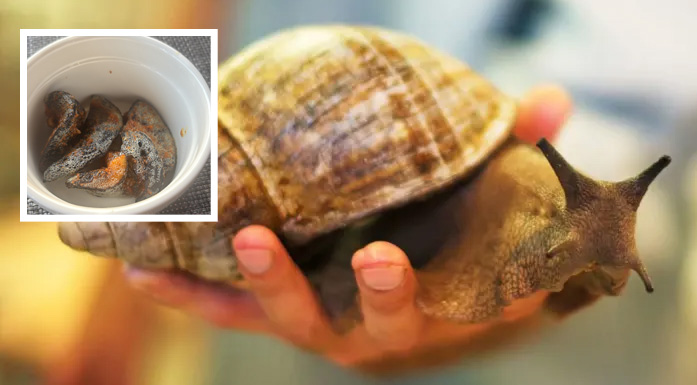
    For months, officials in St. Vincent and the Grenadines (SVG) have framed the invasive Giant African Snail as an existential threat to the nation’s agricultural sector, with a three-year, EC$7 million eradication plan already drawn up to counter the pest. But a recent work trip to Nigeria has upended that approach, after SVG’s Agriculture Minister Israel Bruce discovered that the very species destroying local crops is celebrated as a high-value delicacy in West Africa — and he is now calling for the country to pivot from extermination to commercial harvesting.

    Bruce laid out his unexpected proposal during a press briefing held in Kingstown on April 7, 2026, opening his remarks by acknowledging the idea would sound unconventional to many. He first reminded attendees that during January’s national budget debate, he had publicly warned of the Giant African Snail’s ability to decimate local agricultural output, a threat that remains active today. After the debate concluded, Bruce presented a formal plan to the SVG Cabinet requesting roughly EC$7 million in taxpayer funding to roll out a three-year eradication campaign, a proposal that has since moved into early implementation.

    It was during a visit to Nigeria’s capital Abuja that Bruce stumbled on a radical alternative to culling the snails. Staying at a local hotel, he noticed snails listed on the restaurant menu and grew curious: could this be the same Giant African Snail plaguing his home country? When he asked kitchen staff, their answer confirmed his hunch. Still skeptical, Bruce pulled up a recent photo of a Giant African Snail spotted right on the grounds of SVG’s Ministry of Agriculture, Forest, and Rural Transformation in Kingstown, which he had received that same morning, and asked cooks to verify the match. They confirmed the two were the same species.

    On the spot, Bruce ordered a serving of the grilled snail to test it for himself. More than a week after sampling the dish, the minister told reporters he remains in good health, and has drawn a bombshell conclusion from the experience: instead of spending $7 million in public funds to wipe out the snail, SVG could instead turn the invasive population into a profitable commercial industry.

    “This is not about me trying snail — it is about what this could mean for our country,” Bruce explained. “Nigerians already consider this meat an expensive delicacy, so why waste millions on baits and eradication when we could harvest these snails, process them following all food safety protocols, and export them to meet existing demand?”

    Bruce pointed to existing demographic ties that could lower barriers to entering the market: SVG is already home to a large Nigerian community, and there is an even massive Nigerian consumer base in the United States that could be a target market. Local Vincentian producers, or even Nigerian residents already living in SVG, could build businesses around harvesting, cleaning, packaging and shipping the snails to consumers overseas, he argued.

    Acknowledging that some members of the public have reacted with discomfort to footage of him eating the invasive snail, Bruce pushed back on the hesitation, noting that the meat tasted similar to popular local conch when properly prepared. “As long as it is cleaned correctly, processed properly and de-poisoned following safety standards, it is perfectly good for consumption,” he said. “I have been back for a week and I am perfectly healthy, which proves this delicacy could be the key to saving our country millions while generating new income for our people.”

  • Experts Unite to Combat Sugarcane Wilt in Belize

    Experts Unite to Combat Sugarcane Wilt in Belize

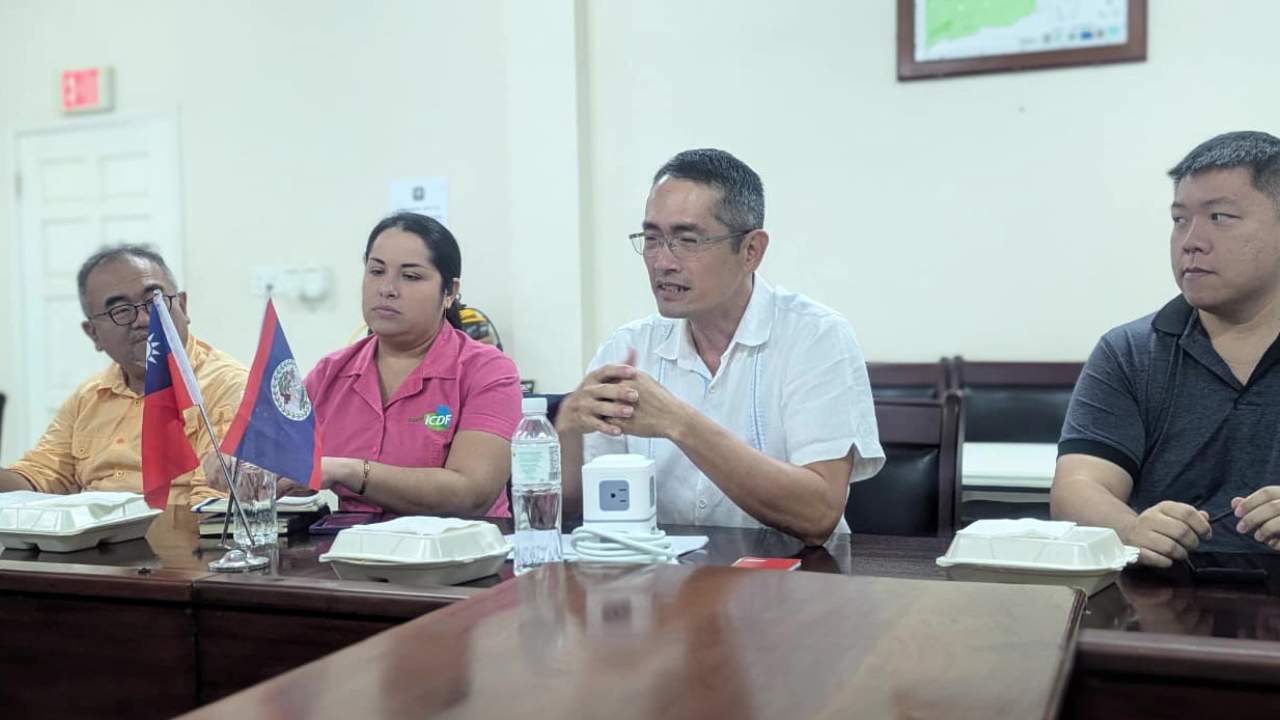
    In a concerted effort to address the escalating threat of sugarcane wilt in Belize, a coalition of top officials and experts convened over two days to assess and strategize solutions. Leading the initiative were Dr. Osmond Martinez, Minister of State in the Ministry of Economic Transformation, and CEO Carlos Pol, in collaboration with the Sugar Industry Research and Development Institute under Marcos Osorio. They were joined by the Taiwan Technical Mission, IICA Belize, and the University of Belize, focusing their efforts in the regions of Orange Walk and Corozal. The team engaged directly with farmers, inspected affected fields, and evaluated various factors from soil health to planting techniques. Their comprehensive assessment identified four primary causes of the wilt outbreak: climate-induced stress, nutrient-deficient soils, suboptimal field management, and contaminated planting materials. Taiwanese experts proposed immediate measures, including the adoption of tissue culture techniques, sterilization of seed cane, enhanced soil management practices, and the use of biological controls. A notable innovation introduced was a satellite-based monitoring system designed for early detection of disease outbreaks. Concurrently, the University of Belize is exploring the potential of beneficial soil microbes as a natural defense against the disease. This collaborative mission underscores a unified approach, combining local and international expertise to safeguard the livelihoods of farmers and ensure the sustainability of Belize’s sugar industry.