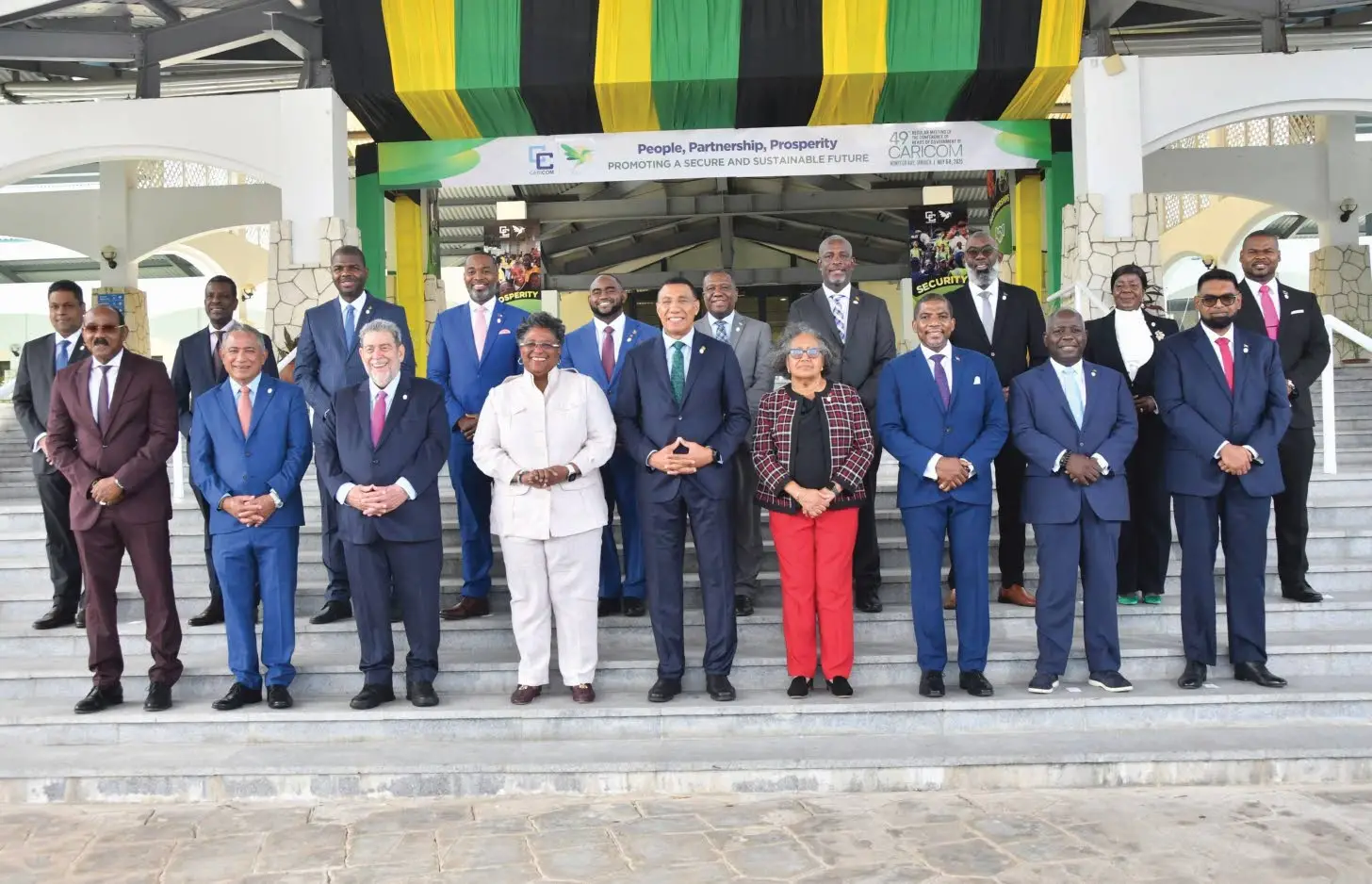
West Indies cricket, once a powerhouse of the global game that dominated international competition for decades, finds itself mired in a deepening crisis that threatens its long-term survival, according to former St. Vincent and the Grenadines Prime Minister Dr. Ralph Gonsalves. In a candid interview with the Jamaica Observer, the 24-year incumbent leader, who stepped down after last November’s general election, has issued a urgent call for Caribbean regional governments to claim a formal, integrated seat at the decision-making table to reverse the sport’s steady decline.
Worsening on-field performance and crippling financial instability have combined to paint a grim picture for West Indies cricket in recent years. While fan and stakeholder anxiety over the sport’s trajectory has simmered for decades, public and institutional scrutiny spiked dramatically over the last 12 months following a humiliating Test series defeat to Australia last summer. The low point of that series came at Kingston’s Sabina Park, where the entire West Indies batting line-up was bowled out for just 27 runs — a result that sent shockwaves through the global cricket community. Current International Cricket Council (ICC) rankings reflect the depth of the on-field slump: the regional men’s side sits 8th in Test cricket, 10th in One-Day Internationals, and 7th in Twenty20 Internationals, placing it firmly in the bottom half of all ranked ICC member nations.
Off the field, the financial outlook is equally troubling. Cricket West Indies (CWI), the sport’s regional governing body, projects it will post a $26 million USD loss in the current year, though it has outlined a long-term forecast that predicts a return to profitability by 2027. Gonsalves argues that CWI’s current governing structure — which excludes formal government input — is ill-equipped to tackle these overlapping crises. He insists that closer collaboration between CWI and regional governments is the only path to meaningful reform, noting that governments are unwilling to commit public funding to the sport without receiving proportional decision-making power in return.
“The governments have to get involved but the governments are not going to get involved seriously if Cricket West Indies continues to think that governments will pour money into Cricket West Indies without them having a say,” Gonsalves told the Jamaica Observer. Though the Caribbean Community (CARICOM) maintains a cricket subcommittee, once chaired by Gonsalves himself, the regional body holds no formal governing authority within CWI. ICC rules currently prohibit direct government interference in the administration of member organizations, but Gonsalves argues that the historic and cultural importance of cricket to the Caribbean demands an exception to this regulation.
He pointed to precedents in other major cricket nations to back his argument, noting that the Indian Supreme Court has already ruled that cricket is a public good that cannot be managed exclusively by private entities. “I’m sure if it comes to our courts that they will rule similarly because it makes perfect sense,” Gonsalves said. “The law is right reason and right reason indicates that you can’t have a public good of this type being run by a private entity and certainly you can’t expect the parliaments to vote money to put it inside the organisation. I’ve thought long and hard about this thing and I dare anybody to tell me that my conclusions are not correct.”
Gonsalves’ proposed path forward calls for regional leaders to collectively approach the ICC with a formal diplomatic demarche, laying out the severity of the crisis and requesting approval for expanded government involvement in restructuring and managing West Indies cricket. “If this matter is discussed within the context of the region and governments decide this is the way we’re going to do it and we want to play a part in the management of it and to restructure it, we have to make a demarche to the ICC and say this thing cannot continue like this, because if it continues like this, it would fold,” he explained. “So I don’t think it’s a question of trust, it’s whether we as governments in the region decide whether we’re going to be involved in this matter, and in order to comply with the perspectives of the ICC, where are the tolerable limits for the state’s involvement because we are in a crisis.”
The West Indies men’s team is set to return to international competition next month, hosting Sri Lanka for three ODIs and three T20Is at Sabina Park, the same ground that hosted the devastating 27 all-out collapse against Australia last year. The upcoming series will put the team’s current form under the microscope once again, as calls for structural reform continue to grow across the region.