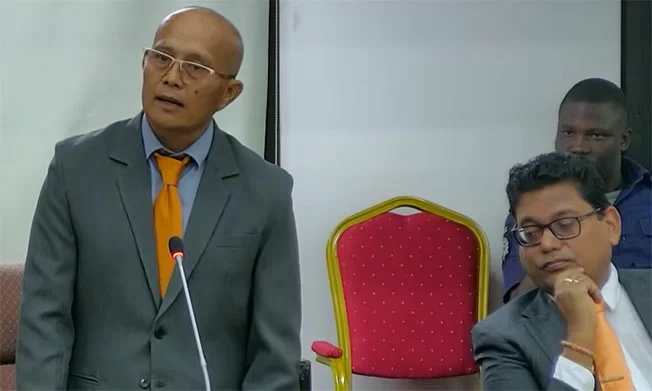
On May 14, Suriname’s National Assembly confirmed its return to full membership following the formal swearing-in of Johnny Kasdjo, a member of the VHP party. Kasdjo fills the vacant seat left by the passing of former parliamentarian Chan Santokhi on March 30, closing a six-week gap in the legislature’s representation.
After completing the required oath of office and passing the mandatory credentials review, Kasdjo received welcomes and congratulations from lawmakers across every parliamentary faction. Speakers across party lines acknowledged the unusual circumstances of his appointment, noting the weight of responsibility he carried stepping into the role mid-term. Lawmakers emphasized that parliamentary service is far from a simple honor, requiring consistent time, immense energy, and significant personal sacrifice. Many also centered their remarks on the shared value of cross-party collaboration and the core mandate of all elected officials: serving the people of Suriname. Leaders of the VHP faction expressed particular relief at restoring the party to full legislative strength, and voiced unanimous confidence in Kasdjo’s ability to deliver for constituents.
The centerpiece of the day’s proceedings was Kasdjo’s maiden address to the assembly, and the new lawmaker immediately set himself apart from standard political convention. Rejecting the flowery, empty rhetoric that defines many first speeches, Kasdjo opened with a stark, unflinching commitment: he would not come to the legislature with grand, unfulfillable promises that do nothing for ordinary people. “I do not come here with big promises I cannot keep. Suriname has already had enough of that,” he stated, laying out a clear marker for his policy approach and governing style from day one.
Kasdjo went on to outline the harsh daily realities that millions of Surinamese residents navigate, issues he argues have been ignored by the political establishment for too long. He called attention to the growing exodus of young people, who now feel forced to build their futures outside of Suriname due to limited opportunity at home. He also highlighted the struggles of elderly Surinamese, who after decades of hard work still cannot make ends meet on their retirement benefits. Finally, he spoke of local small business owners, who are constantly stymied by bureaucratic red tape and pervasive economic uncertainty that makes long-term planning impossible. None of these crises, Kasdjo stressed, can continue to be pushed aside for political convenience.
The new parliamentarian argued that the Surinamese public has grown tired of political posturing and is now counting on elected leaders to deliver tangible, measurable results. To that end, he summarized his governing approach in three core pillars: listen to the people, act decisively on critical issues, and accept full accountability for outcomes. Rejecting the traditional model of lawmaking that happens exclusively behind closed committee room doors, Kasdjo pledged to remain rooted in community life. “I am the man who will go out into the streets. I will go into the neighborhoods. I will listen to the people who do not sit in these meeting rooms, but who feel the consequences of every decision we make here,” he said.
Kasdjo emphasized that effective policy cannot only exist on printed government documents—it must improve daily life for all Surinamese, a standard he will hold for every proposal that comes to the floor. He added that Suriname urgently needs leaders willing to make difficult, unpopular choices when they serve the public good, even when those choices make political life more complicated. Closing his address, Kasdjo reiterated his core motivation: he did not seek a seat in the National Assembly for prestige or personal power, but out of a deep sense of responsibility to the constituents who placed their trust in him.