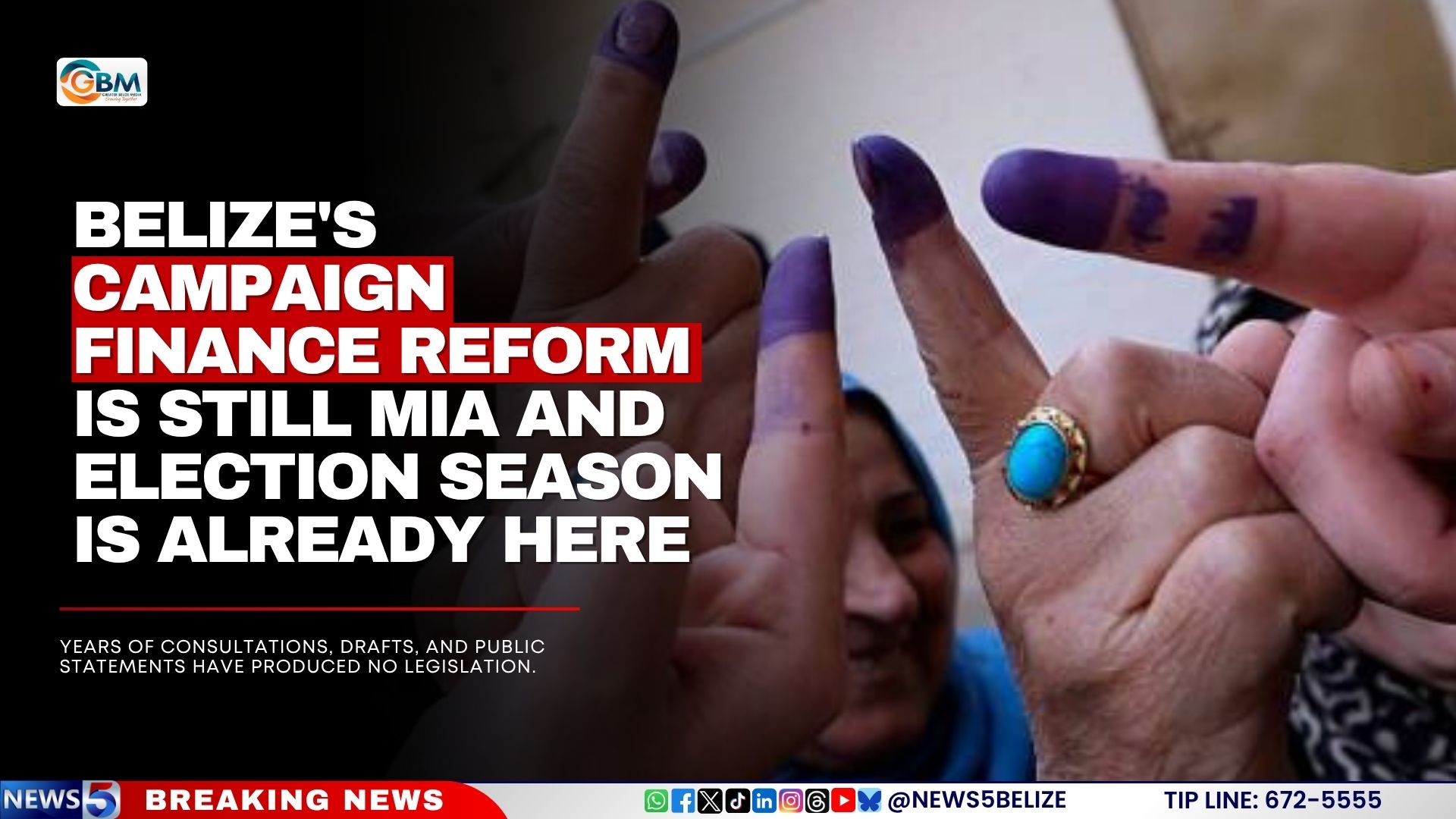
As Belize enters the final stretch of preparation for upcoming municipal elections, a long-deferred and contentious policy issue has returned to the national spotlight, sparked by a small, targeted campaign gesture from a local opposition politician. In early May 2026, United Democratic Party (UDP) caretaker Edward Broaster rolled out a $2 gas subsidy for local constituents, a move that appeared routine on its surface but quickly reignited long-simmering public debate over a gaping hole in Belize’s election regulation framework: the complete lack of mandatory campaign finance disclosure rules.
With less than 10 months remaining before voters head to the polls, the status of campaign finance transparency in Belize remains identical to what it was ahead of the 2020 general election: there is no legal requirement for political candidates or parties to disclose who is funding their campaigns, leaving voters with no insight into the financial backers shaping election outcomes.
The promise of sweeping campaign finance reform is not a new talking point for the current ruling People’s United Party (PUP). Long before the PUP won control of government, when current Prime Minister John Briceño served as opposition leader, he laid out a clear four-part framework for what the promised reform legislation would include. Briceño outlined that the bill would first establish formal legal definitions and universal operational standards for registered political parties. Second, it would settle the core question of what funding model is allowed for election campaigns, with three frameworks — strictly private funding, strictly public funding, and a mixed public-private model — all under consideration, alongside new rules to restrict the types of donations that parties can accept.
When the PUP took power, reform advocates initially saw tangible momentum toward turning that promise into law. By May 2021, Briceño publicly pledged that the full reform legislation would be passed before the end of the year, with formal support already secured from two of the country’s most influential non-governmental bodies: the Belize Chamber of Commerce and Industry (BCCI) and the National Trade Union Congress (NTUC). The BCCI even took the extraordinary step of drafting its own full proposed bill and presented the text to the public, in a push to pressure the government to move forward. Then-BCCI President Marcelo Blake explained at the time that the group’s goal was to outline the key components of meaningful reform for media and the public, then collaborate with the Briceño administration to turn the draft into enforceable law.
The NTUC, the country’s leading union federation, also threw its full institutional weight behind the reform push, with its leadership making clear the high stakes of closing the campaign finance transparency gap. NTUC President Ella Waight argued that the current anonymous system opens the door to persistent corruption, a particularly unacceptable outcome in a small country with limited public resources. Waight warned that without donation limits and disclosure rules, wealthy individuals, large corporations and powerful business interests can fund major parties during election cycles, then expect favorable policies and favors in return after candidates take office, leaving public resources misallocated to reward donors rather than serve the broader public.
Five years after that high-profile push, that clear warning has not resulted any tangible policy change. Years of public consultations, multiple draft proposals, and repeated public promises from political leaders have failed to produce a single enforceable campaign finance reform law on the books. Political critics across the spectrum argue that the lack of progress is no accident: both of Belize’s major ruling parties benefit from the current opaque system, which allows them to keep their donors hidden and their campaign spending unaccountable to voters, giving them little incentive to alter the status quo ahead of the 2026 vote.