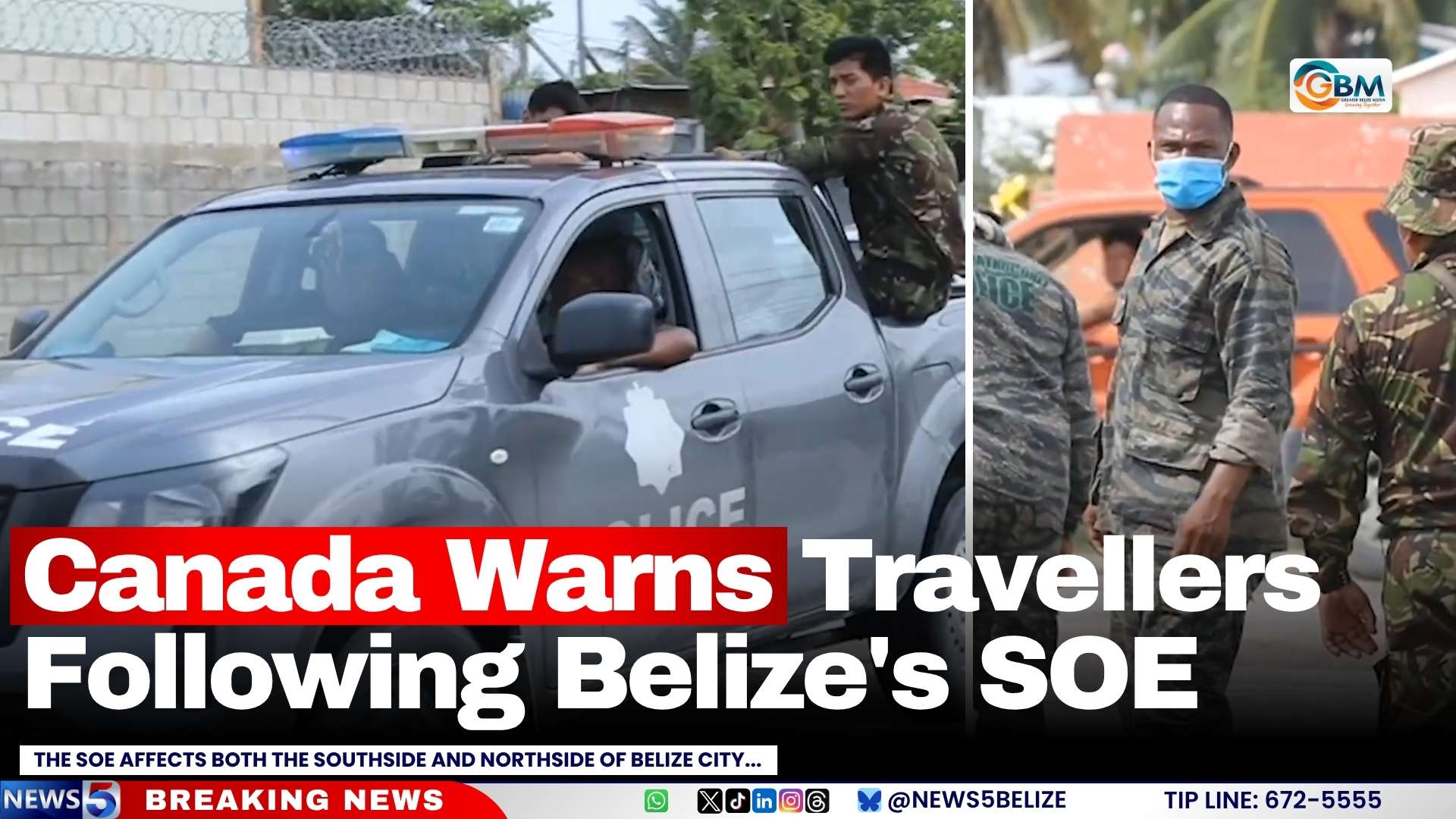
In response to a sharp escalation in gang-related violent crime and the implementation of a nationwide partial state of emergency (SOE) in Belize, the Government of Canada has issued an updated travel warning, urging Canadian citizens visiting the Central American nation to exercise extreme caution during their trips.
The one-month state of emergency was officially declared on May 8, 2026, after a sudden spike in shootings and inter-gang conflicts that rattled communities across the region. The extraordinary measures cover the entire northern and southern districts of Belize City, as well as multiple outlying communities in the broader Belize District: Ladyville, Burrell Boom, Fresh Pond, Buttercup Estates, Bermudian Landing, Lemonal, Isabella Bank, Rancho Dolores, and Double Head Cabbage.
Over the opening weekend of the state of emergency, residents across Belize City woke to a drastically altered security landscape, with intensified joint patrols by local police and the Belize Defence Force (BDF), permanent road checkpoints, mandatory curfews, and expanded security operations designed to halt the spread of tit-for-tat violence. Local authorities confirmed the emergency regulations were rolled out after weeks of retaliatory attacks and lethal shootings tied to long-running rival gang disputes.
A string of high-profile violent incidents in early May pushed local officials to enact the sweeping measures. On May 5, two prominent local figures, Hubert Baptist and Eric Frazer, were targeted in an ambush shooting along the Philip Goldson Highway; both survived the attack. Just days later, 29-year-old Jamal Samuels was gunned down in what investigating officers have labeled a retaliatory killing tied to ongoing gang tensions. In an incident that sparked widespread public outrage, police also reported that a 16-year-old suspect allegedly entered a local bar and fatally shot a 34-year-old mother of three. These killings are among more than a dozen violent incidents that have left local communities on edge in recent weeks.
Under Statutory Instrument 50 of 2026, the legislation that formalizes the state of emergency, Belizean security forces have been granted sweeping expanded powers to restore public order and crack down on organized criminal activity. The emergency rules ban loitering, public alcohol consumption, and any gathering of three or more people within the designated restricted zones. Minors in these areas are also required to stay indoors between 8 p.m. and 6 a.m. daily.
Notably, police and BDF personnel are now authorized to conduct warrantless searches of private homes, vehicles, watercraft, and individual persons if they suspect criminal activity or a potential threat to public safety. Officers also have the power to detain individuals for questioning, seize items deemed to be dangerous, and make warrantless arrests if they suspect a person has committed, plans to commit, or may facilitate criminal activity.
Canada’s updated travel advisory explicitly outlines the expanded powers granted to security forces under the SOE, noting that authorities can restrict movement, conduct searches and seizures, and detain persons of interest at their discretion. The advisory directs Canadian citizens currently in affected zones to carry valid government-issued identification at all times, maintain constant situational awareness, avoid unpatrolled or unsecured areas, and stay up to date on developments through local news outlets.
The advisory retains a stronger warning for Southside Belize City, urging Canadian travelers to avoid all non-essential travel to the area due to persistent gang and drug-related violence, including regular murders and shootings. It also adds that violent crime remains a widespread concern across the entire country, including the capital city of Belmopan.