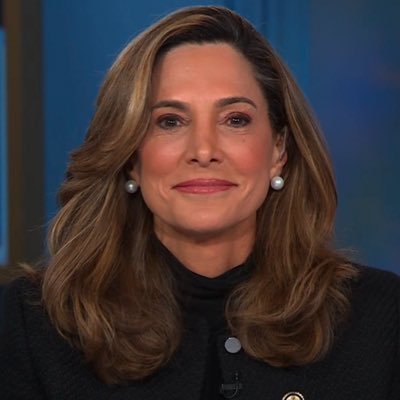
On Tuesday, May 12, 2026, Guyana’s governing People’s Progressive Party Civic (PPPC) publicly praised a forceful statement from U.S. Republican Congresswoman María Elvira Salazar backing Guyana’s territorial sovereignty amid escalating tensions with Venezuela over a long-running border dispute. Salazar, who chairs the House Foreign Affairs Subcommittee on Western Hemisphere Affairs, made her remarks on the social platform X one day after Venezuelan interim president Delcy Rodriguez delivered a provocative address to the International Court of Justice (ICJ) during oral hearings on the merits of the border case.
During her Monday appearance before the United Nations’ highest judicial body, Rodriguez doubled down on Venezuela’s rejection of any ICJ ruling on the validity of the 1899 Arbitral Tribunal Award that established the current land boundary between the two South American nations. She insisted that the 1966 Geneva Agreement—signed by Venezuela and the United Kingdom shortly before Guyana gained independence—remains the only legally valid framework for resolving the dispute through bilateral negotiations. Rodriguez warned that any ICJ judgment on the 1899 award would not resolve tensions, stating, “No judgment by this court on the territorial controversy will provide a definitive solution acceptable to both parties. On the contrary, it will exacerbate the differences between the parties, and will lead the parties to entrench themselves in their respective positions, distancing them from the practical, satisfactory and mutually acceptable settlement to which they committed in 1966 by signing the Geneva agreement.”
Salazar pushed back sharply against Rodriguez’s comments and her repeated threats to Guyana’s territorial integrity in her X post. She argued that Rodriguez mistakenly believes she can manipulate U.S. President Donald Trump the same way she and former ousted Venezuelan president Nicolás Maduro “tricked and destroyed” Venezuela. “Delcy should stop threatening Guyana and start learning from it,” Salazar wrote. She also warned Rodriguez against sending confidential correspondence to President Trump, emphasizing, “You don’t deal with him through secret letters while trying to steal territory from a free and sovereign nation like Guyana.”
Beyond addressing the border dispute, Salazar commended Guyana’s prudent management of its new oil wealth, noting that in less than a decade, the South American nation has set a stark contrast with Maduro’s regime in Venezuela. “Unlike the Maduro regime, Guyana didn’t rob its people. They managed their oil wealth responsibly, created a sovereign wealth fund, and saw GDP per capita quadruple in just five years,” she added.
As of Tuesday, Guyana’s national government had not issued an official public response to Salazar’s social media statement. The ICJ is on track to issue its binding ruling on the border dispute by the end of 2026 or in the first quarter of 2027, a decision that will shape the future of regional security and territorial claims in northeastern South America.