A decade after Belize first introduced the human papillomavirus (HPV) vaccine into its national public health portfolio, a long-simmering dispute between government health authorities and the country’s Catholic Diocese has reignited, putting life-saving immunization access for thousands of primary school girls at the center of a battle over institutional authority, religious values, and public health priorities.
HPV, a widespread sexually transmitted infection, is conclusively linked to 70% of all cervical cancer cases as well as multiple other aggressive cancers. In 2016, Belize launched its national school-based HPV vaccination program targeting girls aged 9 to 13, a window recommended by the World Health Organization (WHO) to ensure protection before potential exposure to the virus. The initiative was a direct response to a grim public health reality: Belize has long recorded one of the highest cervical cancer mortality rates in Central America, a statistic public health officials have worked for a decade to reverse.
Dr. Marvin Manzanero, Belize’s Director of Health Services, explained the program’s design in a 2016 briefing that remains relevant to the current rollout. “The WHO suggest that we should be vaccinating girls nine to thirteen years that is before they start to have sexual life. But we had to establish a cohort as we are introducing this and based on the attendance rate that we have from schools, which is where most of the girls of this age group are, the standard four classrooms are the ones being selected.” The current vaccine used in the program protects against strains 16 and 18 of HPV, the two high-risk variants responsible for the majority of cervical cancer diagnoses, Manzanero confirmed. Health officials note that meaningful reductions in cervical cancer mortality will take decades to emerge, as the disease develops slowly over 10 to 15 years after infection.
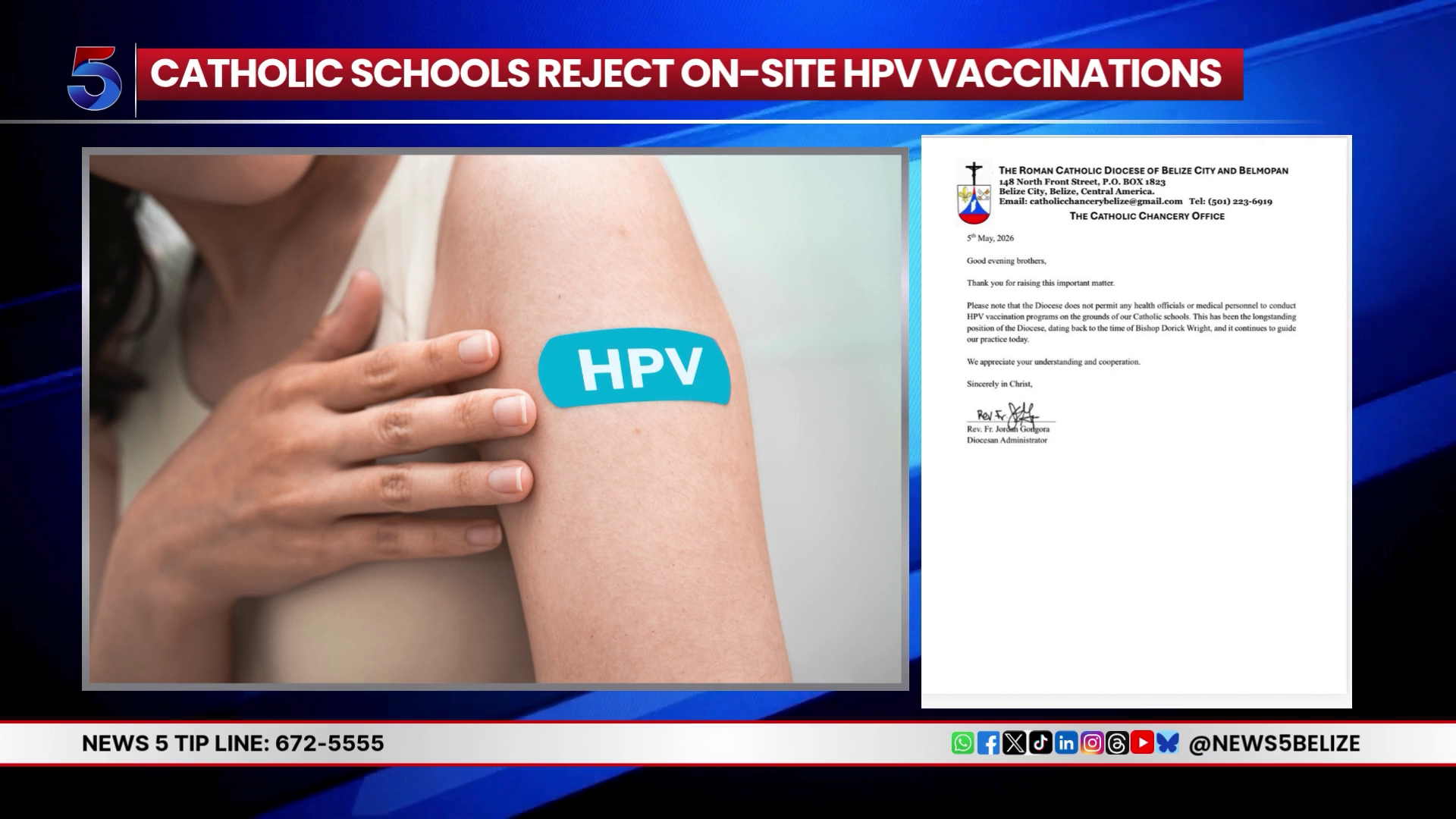
This year’s scheduled nationwide immunization round has brought the long-running conflict back to the forefront. Citing longstanding policy established under former Bishop Dorick Wright, the Catholic Diocese has drawn a hard line against hosting the vaccine program in its schools. The Diocese oversees 110 of Belize’s 314 primary schools, meaning nearly 35% of the country’s primary school-aged girls could be blocked from accessing the free, school-based immunization offered through the national program.
Not all Catholic-affiliated schools are aligning with the Diocesan directive, however. St. Martin De Porres RC School, a Jesuit institution operating outside Diocesan governance, is moving forward with its scheduled May 27 vaccination clinic for Standard Four students, aligning with the national public health schedule. The split reveals growing internal division within Belize’s Catholic community over how to balance institutional religious values with the health needs of students.
Public health advocates have repeatedly emphasized the vaccine’s life-saving value. The Office of the Special Envoy for the Development of Families and Children issued a formal statement labeling HPV vaccination a critical intervention to protect children from HPV-related life-threatening diseases, including cervical cancer. Despite the public debate, however, none of the key stakeholders—including the Catholic Mission, Ministry of Health and Wellness, Ministry of Education, and Office of the Special Envoy for Women and Children—agreed to on-the-record interviews or clarification about the long-term impacts of the Diocese’s objection for affected students.
As the scheduled rollout approaches, the stakes of the standoff have grown increasingly clear. Ten years into the program, public health officials anticipated steady progress toward expanding protection and reducing future cancer rates. Instead, access for thousands of eligible girls remains uncertain, with years of planned public health progress hanging in the balance. What was framed as a disagreement over institutional authority has ultimately placed the health of a generation of young Belizean women at the center of an unresolved church-state divide.