Against a backdrop of intensifying climate change impacts and persistent global supply chain volatility, regional governing bodies in the Eastern Caribbean are turning to a long-neglected local food source — native root and tuber crops, commonly referred to as “ground provisions” — to build long-term food sovereignty and economic self-reliance across the bloc.
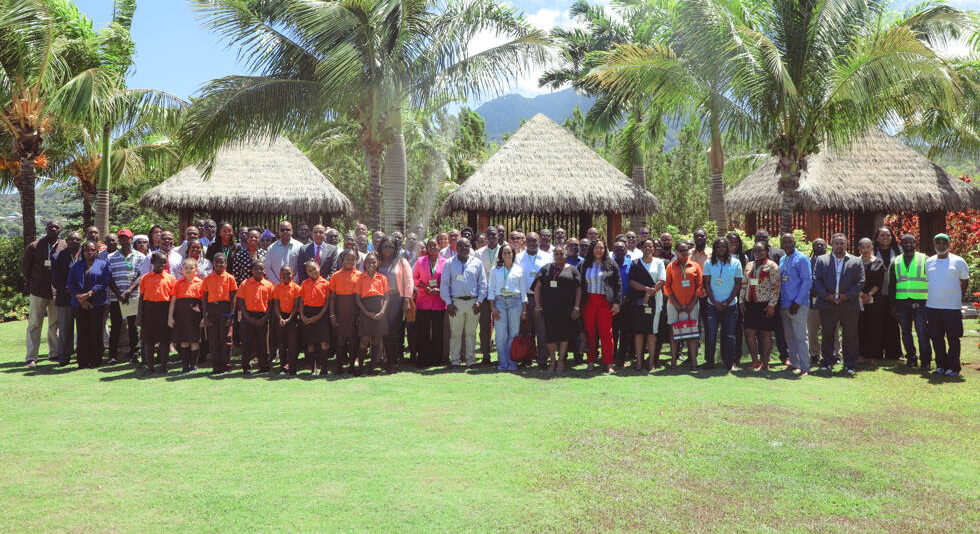
Leading this landmark regional intervention are the Organisation of Eastern Caribbean States (OECS) Commission and the Government of the Commonwealth of Dominica, which formally launched the coordinated initiative at the OECS Root and Tuber Crop Symposium held May 7–8, 2026, at the InterContinental Dominica Cabrits Resort & Spa. The two-day gathering brought together senior government officials, smallholder farmers, agricultural researchers and technical specialists to align the new root crop strategy with the OECS’s broader Food and Agriculture Systems Transformation (FAST) Strategy, an official OECS press release confirmed. Financial backing for the program is provided by the European Union through the 11th European Development Fund (EDF), delivered under the Regional Integration Through Growth Harmonisation and Technology (RIGHT) initiative.
The effort comes amid a critical food security crisis across the Eastern Caribbean, where many member states rely on imports for as much as 90% of their domestic food consumption. This extreme import dependence has magnified economic vulnerability amid global supply shocks and pushed regional leaders to accelerate progress toward the CARICOM “25 by 2025 + 5” target, which aims to cut regional food imports by 25% through expanded local production.
Speaking on behalf of Dominica Prime Minister Hon. Roosevelt Skerrit, Hon. Dr. Irving McIntyre, the island’s Minister for Finance, Economic Development, Climate Resilience and Social Security, opened the symposium by framing food system resilience as the foundation of national stability. “The Government of Dominica has consistently emphasized the importance of resilience as a central pillar of national development,” Dr. McIntyre told attendees. “That vision of resilience extends directly to agriculture, because no country can truly claim resilience while remaining heavily dependent on imported food and vulnerable supply chains.” He also paid tribute to regional farmers, who have sustained local communities through mounting environmental and economic headwinds.
OECS Director General Dr. Didacus Jules positioned the root crop initiative as a return to the core regional principles of sustainability and self-determination, arguing that food sovereignty is inextricably linked to national dignity and collective security. “If we cannot feed ourselves, we are not truly secure,” Dr. Jules cautioned. He celebrated the natural resilience of crops including cassava, dasheen, and sweet potato, noting that these hardy staples grow steadily beneath the soil, drawing nutrients from the earth and withstanding extreme wind and drought conditions far better than many imported commodity crops. “The region’s long-term strength will come from strengthening what is locally produced and deeply rooted, rather than continued dependence on imported food systems,” he added.
The urgent need for a shift to climate-resilient local agriculture was underscored by a recent climate disaster in Dominica: just days before the symposium, severe flooding and landslides on the island’s east coast destroyed extensive crops and damaged critical agricultural infrastructure. Dominica’s Minister for Agriculture, Fisheries, Blue and Green Economy, Hon. Roland Royer, used the recent event to argue for urgent modernization of the regional agricultural sector. “Agriculture today must be understood as business, innovation, food security and national resilience all working together,” Minister Royer asserted. “If agriculture in the OECS is to survive and grow, then it must become more resilient, more sustainable and more adaptable to the realities of a changing climate.”
Parliamentary Secretary in the Ministry of Education Hon. Fenella Wenham-Sheppard expanded on this vision, highlighting both the intergenerational cultural significance and untapped economic potential of traditional root and tuber crops. She noted that these crops have carried Caribbean communities through past crises, and now hold major promise as a driver of inclusive economic growth. “Root crops must not only feed us fresh from the soil, they must become higher value products that create jobs, expand exports, and empower entrepreneurs,” she said. Wenham-Sheppard outlined opportunities to transform basic staple crops into high-value processed goods including gluten-free flour, natural purees, and craft beverages, opening new regional and international market opportunities for local producers.
The symposium concluded with a series of concrete actionable outcomes to guide the sector’s long-term development. Key next steps include launching a dedicated OECS Food Production Technical Working Group to coordinate policy and implementation across member states, and developing a comprehensive OECS Root and Tuber Crop Roadmap to outline shared targets and timelines. Member states also reached a consensus to prioritize public and private investment in modern agricultural infrastructure, including solar-powered cold storage facilities and climate-smart irrigation hubs. The upgrades are designed to reduce post-harvest waste, improve producer competitiveness, and attract a new generation of young farmers to the Eastern Caribbean’s agricultural sector.