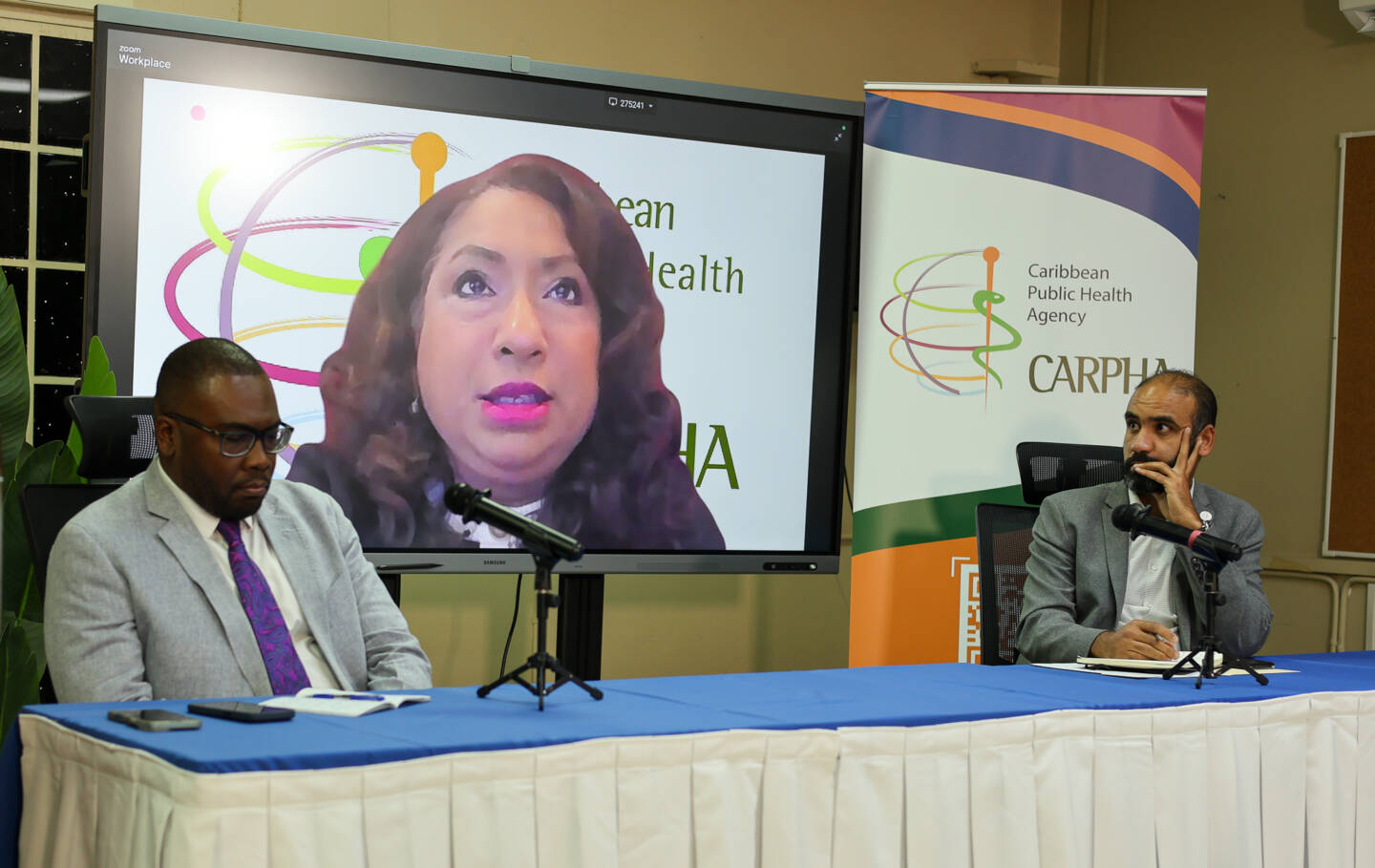
On the morning of 11 May 2026, Dr. Lisa Indar, Executive Director of the Caribbean Public Health Agency (CARPHA), delivered a formal opening statement at a widely anticipated media briefing, addressing the ongoing hantavirus outbreak linked to the Dutch-registered expedition cruise ship MV Hondius. The briefing was convened to deliver transparent, evidence-based updates to regional governments, media outlets and the general public, dispelling growing misinformation around the emerging public health event.
The outbreak traces back to 1 April 2026, when the MV Hondius departed Argentina for a South Atlantic expedition. On 2 May, the United Kingdom’s International Health Regulation (IHR) focal point notified the World Health Organization (WHO) of an unusual cluster of severe respiratory illness among passengers and crew on board. As of the 11 May briefing, nine confirmed and suspected hantavirus cases have been documented, with three fatalities reported. One additional passenger is awaiting retesting after an initial inconclusive result. With people on board originating from 28 countries—including the Philippines, the United States, the United Kingdom and the Netherlands—multiple passengers have already disembarked or been medically evacuated to different nations, triggering a large-scale multinational contact tracing operation coordinated by global health authorities. Following the initial notification, the WHO and Dutch public health officials placed the vessel under strict public health protocols, and all people on board have since undergone ongoing monitoring; many affected individuals have been transferred for medical care or repatriated to their home countries under controlled public health measures.
Dr. Indar clarified that hantavirus is not a new or unknown pathogen. It is a well-documented rodent-borne zoonotic virus that has circulated in wild rodent populations across the globe for decades, with roughly 20 identified strains. The virus is naturally shed by infected rodents through urine, droppings and saliva, and primary transmission to humans occurs through contact with infected rodents or environments contaminated by their excreta. The specific strain driving the MV Hondius outbreak is the Andes virus, a variant predominantly found in parts of South America including Argentina, and the only hantavirus strain confirmed to cause limited human-to-human transmission. This rare person-to-person spread only occurs through intimate or prolonged close contact, and the virus has an incubation period of between one and six weeks. Critically, Dr. Indar emphasized that the rodent species that naturally hosts the Andes virus is not present in the Caribbean, meaning there is no established local transmission cycle in the region. Currently, there is no specific antiviral treatment or licensed vaccine for hantavirus infection; clinical care is limited to supportive interventions such as oxygen therapy and close intensive monitoring.
Aligning its risk assessment with leading global health bodies including the WHO, the U.S. Centers for Disease Control and Prevention (CDC), and the UK Health Security Agency (UKHSA), CARPHA has concluded that the overall risk of widespread hantavirus transmission to the Caribbean public remains low. Dr. Indar outlined multiple scientific foundations for this assessment: the virus does not spread easily between people, even the Andes variant’s limited human-to-human transmission requires extremely close, prolonged contact and has never caused widespread community spread, the primary reservoir remains wild rodents, the virus cannot spread via airborne transmission like COVID-19 or seasonal influenza, it has a short lifespan when surviving in external environments, and its required natural habitat does not exist in the Caribbean. Dr. Indar also explicitly distinguished hantavirus from COVID-19, noting that COVID-19 caused a global pandemic because it spreads easily between people including those with asymptomatic or mild infections, while hantavirus is primarily rodent-borne with very limited, uncommon human spread that cannot drive large-scale outbreaks.
Following the initial notification of the outbreak on 2 May, CARPHA activated its emergency response protocols immediately. Within three days, the agency disseminated a formal watching brief to all member states on 5 May, established ongoing coordination with international agencies, regional Chief Medical Officers, IHR national focal points and other key stakeholders, implemented daily situational monitoring, convened meetings of its Incident Management Team for Emergency Response (IMT-ER) and regional Chief Medical Officers, and hosted the current media briefing to ensure transparent public communication.
CARPHA’s regionally adapted early warning surveillance systems and laboratory networks are already fully activated to monitor the evolving situation and are fully capable of detecting and responding to any imported cases should they arise. Dr. Indar emphasized that the agency remains committed to proactive, accurate information sharing with member states and the public to counter misinformation and strengthen regional situational awareness. CARPHA is also urging the public to maintain basic, effective preventive habits including frequent handwashing, avoiding close contact with unwell individuals, and taking appropriate precautions in areas where rodents may be present—measures that protect against a wide range of infectious diseases beyond hantavirus.
In closing, CARPHA reiterated its core public messaging: hantavirus is a serious but rare and well-understood disease, the current risk to the Caribbean region remains low, CARPHA’s regional public health systems are fully prepared to detect and respond to any emerging threats, and global health authorities are continuing coordinated monitoring and containment efforts. Dr. Indar noted that this outbreak underscores the critical importance of rapid international coordination, robust contact tracing, and targeted isolation measures to prevent the further spread of rare but potentially deadly pathogens.