Every year as Mother’s Day rolls around, political parties across the Netherlands twist themselves into elaborate contortions to craft flowery, flattering tributes to mothers everywhere. Rhetoric of praise, admiration, and respect fills public spaces, with endless highlights of maternal strength, relentless dedication, and quiet sacrifice laid out for all to see. But this year, those pretty words proved as hollow as water – literally, in communities across the country’s northern region.
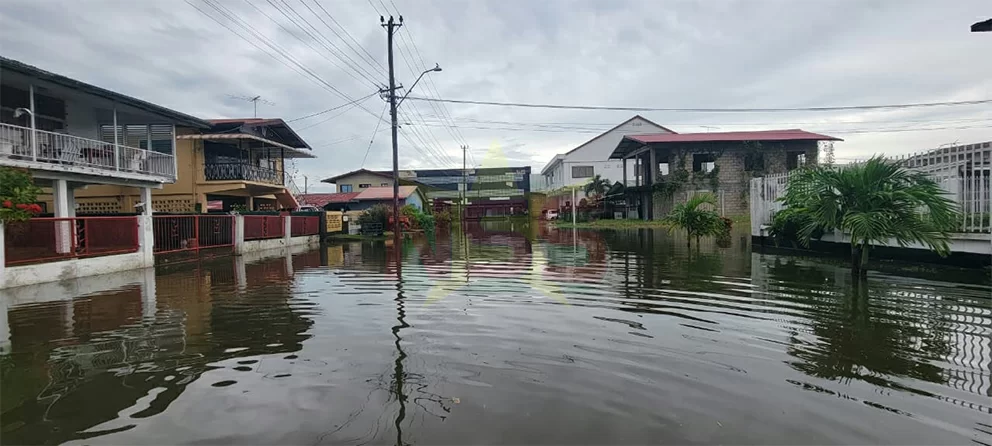
Unrelenting rain poured through the entire night and most of the preceding day, leaving widespread street flooding that trapped thousands of residents in their homes, keeping them from traveling to visit their mothers for the holiday. Floodwaters reached knee-deep across residential neighborhoods, carrying a toxic slurry of casually discarded waste: plastic water bottles, splintered wood, food containers, aluminum beer cans, and all the everyday trash that communities so often dispose of carelessly. Drone footage captured the stark transformation clearly: where smooth asphalt once ran, murky brown floodwater now stretched as far as the eye could see, erasing the line between public streets and local canals in the northern part of the country.
While local residents could only watch helplessly as floodwaters climbed, swallowing up yards and creeping into ground floors of homes, many local mothers who had spent days preparing small Mother’s Day ventures saw their hard work wash away alongside the flood. Bakers spent hours baking cakes and pastries to sell for the holiday, craft workers assembled handmade goods, and small vendors set up pop-up stalls along popular routes, all hoping to earn a little extra income for their own families. The rare potted plants that survived the deluge along Tourtonnelaan were the exception; most flower arrangements were completely submerged, turning the entire investment into a total failure. And even those vendors who managed to save their stock saw no customers, as flooding kept potential buyers trapped at home.
This juxtaposition of empty celebratory rhetoric and harsh reality stretches far beyond the flooded streets of the Netherlands, however. Across the globe, millions of mothers face systemic violence, poverty, and conflict that make a celebratory Mother’s Day unthinkable.
In Sudan, mothers and children are slowly dying from widespread starvation as conflict devastates food systems. In Gaza and Ukraine, mothers and daughters are killed in indiscriminate rocket and airstrikes. In war zones around the world, sexual violence against mothers and children is used as a deliberate weapon of war, targeting those who are most vulnerable. These are not abstract statistics: they are daily realities for millions of women who hold the role of mother.
Can a mother trapped in besieged Gaza spare a thought for the commercialized celebration of Mother’s Day? Can a child who lost their mother in a bombing in Ukraine stop to plan a tribute to the parent they have buried? Can a mother in Pakistan who lost her son to a terrorist attack find any joy in a holiday celebrating maternal bonds? Do women living through unending civil war in Syria even allow themselves to dream of a quiet, safe day of celebration? And on Mother’s Day itself, how many mothers around the world still face the terror of domestic abuse behind closed doors?
The answer is that all these realities are happening at the same time, right this second. While families in relatively safe, wealthy regions ate cake and watched floodwaters carry away ruined flower displays, other mothers across the globe were being buried, assaulted, or simply abandoned by the international community.
Mother’s Day is a beautiful tradition for those fortunate enough to be able to set aside the world’s harsh problems for 24 hours. But it is a mistake to pretend that a single day of flattering rhetoric and social media posts can fix the deep inequities that leave the most vulnerable mothers behind. The mothers who need the most support, a shoulder to lean on, and systemic change are rarely the ones who get flowery public tributes from politicians.
Instead, they get floodwaters that destroy their livelihoods, silence from global leaders, or nothing at all. That is not a celebration of motherhood. That is the unvarnished reality of how the world actually works. It is worth pausing to reflect on this truth before posting another polished, perfect tribute to motherhood online.