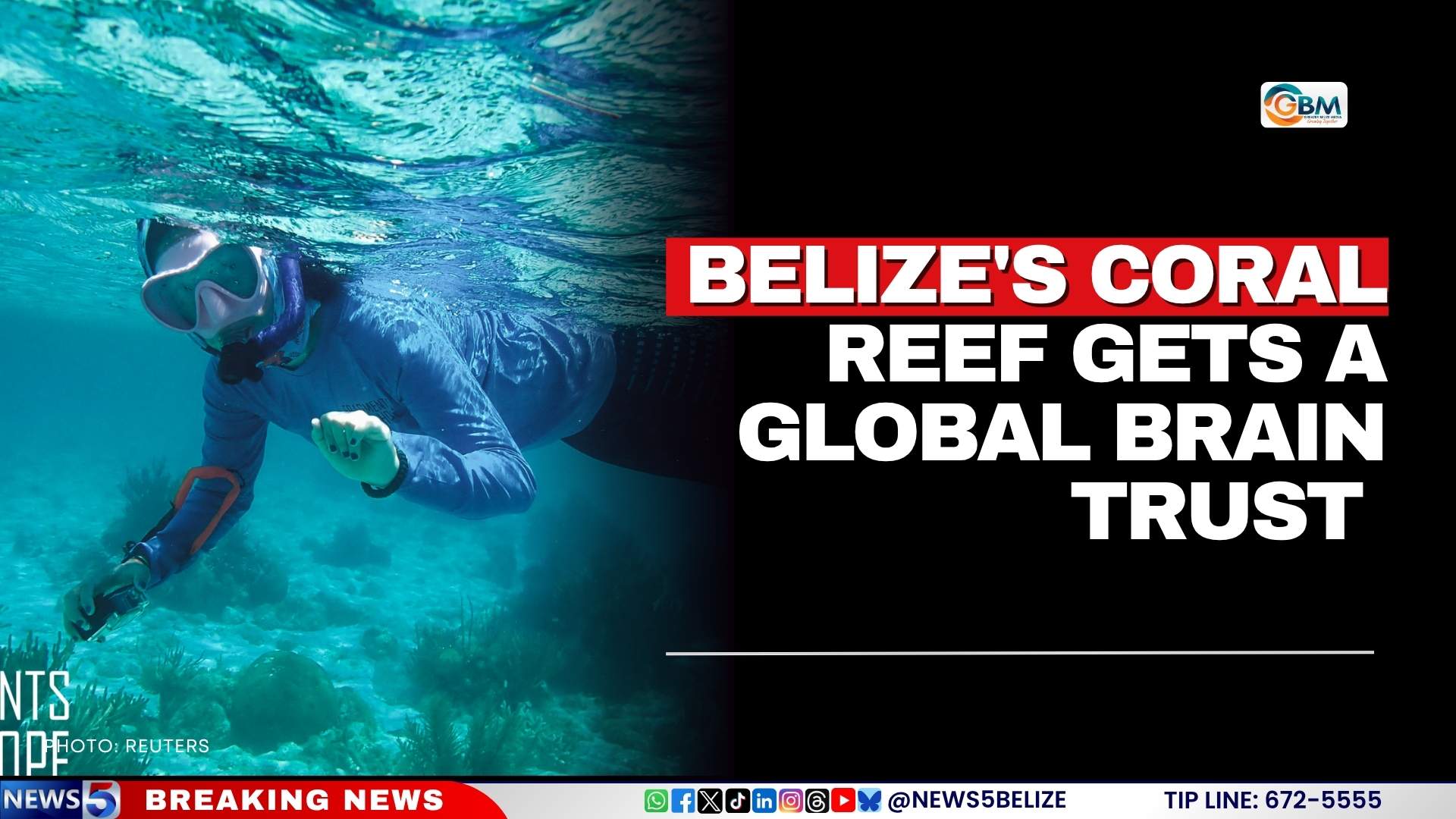
On May 9, 2026, a landmark milestone was reached for coral conservation in Belize, as a small community-based non-profit from Placencia brought together a global network of leading marine scientists for one of the most ambitious coral science collaborations the Central American nation has ever hosted.
Fragments of Hope, an organization that has quietly worked on reef restoration along Belize’s coastlines since 2006, organized the international workshop under the umbrella of the COR-POP initiative. The gathering drew researchers from top scientific institutions across four countries, including Germany’s Alfred Wegener Institute, the University of Miami, the Smithsonian Institution, Boston University, Tufts University, the University of Belize, and Scripps Institution of Oceanography at UC San Diego, all of which have signed on as official project collaborators.
The workshop also included official participation from three of Belize’s key government bodies: the Ministry of Blue Economy and Marine Conservation, the Belize Fisheries Department, and the Blue Bond and Finance Permanence Unit, marking widespread public and private support for the project.
The core mission of COR-POP is to develop an accessible, data-driven management system that empowers local reef conservation teams to make smarter restoration decisions. The framework will guide managers on which coral strains to cultivate, where to outplant new colonies, and how to maintain the genetic diversity needed for corals to survive rising ocean temperatures linked to climate change. A defining feature of the project is that all tools and data produced will be open-source, specifically designed to be usable by low-resource community conservation programs that often lack access to cutting-edge research and technology.
COR-POP receives funding from CORDAP, the G20’s dedicated research and development platform focused on global coral preservation, a reflection of the international community’s recognition of Belize’s critical role in Caribbean reef conservation.
The stakes of this work could not be higher, as climate change-driven coral bleaching continues to threaten reef ecosystems across the globe. But Fragments of Hope already has a proven track record of success: during recent mass bleaching events, just 4% of corals restored by the organization died, compared to a 31% mortality rate recorded in nearby natural, unassisted reef stands. This tangible success story was a key factor that supported Belize’s removal from UNESCO’s List of World Heritage in Danger back in 2018, when the country’s barrier reef system was recognized for major conservation gains.
For local conservation leaders, the international workshop marks a new chapter, turning years of community-based on-the-ground work into a scalable model that could benefit reef restoration efforts across the globe.