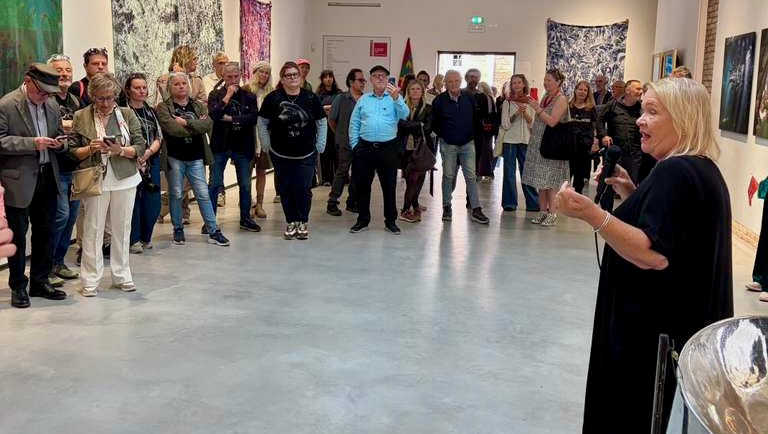
As Grenada prepares to take part in its ninth consecutive edition of the 61st Venice Biennale, Dr. Susan Mains, commissioner of the Grenada Pavilion, opens up about the journey, the milestone, and a groundbreaking new direction for the small island nation’s presence at one of the world’s most prestigious international art events. For Mains, this participation is far more than a symbolic exhibition slot—it is a years-long strategic effort to build cross-border connections with Italy and the global arts community, strengthening the cultural and creative capacity of a small island developing state. Backed by official endorsement and support from Grenada’s Minister of Culture, the project has steadily grown into the transformative initiative it represents today.
Nine consecutive participations are more than a numerical milestone: they stand for unbroken continuity, steady growth, and a continuously evolving artistic vision for the Grenada Pavilion. Over decades of engagement with the Biennale, the curatorial and leadership team has come to a core realization: Grenada’s cultural narrative does not exist in isolation. It is deeply interwoven with the shared histories, natural rhythms, and collective aspirations of all Caribbean neighboring nations. In line with this understanding, the 2026 pavilion will mark a deliberate, transformative shift in its mission.
Moving forward, the Grenada Pavilion will expand its scope to embrace the entire Caribbean region, reimagining the Caribbean Sea not as a dividing barrier between islands, as it was often framed in colonial histories, but as a unifying connector that ties communities together—echoing the cross-island networks of the indigenous Kalinago people who navigated these waters for centuries. What was once a platform solely for Grenadian artistic voices will now open its doors to collaborative work, shared storytelling, and celebration of the extraordinary cultural diversity that defines the Caribbean. From the tiniest micro-island to the region’s largest sovereign nations, every artistic voice carries a unique cadence, and together they form a cohesive, powerful chorus that demands global attention. For this year’s edition, artists from across the region have joined the roster: Russell Watson of Barbados, Edward Bowen of Trinidad, and Grenadian artists Lilo Nido, Christ Mast, Jeverson Ramirez, and Arthur Daniel round out the list of contributors, each adding their unique perspective to deepen and enrich the collective narrative.
The thematic core of the pavilion is anchored in research and writing by Asher Mains, MFA, who draws heavily on the work of Edouard Glissant, the iconic Martinican philosopher and writer whose thought was shaped by his dual experience of Caribbean lived reality and French intellectual tradition. This layered history—rooted in Indigenous Caribbean heritage, shaped by European colonialism, and enriched by the forced migration of African peoples and the arrival of Southeast Asian communities—has created a dynamic cultural synthesis that makes the Caribbean a global hotbed of creative innovation and cultural richness, a legacy the pavilion seeks to center.
Mains emphasizes that this collaborative model is not rooted in competition, a core value that sets the pan-Caribbean project apart from the often individualistic, comparative framing of national pavilions. The goal is not to outperform other participating nations or artists, but to stand in solidarity: to lift each other up, exchange knowledge, learn from one another, and celebrate shared cultural heritage. The region’s strength, Mains argues, does not come from outcompeting one another, but from deep connection. When one Caribbean story is told, it resonates across every island and coastline of the region, and it belongs to all. This year’s Biennale marks a historic turning point for Caribbean art: alongside the reimagined Grenada Pavilion, national pavilions will also be hosted by The Bahamas, Haiti, and Cuba, while dozens of additional Caribbean artists are featured in the central Biennale exhibition curated by Koyo Kouoh. Mains notes that Kouoh’s inclusion of Caribbean creators in her *Minor Keys* curatorial framework has brought unexpected, graceful new layers to the central exhibition, highlighting the underrecognized power of the region’s artistic output.
The Grenada Pavilion’s evolution has been shaped over multiple Biennale cycles by its long-running collaboration with curator Daniel Radini Tedeschi and his team, who have helped turn the project’s long-held aspirations into reality. Every sponsor and supporter that has backed the initiative has aligned with its core vision: a world built on peace, where art acts as a harbinger of greater connection and collective understanding.
For Mains, serving as commissioner for this milestone participation is both a profound honor and a weighty responsibility. Moving forward, the Grenada Pavilion proceeds with clear intention, radical unity, and an unshakable belief in the power of collective artistic presence. While Grenada walks into this 9th participation with well-earned national pride, its greatest defining feature moving forward is radical openness: the pavilion is no longer a solo national venture, but a core part of a vibrant, united Caribbean artistic family. Together, the region’s artists move forward, together—forward ever.