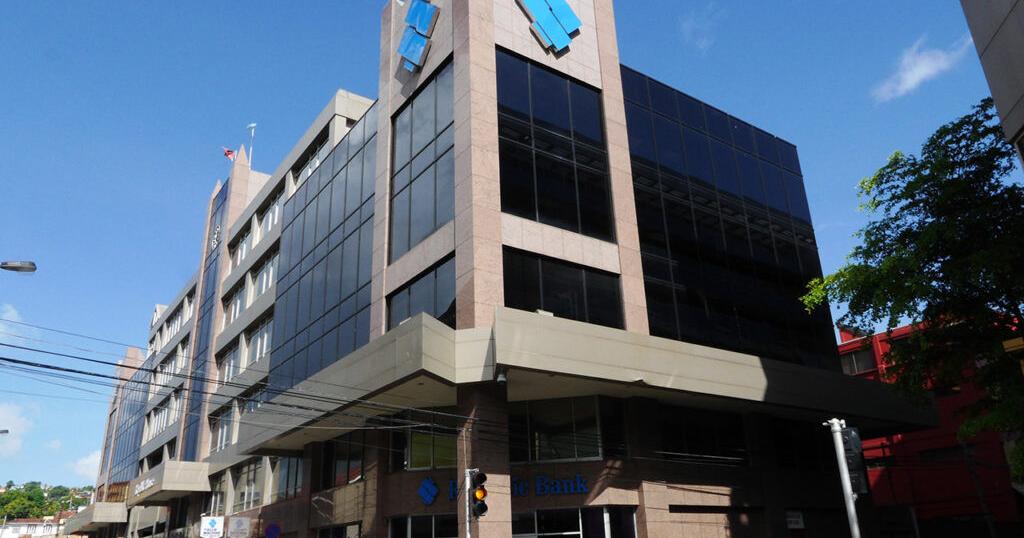
Trinidad and Tobago’s largest commercial lender, Republic Bank Limited (RBL), has halted its planned broad fee increases scheduled to take effect May 1, pulling the updated fee schedule from its official website just days after widespread public and industry backlash over the changes. The decision to pause the rollout comes 24 hours after Central Bank Governor Larry Howai confirmed that the banking regulator was in active discussions with RBL to strike a fair balance between the institution’s revenue needs and the affordability of banking services for everyday consumers and businesses.
Last month, the bank unveiled a sweeping slate of fee adjustments affecting nearly every core banking service, ranging from routine day-to-day transactions to penalty charges for account mismanagement. The most notable proposed increases included a jump in non-sufficient funds (NSF) fees from $34.50 to $57.50, an identical hike to overdraft fees, and a doubling of some late loan payment penalties to a maximum of $100. Additional changes raised charges for paper-based services including cheque books, manager’s cheques and foreign currency drafts, a move the bank framed as an incentive to push customers toward cheaper digital banking platforms. New or adjusted debit transaction fees were also set to roll out across multiple popular account types, with the bank clarifying that only in-branch teller transactions would face the new charges — no increases were planned for ATM transfers, ACH transactions, online and mobile banking, or point-of-sale card payments.
In a public advertisement printed in national newspapers on the day of the pause announcement, RBL acknowledged that it had received widespread customer feedback and concerns about the planned changes. “At Republic Bank, we’ve been listening closely to the conversations and feedback regarding our updated service fees. We understand that any change to your banking costs causes concern, and we’ve noticed there has been some confusion about what these changes actually mean for you,” the bank’s statement read.
Citing customer input as the core driver of the pause, the bank confirmed: “Because we value your feedback, we have decided to pause the fee increases originally set for May 1, 2026 (notice of which was given on April 1, 2026). We will share the new implementation dates with you soon. We want to take this time to clear the air and ensure you have all the facts.” The bank added that its ultimate goal remains making banking “convenient, safe and—most importantly—affordable” for all account holders, and noted that the 90-day pause will give branch teams time to meet directly with customers, clarify misinformation, and help users identify the lowest-cost banking options for their needs.
In explaining the original rationale for higher paper service fees, RBL noted that fewer than 5% of its active customers regularly use cheques, and maintaining legacy paper-based banking systems creates significant unnecessary costs for the institution. “The world is moving away from paper cheques because digital payments are faster, safer, and much cheaper for you. While we need to recover some of those costs, our main goal is to help your transition to the free or lower-cost ‘anytime, anywhere’ digital options that save you a trip to the bank,” the bank’s original statement read.
As of the pause announcement, attempts by media to reach Republic Financial Holdings Ltd (RFHL) President Nigel Baptiste and Vice-President Karen Yip Chuck for additional comment were unsuccessful.
The Central Bank’s engagement with RBL began earlier this week, after customers and industry groups raised widespread alarms about the fee hikes. Speaking to reporters Wednesday following the inaugural FINLIT Live 2026 financial literacy event in Macoya, Howai confirmed that ongoing negotiations were focused on finding a balanced outcome. “I’m sure there are ways in which we would be able to find some kind of a balance between their need to ensure that they are properly compensated for the services that they offer and the cost that is passed on to the consumers,” Howai told reporters.
The governor explained that while the Central Bank lacks legislative authority to issue fines for routine bank price increases, it can push for revisions to fee structures that are deemed excessive or poorly communicated. “What we will do is engage with the banks, and the banks do listen to us and they do respond to us, and I am sure that going forward on the whole issue of fees that we will have a regime that customers will be comfortable with,” he said. Howai added that the core questions under discussion remain whether fee levels are justifiable, communicated clearly, and deliver fair value to consumers.
Since RBL first announced the fee changes on April 28, leadership of business chambers across the country have publicly voiced opposition to the plan, highlighting the disproportionate harm the higher fees would inflict on small and medium-sized enterprises, service sector businesses, and low-income households. While industry groups acknowledged the Central Bank’s intervention and RBL’s stated reasoning for the changes, they have raised ongoing questions about the fairness of the proposed fee structure amid the bank’s strong recent financial performance.
Financial filings show that RBL recorded a net profit of $1.07 billion for the first half of its 2026 fiscal year, which ended March 31. That figure represents a 5.4% increase ($54 million) compared to the $1.01 billion profit the bank posted in the same six-month period in 2025.