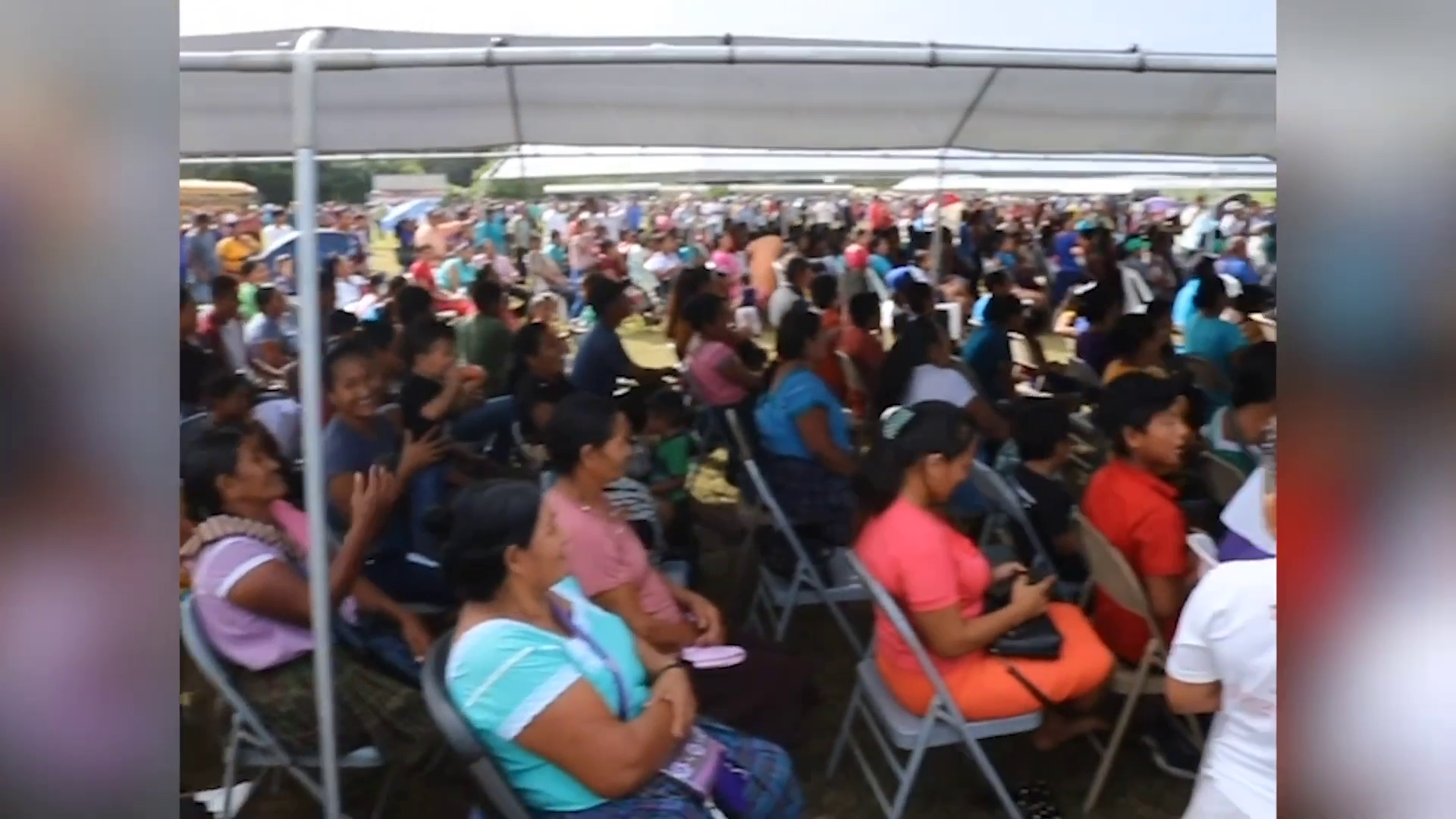
A months-long simmering land conflict between Maya residents of San Marcos Village in southern Belize’s Toledo District and a private landowner has taken a major step toward resolution, following a productive high-level negotiation hosted by the national government this week. The small community, which counts just under 1,000 residents deeply rooted in centuries-old Maya cultural heritage, has been locked in a standoff over a section of land that villagers argue falls within their traditional communal territory. The dispute is not an isolated incident: it reflects a decades-long, widespread struggle for formal recognition of Indigenous land rights across southern Belize that has risen in urgency in recent months, with tensions threatening to escalate into open conflict prior to this week’s talks.
On Wednesday, May 6, 2026, Belize’s Minister of Indigenous People’s Affairs Dr. Louis Zabaneh convened stakeholders at his ministry’s headquarters in Belmopan, bringing together elected leaders from San Marcos, representatives of the Toledo Alcalde Alliance (TAA) and the Maya Leaders Alliance (MLA), and legal representatives for the private landowner involved in the conflict. The meeting concluded with a binding, multi-step agreement designed to de-escalate tensions and establish a clear, formal process to resolve the boundary dispute. The core of the agreement commits both sides to a three-week waiting period during which technical surveyors from Belize’s Ministry of Natural Resources will conduct an independent on-the-ground assessment to map and formally demarcate the exact contested area. Dr. Zabaneh noted that both sides had agreed to abide by the initial survey result as a foundation for further negotiations. The agreement also comes as the government launches a long-promised formal review of national land rights legislation for Maya communities.
Just two days before the San Marcos meeting, Dr. Zabaneh confirmed, the first convening of the cross-sectoral land rights review panel took place. The panel is structured to ensure equal representation: two government appointees will work alongside two leaders selected directly by the Maya leadership to review draft legislation addressing communal land title claims. Once the panel finalizes its revisions, the draft will advance to a Cabinet subcommittee before being introduced to the House of Representatives for a full vote. Dr. Zabaneh emphasized that this formal legislative process is the only legitimate path to securing formal land rights, and called on all stakeholders to avoid unilateral action or premature claims of absolute ownership while the process moves forward. The MLA has scheduled a community meeting with San Marcos residents this coming Friday to walk through the details of the new agreement and answer resident questions, with further updates expected after that gathering.
Beyond the San Marcos breakthrough, Dr. Zabaneh addressed two other pressing controversial cases involving Indigenous community leadership in southern Belize during the same press briefing. The first is an alleged abduction of Marcos Canti, First Alcalde of the Indian Creek community, which occurred three weeks prior to the briefing. To date, no definitive official report or update on the incident has been released to the public, leaving many unanswered questions about what transpired, and whether a formal police report was ever filed. Dr. Zabaneh acknowledged that the lack of information has fueled widespread public uncertainty and even skepticism within government, noting that the ministry has formally requested an update from Minister of Home Affairs Kareem Musa, who is working with the Belize Police Department commissioner to conclude the ongoing investigation. The ministry expects a full public report will be released as soon as the probe is complete.
The second open case involves a viral video that purportedly shows a sitting village alcalde from another southern Belize community committing a violent assault against a resident of his community. Dr. Zabaneh confirmed that the Office of Indigenous People’s Affairs has launched a formal investigation into the incident, and ministry staff will travel to the community in the coming days to conduct on-the-ground interviews and gather evidence. The minister stressed that the government maintains a zero-tolerance policy for all forms of violence in Indigenous communities, regardless of the underlying context of the conflict. “Violence can never be the answer to solve anything, regardless of what the circumstance may be,” Dr. Zabaneh told reporters. “As a country we cannot condone using violence for whatever, whether it is domestic violence or something going on in a village. Absolutely zero tolerance for that. We have to find a way to work and communicate with each other, and that is the way how we solve problems.” Local journalists will continue to follow all three cases, and will publish full updates as new information becomes available.