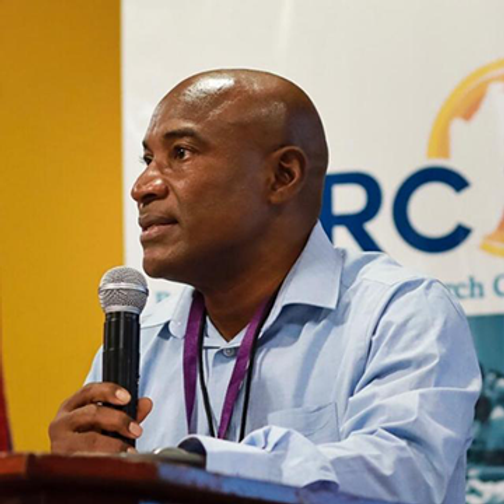
As the United States gears up to implement a 10 percent import surcharge via World Trade Organization (WTO) channels, a prominent Belizean economist is sounding the alarm over the disproportionate harm this measure could inflict on small, trade-dependent economies across the Caribbean, calling for coordinated collective action from the Caribbean Community (CARICOM) bloc.
Dr. Phillip Castillo, a local economic expert, has pushed back against the core justification the US has offered for the new tariff: addressing persistent balance-of-payments deficits. Castillo argues that this rationale falls apart when considering the unparalleled global dominance of the US dollar, which puts Washington in a unique position to avoid the kinds of balance-of-payment crises that plague smaller nations. In an exclusive interview with The Reporter, he broke down the specific risks for Belize, noting that the Central American nation already runs a substantial trade deficit with the United States — importing far more American goods than it is able to export to the large North American market.
For Belize, whose export volume to the US is already limited, the new 10 percent surcharge would act as yet another prohibitive trade barrier, further squeezing domestic producers’ access to American consumers and worsening the country’s already lopsided trade balance. Beyond the immediate impact on Belize, Castillo emphasizes that the moment underscores a long-running need for stronger regional coordination among CARICOM member states. Small individual Caribbean nations lack the economic clout to negotiate effectively with major global powers like the United States, but a unified CARICOM bloc would carry far more leverage to push back against harmful trade measures, he explained.
Castillo also questioned the broader credibility of the US’s decision to seek WTO approval for the surcharge, pointing out that Washington has a recent history of imposing unilateral tariffs on dozens of countries without going through the WTO’s multilateral dispute and approval process. The current formal application to the global trade body, he suggested, looks less like a commitment to multilateral process and more like an attempt to retroactively grant international legitimacy to a trade policy that fits a pattern of unilateral American action.
The US formally notified the WTO of its plan to impose the 10 percent surcharge earlier this year, invoking Section 122 of the 1974 US Trade Act to back its claim that the measure is necessary to correct balance-of-payments imbalances. WTO members are scheduled to begin formal consultations with Washington on the proposal in the coming weeks, a process Castillo says is not without opportunity for small economies. Even with the odds stacked against them, the multilateral consultation process creates a formal space for smaller nations to collectively air their opposition and potentially shift American trade policy before the surcharge is implemented, he noted.
Still, Castillo warned that if the US moves forward with the measure despite global pushback, the global trading system will face deeper disruptions, with the worst fallout falling on vulnerable small economies like Belize that lack the economic size and diversification to absorb external trade shocks. The proposed surcharge comes at a particularly fragile moment for the global economy, which is already grappling with skyrocketing oil prices tied to escalating geopolitical tensions between the US, Israel and Iran, as well as lingering unresolved tariff disputes and persistent supply chain disruptions that have left global growth already teetering.