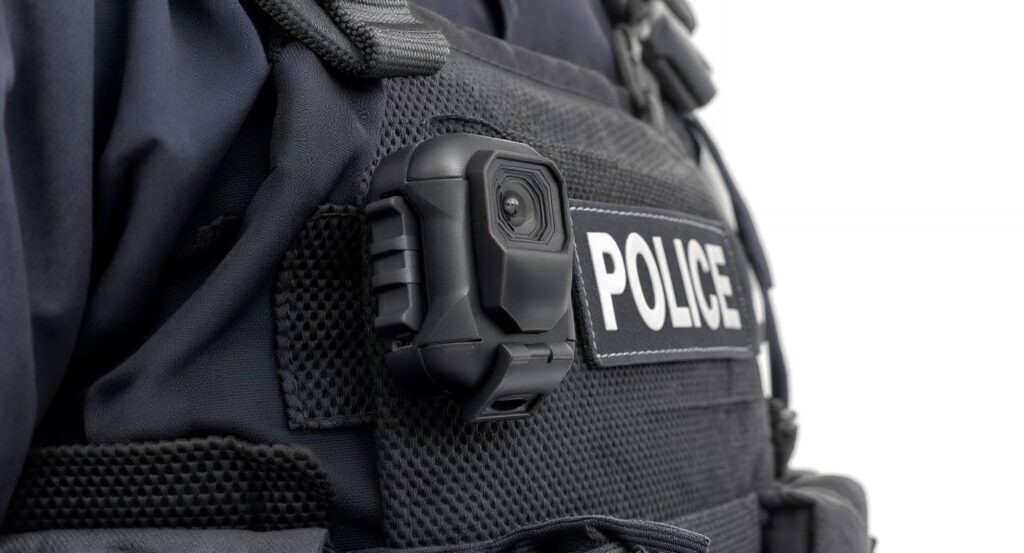
KINGSTON, Jamaica — Two major Jamaican church coalitions have ramped up pressure on the Andrew Holness administration to outline a definitive national stance and binding implementation timeline for equipping police officers with body-worn cameras, amid growing public friction over inconsistent official statements and a persistent high rate of fatal police shootings.
In a joint public statement released Friday, the Jamaica Umbrella Groups of Churches (JUGC) and the Watchman Church Leaders Alliance (WCLA) are not only pushing for policy clarity but also calling for a broad, inclusive national roundtable. The proposed dialogue would bring together key stakeholders spanning civil society organizations, the Independent Commission of Investigation (INDECOM) — Jamaica’s independent police oversight body — religious leadership, the Ministry of National Security, and senior command of the Jamaica Constabulary Force (JCF) to tackle the urgent issue of deadly police use of force.
The coalition pointed out that the current conflicting public positions from top government officials have created crippling policy ambiguity that erodes public confidence in national security. Specifically, the groups highlighted the open divergence between Prime Minister Andrew Holness and National Security Minister Horace Chang on the value and deployment of body-worn cameras. Holness has repeatedly stated publicly that his government is committed to rolling out the surveillance devices to frontline officers. But Chang has consistently pushed back against the policy, voicing repeated skepticism over more than two years.
Chang first questioned the utility of body-worn cameras during a post-Cabinet media briefing in November 2024, arguing that the devices offer minimal value in the context of fatal police shootings. He claimed at the time that officers engaged in gunfire would prioritize taking cover, making it unlikely the cameras would capture clear, usable footage. In an April 2026 post-Cabinet update, Chang doubled down on his criticism, questioning the practicality of deploying cameras during confrontations with heavily armed criminal gangs and repeating concerns that the devices could put officers at greater risk. He also argued that persistent public demands for body-worn cameras reinforce widespread public mistrust of the JCF.
In his most recent public comments on the issue, reported this week, Chang added a new objection: claiming that the design of standard police uniforms creates an inherent physical barrier to mounting and using body cameras effectively. He also noted that other systemic reforms are needed to improve policing beyond the introduction of body-worn devices.
The church coalitions said they do not disagree that additional reforms are necessary to strengthen Jamaican policing. It is precisely because multiple improvements are needed, they argue, that body-worn cameras should be implemented as a core measure to boost both accountability and officer protection.
The groups emphasized that they recognize the extraordinary occupational pressure and safety risks that Jamaica’s police officers face amid high rates of violent crime and gang activity. Even so, they maintain that greater transparency through mandatory body camera use does not undermine effective law enforcement — instead, it strengthens it. They pointed to the country’s persistently high number of fatal police shootings as evidence that more, not less, independent oversight is needed to rebuild public confidence.
“Where operations lack clarity, suspicion replaces trust, and the divide widens,” the groups wrote in their joint statement, warning that continued policy inaction will only deepen the rift between law enforcement and the communities they serve.