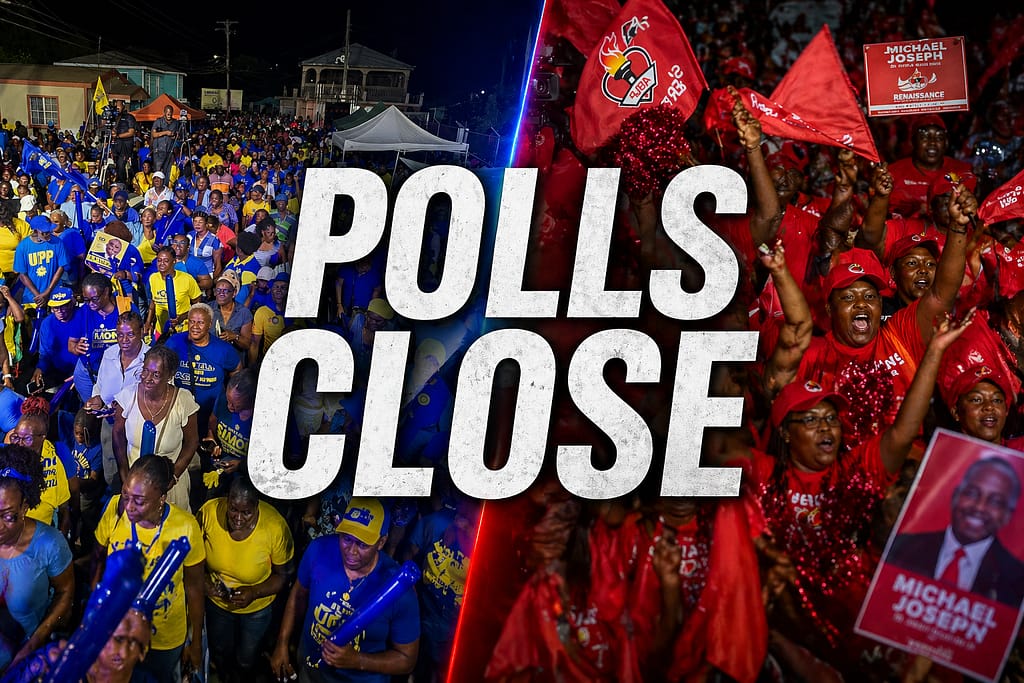
After a full day of orderly, widely praised balloting, polls have officially closed across Antigua and Barbuda in one of the Caribbean nation’s most closely watched general elections in recent history. The outcome of the vote will decide whether incumbent Prime Minister Gaston Browne makes history by securing an unprecedented fourth consecutive term leading the country.
Voting operations kicked off precisely at 6 a.m. local time and wrapped up at 6 p.m., with election authorities confirming that any voter already waiting in queue before the closing deadline would still be permitted to cast their ballot. Now, all cast ballots are being secured ahead of transport to centralized counting centers, where official tabulation will get underway. Preliminary results are expected to trickle in overnight, with a final official projection likely by Friday morning.
Across the nation’s 17 electoral constituencies, voters faced a diverse field of candidates. The main contest pits Browne’s ruling Antigua and Barbuda Labour Party (ABLP) against the opposition United Progressive Party (UPP) led by Jamale Pringle, alongside one candidate from the Barbuda People’s Movement (BPM) and three independent hopefuls.
Election day unfolded without major incident, with organizers and voters alike describing the process as exceptionally smooth and efficient. Early morning saw strong voter turnout across multiple districts, while lines remained short for most of the day — an intentional improvement driven by the addition of new polling stations to streamline voter flow and reduce wait times.
Independent election observer missions from leading regional and global bodies, including the Commonwealth, the Caribbean Community (CARICOM), and the Organization of American States (OAS), have issued initial positive assessments, confirming that the election was conducted in a free, fair and transparent manner, with no significant disruptive events reported.
Throughout the weeks-long campaign season, the election was framed as a clear national choice between continuity and change. Browne, who is vying to break modern political records for the longest consecutive premiership in Antigua and Barbuda, centered his campaign on his administration’s track record of strong economic growth, large-scale infrastructure development, and what he termed a national “renaissance.” He argued that retaining his leadership is critical to sustaining the nation’s upward trajectory and raising living standards for all residents.
In contrast, opposition leader Pringle cast the 2024 election as a critical opportunity for change after more than 10 years of ABLP incumbency. He centered his platform on addressing voter concerns over skyrocketing cost of living, unaddressed infrastructure gaps, alleged governance shortcomings, and widespread public dissatisfaction among key demographic groups of the electorate.
Key policy issues that dominated campaign discourse included rising household living costs, persistent national water supply challenges, poor road conditions, growing crime rates, overall economic management, and international relations. The two major parties also put forward competing plans on public sector wages, tax policy, and expanded social support programs for vulnerable communities.
On election day, both major parties publicly expressed confidence in their prospects, with candidates and party operatives reporting steady turnout in their traditional political strongholds. Election officials, backed by uniformed security personnel and accredited party agents at every polling location, maintained consistent order across all sites. The Antigua and Barbuda Electoral Commission also rolled out expanded access measures, including the additional polling stations and on-site voter ID support, to remove barriers to citizen participation.
As counting teams prepare to work through the night to tabulate results, all national and regional attention now shifts to the incoming outcome. The final results will not only determine the makeup of the nation’s next parliament, but also set the policy direction of Antigua and Barbuda for the coming five-year term.