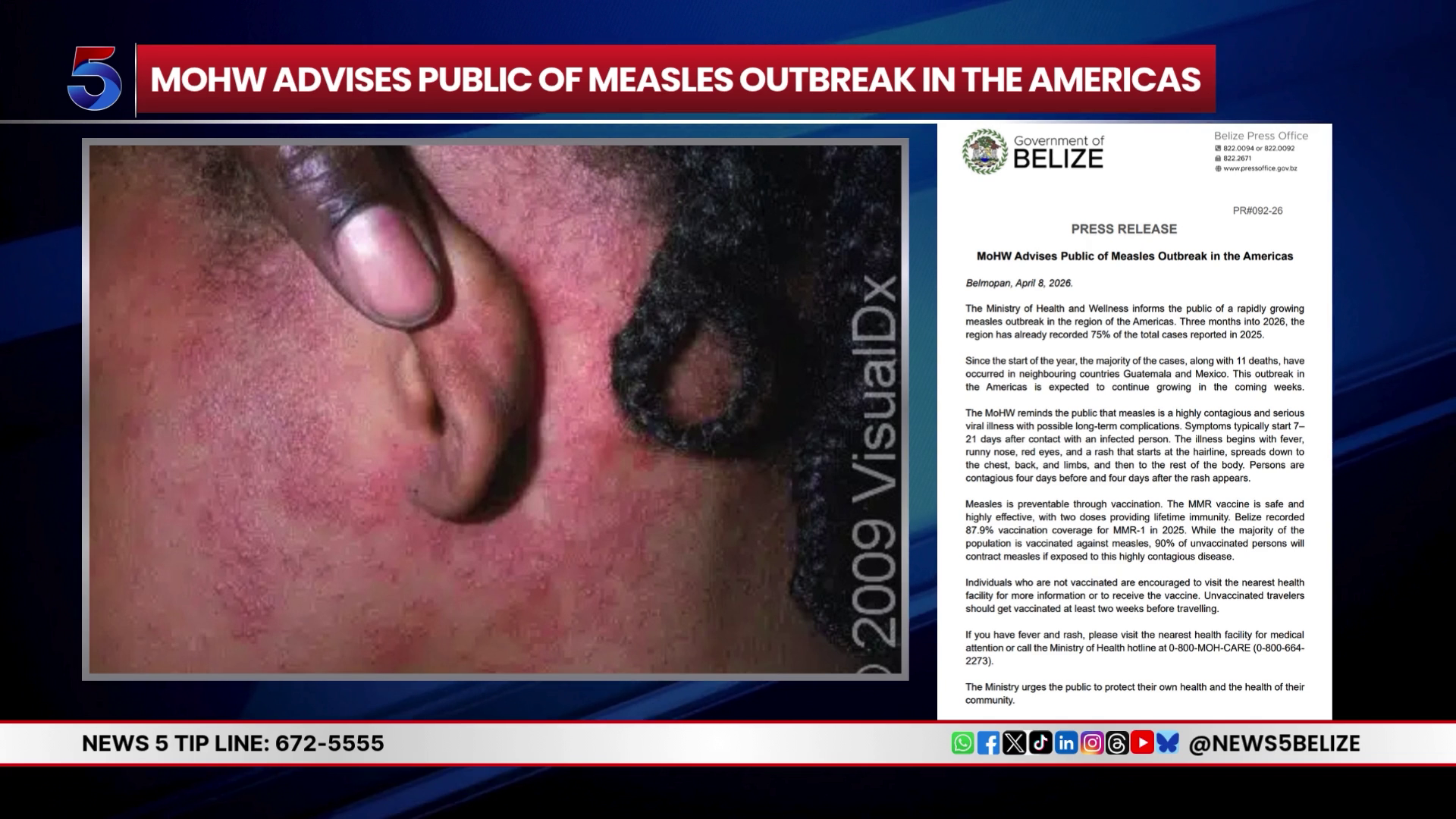
In a public health update released on April 29, 2026, Belize’s Ministry of Health and Wellness has confirmed an imported case of measles in the southern district town of Punta Gorda, linked to recent international travel from neighboring Guatemala. The case, first detected by local health teams last Friday, marks the latest documented measles exposure in the country, following a small handful of cases recorded over the past 12 months.
Dr. Laura Friesen, Acting Deputy Director of the MOHW, shared detailed insights into the public health response to the incident, noting that the infected individual has already been identified, placed under isolation per public health guidelines, and is currently in stable condition with improving symptoms. “The patient has followed all required quarantine and isolation protocols, and is doing well,” Friesen explained in an interview.
To stop potential secondary transmission of the highly contagious viral illness, public health teams have launched an aggressive ring vaccination campaign across Punta Gorda, the town where the patient resides. This targeted strategy involves prioritizing vaccination for all non-immune individuals who may have come into close contact with the infected person, alongside broader outreach to encourage unvaccinated community members to access immunization services. Friesen emphasized that the campaign represents a large-scale, coordinated effort to protect local residents, given that measles is one of the most contagious airborne viral infections and can cause severe complications, particularly in unvaccinated children and immunocompromised people.
Friesen went on to outline Belize’s routine national childhood vaccination schedule for measles, which provides the first dose of the highly effective MMR (measles, mumps, rubella) vaccine to children at 12 months of age, with a required second booster dose administered at 18 months. For adults and children older than 18 months who have never completed the recommended vaccine series, she advised that two doses spaced one month apart are sufficient to build full immunity.
Describing measles as a “miserable illness” that carries avoidable health risks, Friesen issued a clear public appeal: any person who is unsure of their vaccination status, or who has never received a measles-containing vaccine, should contact their local public health facility immediately to schedule immunization. Health officials across the country have reiterated that measles is a fully preventable disease when the MMR vaccine is administered per the recommended guidelines, and that widespread vaccination remains the most effective tool to stop community outbreaks.