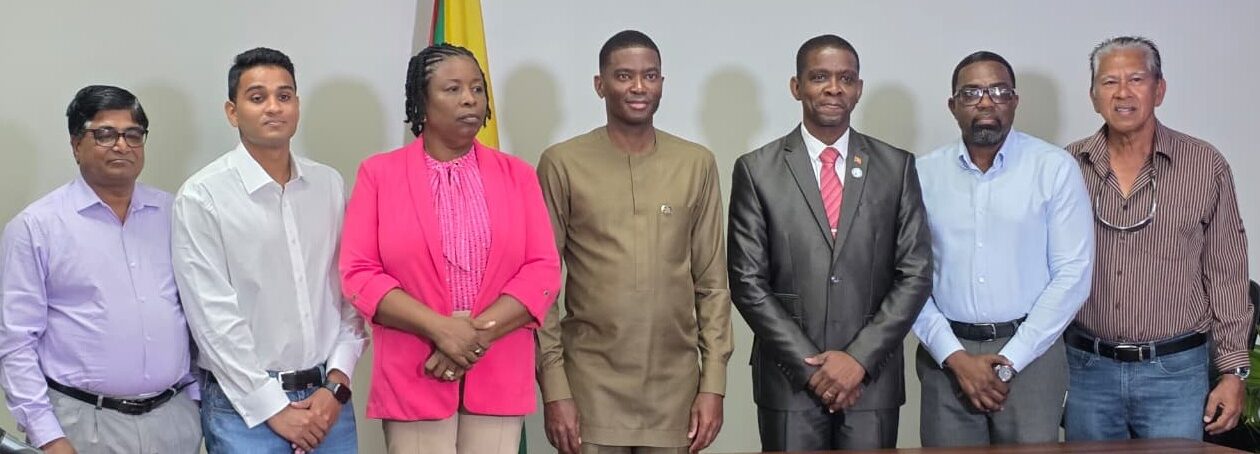
The Caribbean island nation of Grenada has officially entered a new delivery phase for its flagship disaster resilience infrastructure initiative, with the government inking three civil works contracts worth a combined total of EC$36.25 million to upgrade key at-risk assets. The formal signing ceremony, hosted at the Ministry of Infrastructure’s conference room, paves the way for on-the-ground construction work to launch within the next few months, bringing long-awaited flood and storm protection to vulnerable communities in the St Andrew region.
The contracted works fall under Component 1 of the national Grenada Resilience Improvement Project (GRIP), an overarching program designed to reinforce critical public infrastructure across the country against extreme weather and natural disasters. Two of the project’s three lots focus on coastal protection infrastructure along the Soubise coastline, while the third covers full reconstruction of the Balthazar Bridge, a key transportation link for the area.
Breaking down the awarded contracts, General Earth Movers Limited (GEML), a local Grenadian construction firm, secured two of the three tenders. The company will lead the EC$20.7 million reconstruction of the Balthazar Bridge, and also take on the EC$4.34 million first phase of Soubise coastal protection works. The second phase of Soubise’s coastal protection upgrades, which includes installation of rock and step revetments to stem coastal erosion, has been awarded to Construction & Industrial Equipment Limited (CIE) for a contract value of EC$11.21 million.
Alva Browne, Grenada’s Permanent Secretary for Infrastructure, signed the agreements on behalf of the Government of Grenada, with senior leadership representatives from GEML and CIE signing on behalf of their respective companies. The ceremony was attended by multiple high-ranking government officials, including Prime Minister Dickon Mitchell, who also serves as the country’s Minister for Infrastructure. Other dignitaries in attendance included Delma Thomas, Minister for Youth and Sports, Minister for Mental Health, Wellness and Religious Affairs, and Parliamentary Representative for St Andrew NorthWest, as well as David Andrew, Minister of Education and caretaker parliamentarian for St Andrew SouthEast.
In his remarks at the signing, Prime Minister Mitchell emphasized the critical public safety and economic importance of the GRIP initiative, noting that stronger disaster-resilient infrastructure will protect Grenadian communities from the growing impacts of climate change and extreme weather events. He also recognized the collaborative efforts of the Ministry of Mobilisation, Implementation and Transformation, the Ministry of Infrastructure, and the GRIP internal project management team for advancing the initiative from planning to the contract award and execution phase.
All contracted civil works are scheduled for completion within 13 months of the official signing date, meaning upgraded infrastructure is expected to be fully operational by mid-2027 if construction proceeds on schedule. The GRIP project is part of Grenada’s broader national strategy to build long-term climate resilience across its transport and coastal infrastructure sectors, as small island developing states continue to face disproportionate risks from climate-driven sea level rise and extreme storm activity.