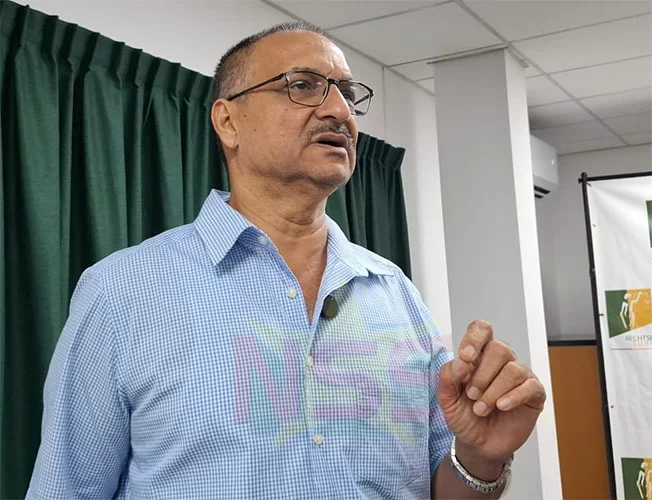
A long-simmering dispute between Suriname’s travel agent community and Dutch airline giant KLM has entered a critical new phase, after a Surinamese court handed down a binding timeline for negotiations over long-disputed agent commission rates. The dispute centers on demands from the Association of Surinamese Travel Agents (ASRA), which represents 17 industry members, for a meaningful increase to the commission KLM pays to agents for ticket sales. Currently set at a base 6%, ASRA board member Bhagwan Gangaram Panday told local outlet Starnieuws that this rate is no longer sufficient to cover agents’ rising operational costs. Worse, he added, in many cases actual payouts fall far lower, landing between just 2% and 3% of a given ticket’s total price.
The conflict moved into the legal system after KLM filed a summary proceedings lawsuit against the State of Suriname over the commission issue. On Monday, canton judge Suzanne Chu issued her ruling on the case, partially rejecting KLM’s claims and ordering all involved parties including ASRA to complete a full evaluation of the current commission policy within a 14-day window. Should the parties fail to meet this deadline, a daily fine of 50,000 Surinamese dollars will be imposed, capped at a total maximum of 2 million Surinamese dollars.
Gangaram Panday has made clear that ASRA intends to stand firm in its demands, and called on the Surinamese government to do the same, arguing that the state itself stands to gain directly from a stronger travel agent sector. “We will not back down on this demand, and we believe the government should stand with us,” he stated. “The State of Suriname collects tax revenue from travel industry operators and already provides regulatory and infrastructure support to the sector. The harder travel agents work to promote travel packages and draw international tourists to Suriname, the more revenue both the private sector and the state will earn.”
Gangaram Panday further emphasized that a viable, fairly compensated travel agent sector ripples benefits across the entire Surinamese tourism ecosystem. Every link of the tourism supply chain, from baggage handlers and taxi drivers to owners of rental apartments, eco-lodges and local restaurants, generates income from the tourist arrivals that travel agents help bring in. For this reason, he said, adjusting the commission rate upward to match current economic realities is not just a win for agents—it is a critical investment in the stability and growth of Suriname’s entire tourism industry.