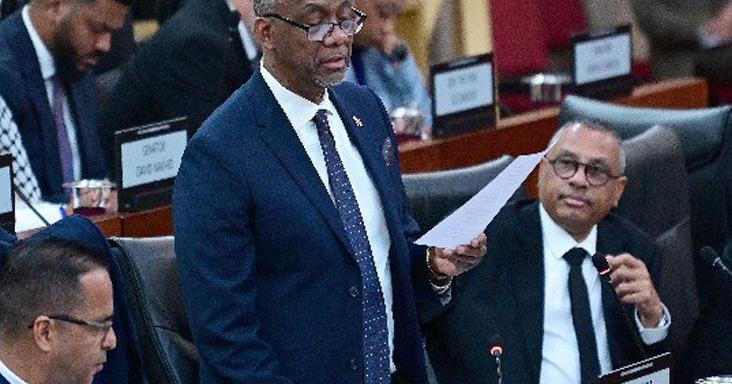
In a landmark move to update decades-old employment regulations, Trinidad and Tobago’s Labour Minister Leroy Baptiste introduced a transformative amendment bill to the Senate Wednesday that aims to rewrite the rulebook for retrenchment practices and strengthen safeguards for workers facing job loss.
The Retrenchment and Severance Benefits (Amendment) Bill 2026 brings a slate of sweeping changes, including stricter accountability requirements for employers, expanded worker protections, and a marked increase in the minimum severance payments companies must issue to laid-off staff. Baptiste outlined that every core stage of the retrenchment process — from initial layoff planning to final severance payout — will be restructured under the new framework.
One of the bill’s most financially impactful adjustments comes via Clause 16, which revises the tiered minimum severance payment structure to deliver higher compensation for displaced workers. For non-monthly paid (hourly, daily or weekly) workers with one to fewer than five years of service, the minimum payout rises to three weeks’ pay per year of employment, while monthly-rated workers in the same tenure bracket will receive one month’s pay per year. For workers with five or more years of service, non-monthly workers get four weeks’ pay per year for the first four years, jumping to six weeks’ pay per year for each year starting from the fifth. Monthly-rated workers in this longer tenure group will receive one and a quarter months’ pay per year for the first four years, increasing to one and three-quarter months per year from the fifth year onward.
Clause 9 of the bill introduces a formal, regulated framework for temporary layoffs, a provision missing from the current outdated law. The new rule caps unagreed temporary layoffs at 90 calendar days; if a worker remains off the job beyond this window, they are automatically classified as redundant starting on the 91st day, triggering the employer’s legal requirement to issue full severance benefits. The legislation does build in limited flexibility: employers can extend the 90-day period if they reach a written agreement with either a recognized majority union representing the worker or the affected employee directly.
Another key mandate comes via Clause 10, which requires mandatory consultation with recognized majority unions before employers can issue formal redundancy notices. The mandatory consultation period is capped at 21 days unless both parties agree to an extension, and the bill mandates that discussions must be “meaningful and genuine” covering six critical areas: the justifications for proposed layoffs, strategies to avoid or reduce the number of job cuts, criteria for selecting which workers will be terminated, measures to ease the impact on displaced staff, paid time off for job searching, and alternative arrangements such as redeployment, reduced working hours, or temporary layoffs. Employers are also required to disclose all relevant information to facilitate these talks, with a narrow exception for information that would cause material harm to the business if released.
Additional worker-focused provisions include Clause 12, which requires employers that fail to meet the new 45-day minimum notice period for layoffs to pay the equivalent of wages for the full missed notice period. Clause 13 enshrines a new right for workers facing redundancy to take reasonable paid time off to seek new employment. Clause 14 adds a rehiring preference mandate: if an employer looks to fill a role identical or substantially similar to one made redundant within the previous six months, they must prioritize offering the position to the previously retrenched worker, and are required to make reasonable efforts to notify former staff of the opening.
Addressing the Senate during debate on the legislation, Baptiste framed the bill as one of the most consequential overhauls to the nation’s labour legal framework in a generation, saying it carries profound social, economic and moral significance for working people across the country. The reform directly addresses the lived experiences of workers who have faced job displacement due to corporate restructuring, insolvency, receivership and business collapse, he added.
Baptiste also used the speech to criticize the previous People’s National Movement (PNM) administration, saying the public was misled into believing comprehensive labour reform was a top PNM priority, yet the update languished for years without decisive action. He noted that the existing retrenchment law has not been updated since 1985, calling the outdated framework one of the country’s “greatest injustices” against workers, pointing to the 2016 closure of ArcelorMittal as a glaring example of the law’s failures. That sudden shuttering displaced roughly 1,400 workers including contract staff, and laid bare the gaps in the country’s outdated employment protection rules, Baptiste said.