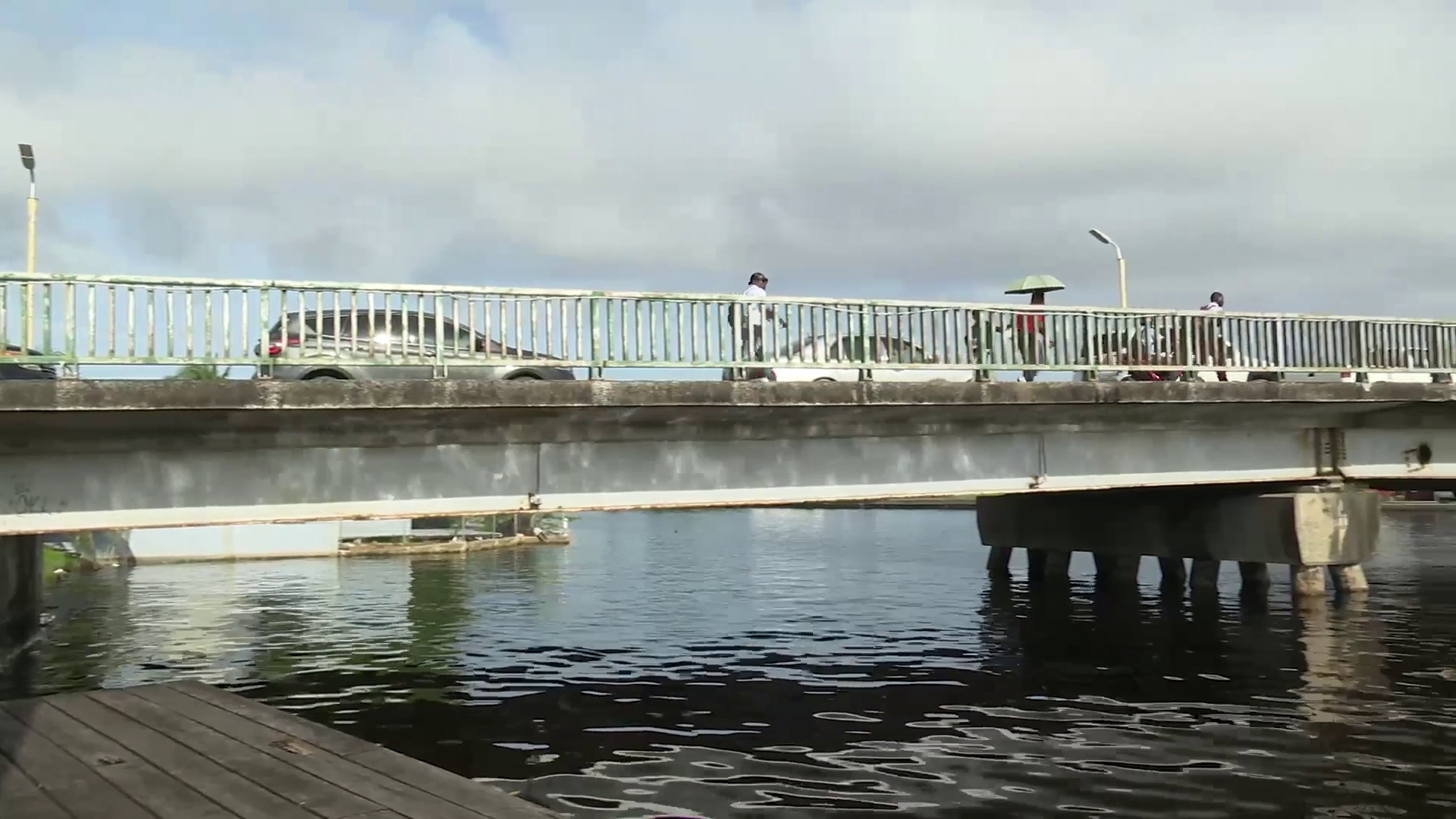
A long-awaited infrastructure project is advancing in Belize, but its ripple effects are creating uncertainty for dozens of small business owners and transport operators whose livelihoods depend on their high-traffic roadside locations. The Ministry of Infrastructure Development and Housing (MIDH) has moved forward with pre-construction preparations for the full replacement of the aging BelCan Bridge, a key crossing that serves daily commuter and commercial traffic across Haulover Creek. To avoid total gridlock in the city during the multi-year construction period, MIDH has planned the installation of a temporary bypass bridge, a solution that requires clearing a large stretch of public highway reserve for construction access and the new bridge route.
Chief Engineer Evondale Moody explained in an interview with local outlet News Five that the government has already finalized a construction contract with Cisco Construction Limited for the full bridge replacement project. The temporary structure will stretch from the Phillip Goldson Highway, across Haulover Creek, to Evergreen Street adjacent to the Belize Water Services (BWS) compound, utilizing vacant government-owned land behind Save U Supermarket for the northern approach. Work on both the temporary bridge and site preparation for the permanent new bridge is scheduled to kick off simultaneously on May 4, requiring the immediate relocation of all unauthorized businesses and operators parked on the public road reserve between the highway and Central American Boulevard.
“We need to hand the construction site over cleared to the contractor to keep the project on schedule,” Moody noted. “All taxi operators parked along the Phillip Goldson Highway reserve, as well as the car dealers operating on Central American Boulevard in front of Save U Supermarket, must vacate the area to make room for pre-construction layout work for the permanent bridge.”
The order to relocate by May 4 has split local operators, with many expressing deep concern over the threat to their income. At least five independent car dealers currently display their inventory on the targeted stretch of land, and multiple operators told reporters they have no alternative location to park their vehicles, putting their ability to attract walk-in customers at severe risk. Roadside food vendors and taxi dispatch operators who rely on the high-visibility location for daily business have also raised alarms that the move could cut off their core customer base.
Not all affected operators are pushing back against the order, however. Nelson Zayden, a car dealer who has operated at the site since 2017 and ran a business near the Hope Center for more than a decade before that, says he accepts the relocation as a necessary part of public development. “We got informal notice many months ago, and the official two-week deadline to move by May 4 is fine with me,” Zayden explained. “To be honest, we never had formal permission to be here anyway; the city council just let us set up. We’ll move, and we’ll adapt – we can shift more of our sales to online advertising to keep customers coming.”
One local staple, Tony’s Barbeque, will be able to keep most of its current location, but will still need to make adjustments. The popular food stand has operated near the existing overpass for years, but its overhanging storage shed currently blocks the planned pedestrian pathway that will connect users of the temporary bridge to the overpass stairs. The shed will need to be removed to clear the footpath, Moody confirmed.
The most consequential detail for many affected operators is that the relocation is expected to be permanent. Moody confirmed that once construction of the new permanent BelCan Bridge is completed in 2028, the area will not be open for the return of informal roadside businesses. MIDH has also confirmed it will provide financial compensation to two long-established small businesses that are required to permanently relocate as part of the project, though details of those compensation packages have not been released to the public. Reporting for News Five, Paul Lopez contributed to this report.