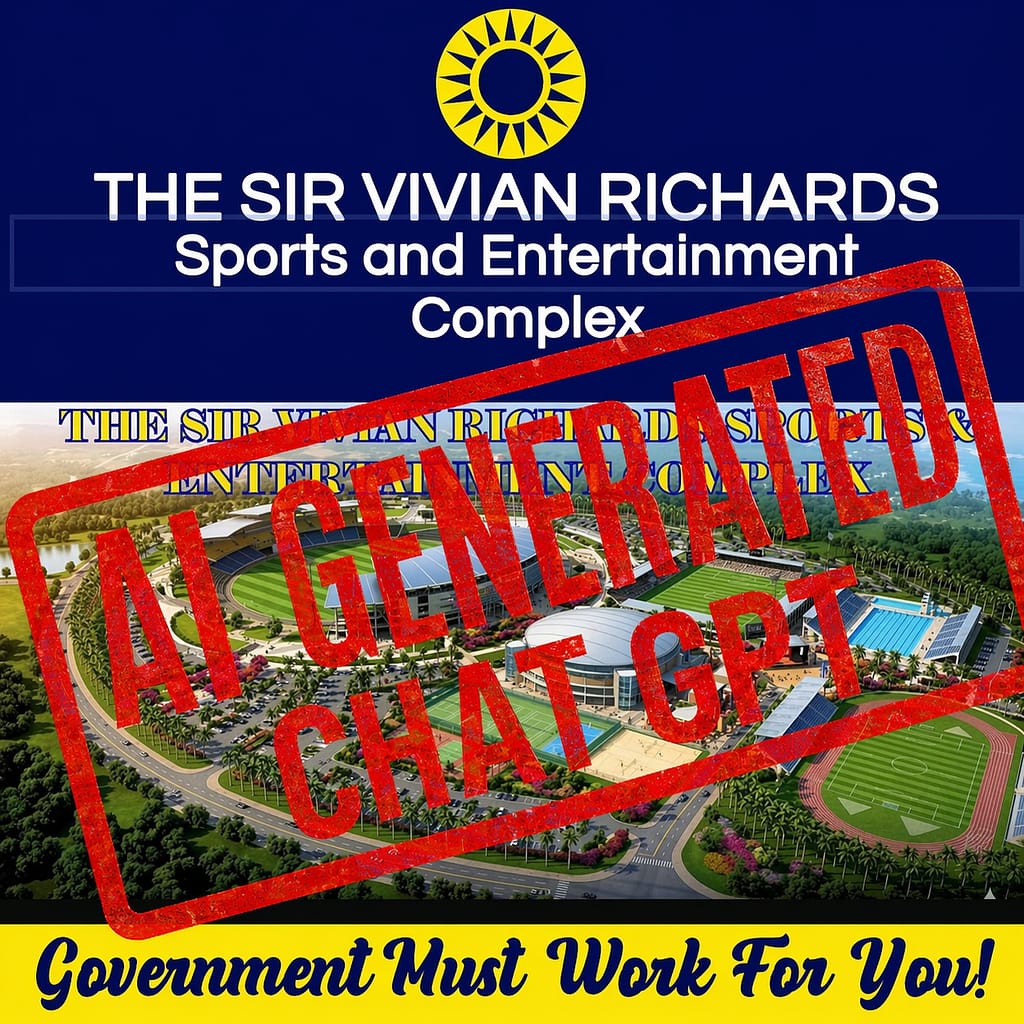
When the United Progressive Party (UPP) unveiled its ambitious new AI-generated concept for a sprawling regional sports complex, the renderings painted an impressive picture: a multi-purpose arena, multiple competition-ready stadiums, and a regulation Olympic-sized swimming pool. But behind the polished digital visuals lies a critical, unanswered question that has dominated public discussion of the proposal: where will the billions of dollars in required funding come from?
Critics of the plan have outlined three potential outcomes that could impact everyday residents if the project moves forward: steep increases in local taxes, a massive expansion of public sector borrowing, or deep cuts to already strained core public services that working communities rely on. These at-risk services include the development of affordable housing, ongoing road improvement projects, upgrades to aging water infrastructure, and the maintenance of basic municipal support programs.
Beyond the funding gap, the proposal has also sparked questions about the UPP’s ability to deliver on large-scale public infrastructure. The party has long been plagued by persistent internal infighting and factional disputes, leaving it struggling to maintain internal cohesion. Political observers point out that if the UPP cannot effectively govern its own internal party dynamics, there is little reason to trust it to manage a multi-billion dollar complex public works project.
In stark contrast, the incumbent Antigua and Barbuda Labour Party (ABLP) has already moved forward with a concrete, financially secured alternative initiative focused on sports-led development. The party has announced a dedicated funding stream for a carefully planned Cricket West Indies High-Performance Campus located at Coolidge, a phased development project built around clear, achievable goals. Unlike the UPP’s broad, unfunded concept, the ABLP’s plan is centered on tangible outcomes: elite athlete training, new local job creation, expanded sports tourism, and sustained, real economic activity that benefits the broader community.
The gulf between the two proposals highlights a core difference in governing philosophy, critics argue. The ABLP has put forward a detailed plan with confirmed financing aligned with public needs, while the UPP’s proposal is dismissed as an unrealistic campaign-style fairy tale that would only deliver economic pain to residents in the form of higher taxes, heavier debt, or reduced access to essential services.
While widespread public support exists for improving local sports infrastructure across the country, residents and observers alike agree that good governance requires transparency around project costs, and leadership that prioritizes the most pressing public needs over flashy, unfunded political promises.