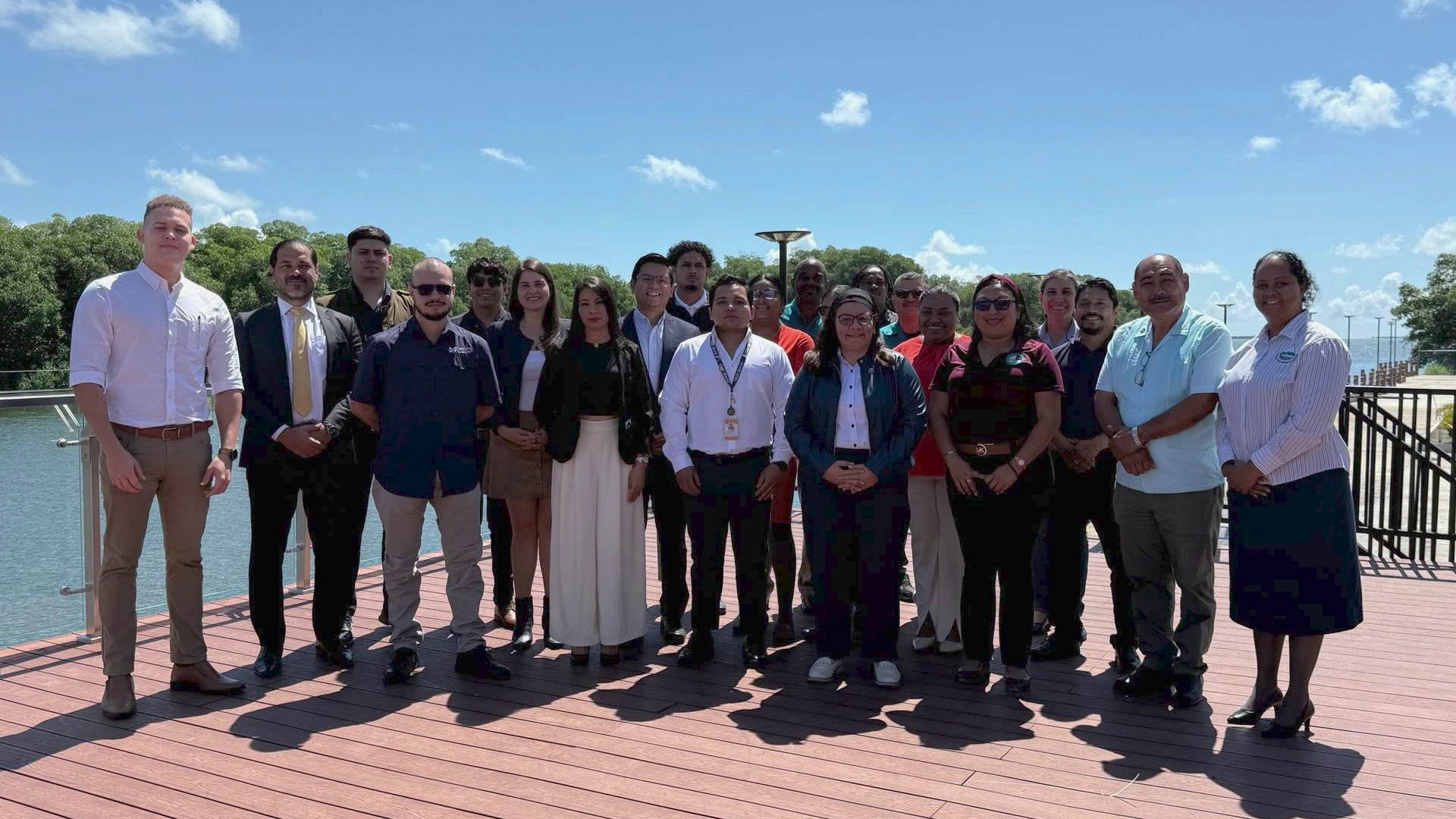
After three days of collaborative data analysis and cross-border discussion, the annual regional Climate and Hydrological Forum drew to a close on April 23, 2026, in Belize City, with a stark forecast that has put agricultural stakeholders and climate planners on alert across Central America.
The forum, a rotating event hosted by member countries across the region, brings together hydrologists, climate scientists, policy leaders and agricultural extension officers to align on seasonal weather projections and share adaptive strategies for a shifting climate. This year’s gathering centered on one high-stakes question: what conditions can the region expect between May and July, a critical window for crop planting and growth?
Climate experts at the event confirmed a major transition in global ocean-atmosphere patterns: the cooling La Niña phenomenon that dominated recent years is now retreating, giving way to the warming El Niño. The shift is projected to bring significantly drier conditions and below-average cumulative rainfall across Belize and much of Central America through the core growing months. Unusually widespread rainfall across Belize in early April already served as an early indicator of this unexpected climate shift, a deviation from historical patterns that experts say signals the growing volatility of regional weather.
Orlando Habet, Belize’s Minister of Sustainable Development, emphasized the unique value of the annual collaborative forum ahead of this projected shift. “This gathering has been held for decades across different Central American nations, and its impact goes far beyond just sharing climate data,” Habet explained in closing remarks. “By pooling observations and technical experiences, and integrating new advances in forecasting technology, we can build more robust, region-wide early warning systems that benefit every sector, from disaster management to food production.”
Habet added that the advance projection of El Niño-driven dry conditions is particularly critical for hurricane preparedness and protecting national food security. Early forecasts let agricultural communities time their planting decisions appropriately, while disaster response agencies can activate readiness protocols ahead of an active storm season, he noted.
For Belize’s agricultural community, which anchors a large share of the national economy and supports rural livelihoods, the forecast is more than a climate update—it is a make-or-break guide for planting decisions that will shape harvest outcomes and food supplies for the year. May through July marks the traditional start of the main planting season, when farmers prepare fields and sow crops in anticipation of seasonal rains. A prolonged dry spell immediately after planting would leave young seedlings without sufficient moisture, likely leading to widespread crop failure.
Andrew Mejia, Director of Extension at Belize’s Ministry of Agriculture, explained that the national government is already moving to support farmers in adapting to the projected dry conditions. “Accurate long-range forecasting is the foundation of agricultural resilience,” Mejia said. “It lets us guide farmers on when to plant, when to hold off, and what adjustments to make to protect their crops and their livelihoods. With this forecast calling for below-average rain across May, June, and July, we are urging caution to avoid devastating losses from post-planting drought.”
To support preparedness, the Ministry of Agriculture has partnered with the World Food Program and Belize’s National Meteorological Service to roll out “Anticipatory Action”, a targeted support project designed to help smallholder farmers mitigate drought-related risks. Mejia noted that forecasting accuracy from the national meteorological service has improved steadily over the past decade, giving policymakers and farmers greater confidence in planning around the three-month projection. The consensus takeaway for producers across the country is straightforward: hold off on early planting, monitor weekly conditions closely, and adjust plans to account for the drier outlook.
As climate change continues to amplify the frequency and intensity of extreme weather events across Central America, regional collaborative forums like this one have grown in importance, helping nations align on projections and share adaptive strategies to protect vulnerable communities and food systems.