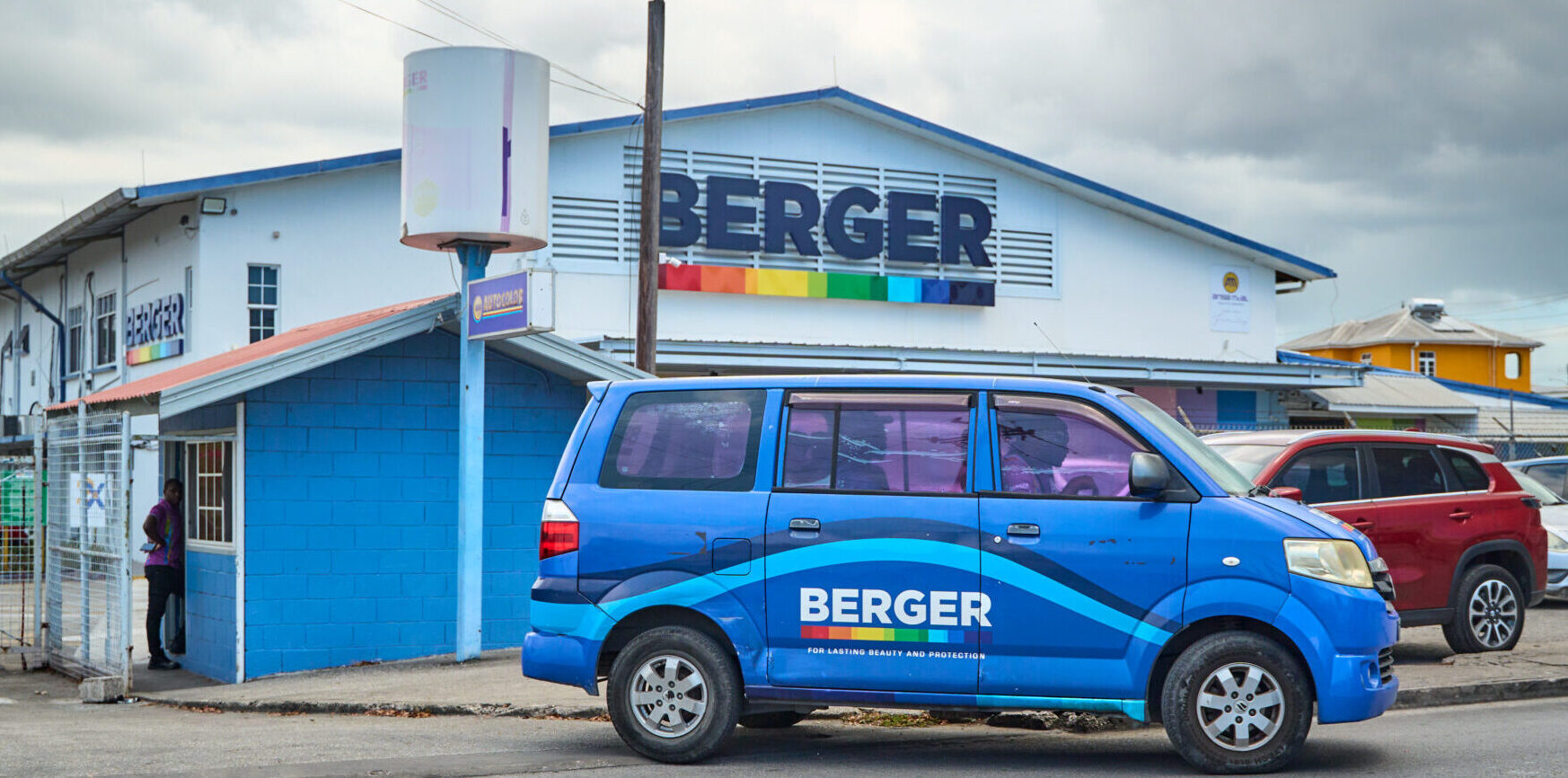
A decades-long chapter of local paint manufacturing in Barbados is drawing to a close this week, as Berger Paints prepares to shutter all its local production, warehouse, retail and administrative facilities on Friday, putting 44 long-tenured employees out of work. While the company will continue selling its branded products through local retail partners, all manufacturing operations will be relocated to other sites across the Caribbean region. The company publicly confirmed its restructuring plan Wednesday, confirming the full scope of facility closures tied to its transition to a third-party distribution model.
For the affected workers, many of whom have spent well over a decade building their careers with the firm, the sudden shift has brought devastating uncertainty and financial upheaval, according to Toni Moore, who serves both as a Member of Parliament and General Secretary of the Barbados Workers’ Union (BWU), the union representing the displaced employees. Moore noted that the average tenure of workers at the Berger Barbados plant ranges between 10 and 15 years, meaning most employees have structured their entire lives and livelihoods around steady employment at the company. Even though many are still within working age, their mid-career status makes a sudden job search particularly daunting, she added, and the unanticipated loss of long-term employment has taken a heavy emotional and psychological toll on workers who dedicated years of service to the brand.
The controversy around the closure first emerged when the company announced its restructuring plans back in February, prompting immediate pushback from labor leaders and government officials over the alleged failure to follow legally mandated consultation processes. Barbados’ Minister of Labour Colin Jordan raised early concerns that the company had already finalized its decision to close the plant before starting required consultations with the Ministry of Labour and the workers’ union. Under Barbadian law, companies planning mass redundancies are required to conduct a six-week consultation period with affected stakeholders, and legal precedent mandates that these discussions must be substantive rather than procedural. Jordan argued that it is impossible to hold meaningful consultations when the final decision has already been made and is non-negotiable, adding that the pre-determined outcome undermines the entire process set out in national labor law.
The Congress of Trade Unions and Staff Associations of Barbados (CTUSAB) has joined the BWU in condemning the decision, calling for a formal investigation over allegations that workers’ legal rights have been violated throughout the restructuring process. CTUSAB General Secretary Dennis Depeiza emphasized that the incident exposes critical gaps in labor regulation enforcement in the country, calling for a full review of existing oversight mechanisms under the national Employment Rights Act. Depeiza argued that stronger enforcement is needed to ensure companies comply with mandatory consultation procedures when planning business closures that result in mass layoffs, to prevent employers from cutting corners at the expense of workers’ rights.
Moore also echoed widespread public concern over the company’s post-closure business model, noting that Berger Paints will continue to generate revenue from sales in Barbados even as it eliminates all local manufacturing jobs. Currently, the company has arrangements in place to keep its products on local shelves through retail partners including Carters (operating via Blades and Williams) and Ace H&B Hardware, with all production moving to regional facilities outside Barbados. As labor groups continue to push for accountability, questions remain about whether the company followed all legal requirements for the closure, and what support will be provided to the dozens of workers who lost their livelihoods this week.