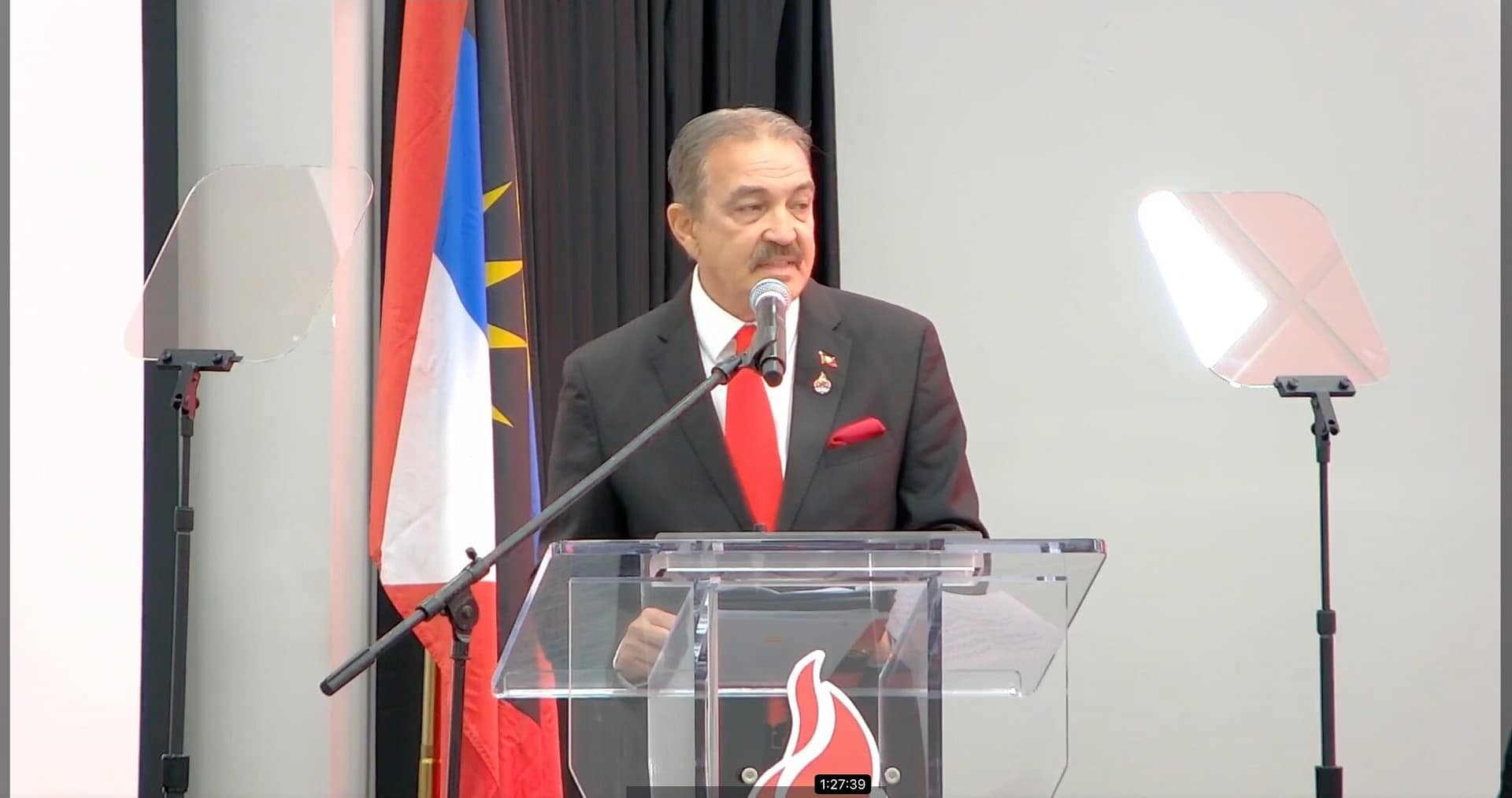
Antigua and Barbuda is set to receive over $1.5 billion in targeted tourism-focused investments over the next two to three years, a landmark injection that will drive job creation and broad-based economic expansion, according to Tourism Minister Charles “Max” Fernandez. The minister, who is also running as a candidate for the St. John’s Rural North constituency, made the announcement during the official launch of the Antigua and Barbuda Labour Party (ABLP) election manifesto, held at the American University of Antigua Conference Centre. He described the upcoming wave of development as unprecedented in the nation’s modern history, directly tying the pipeline of projects to long-term inclusive economic growth.
Fernandez detailed that the $1.5 billion portfolio spans luxury hospitality, residential real estate, critical public infrastructure, and commercial development across both islands. Flagship projects leading the pipeline include the $465 million Half Moon Bay development, the $400 million Nikki Beach Residences, and the $40 million Buccaneer Beach resort project. Global hospitality brand Nobu has already committed more than $70 million to local projects, while a new Marriott hotel is planned for Yepton Beach, and the iconic Jolly Beach Resort is undergoing extensive ongoing renovations. Beyond tourism-focused developments, the investment round includes key upgrades to core national infrastructure: a $55 million modernization project for VC Bird International Airport, a $40 million waterfront revitalization initiative, and a new $23 million domestic brewery project.
New construction activity is already underway across multiple sites, with ground set to break next month on the highly anticipated Eddie Caren Long Bay development, and structural work progressing on several units at the La Mer Estate luxury residential project in Willoughby Bay. Fernandez emphasized that this flood of private and institutional investment did not emerge accidentally, but rather is the outcome of intentional policy leadership, strategic government planning, and a consistent forward-looking vision for the sector. He added that the large volume of committed investment signals strong global confidence in Antigua and Barbuda’s tourism offering and its overall economic trajectory.
As the primary economic pillar of Antigua and Barbuda, tourism has delivered robust post-pandemic results in recent years, with visitor arrivals climbing steadily to pre-pandemic levels and exceeding growth projections. The current government’s strategy, Fernandez noted, is not focused on managing stagnation or decline, but on proactively building sustained expansion. Rather than merely reacting to global shifts in travel demand, the administration is actively shaping the future of the nation’s tourism sector to meet evolving consumer expectations. A core priority of this strategy is ensuring that the economic gains from the investment boom are not concentrated among a small group of stakeholders, but distributed equitably across all communities across Antigua and Barbuda.