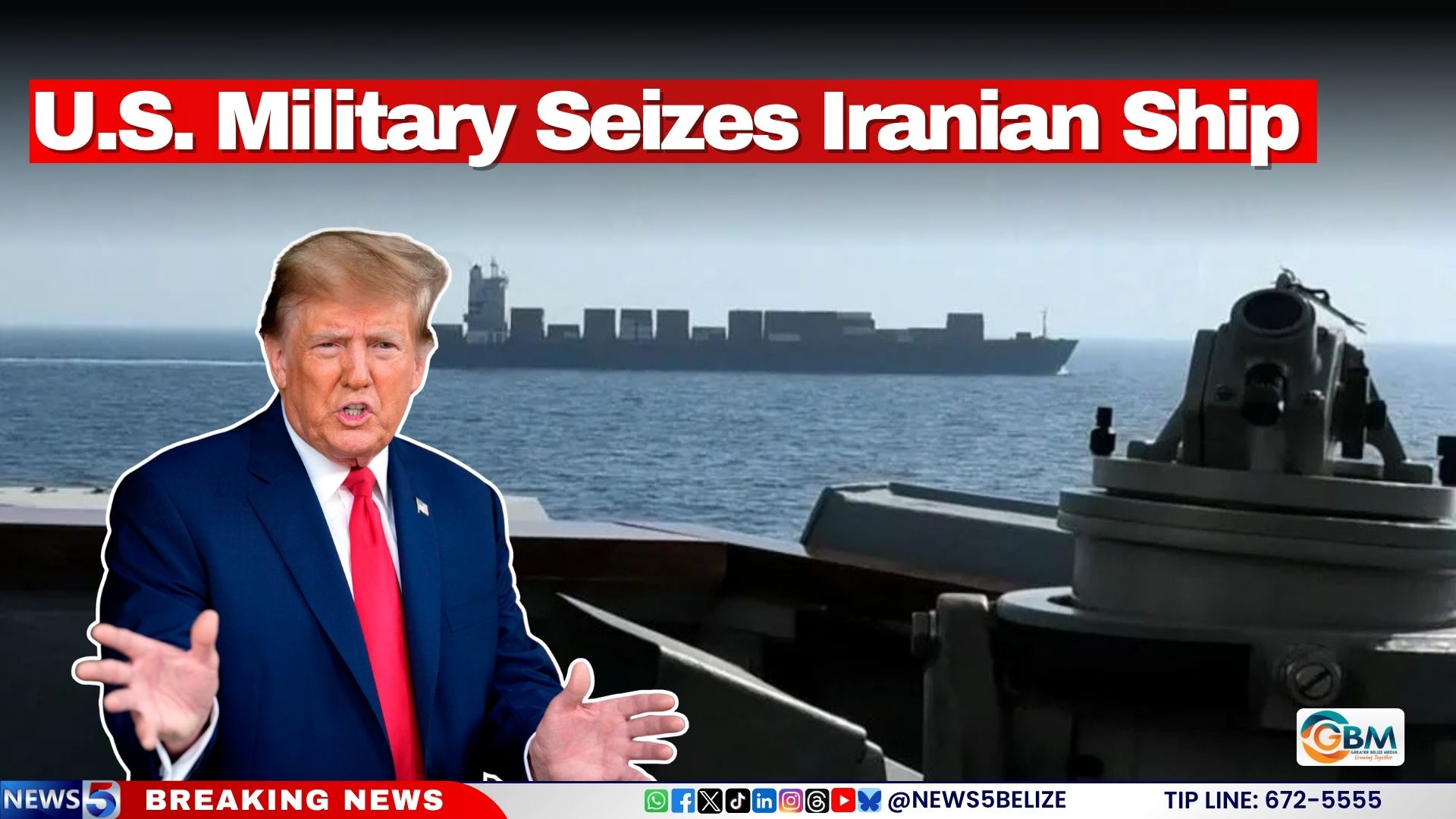
On a Sunday morning in the Gulf of Oman, a tense six-hour standoff between U.S. naval forces and the crew of an Iranian cargo ship ended with the vessel being seized by U.S. Marines after Navy gunfire disabled its propulsion system, according to statements from U.S. military and political leaders. The incident, which unfolded on April 20, 2026, has already drawn fierce condemnation from Iran, which has pledged immediate retaliation and accused the United States of violating an existing ceasefire and committing open piracy in one of the world’s busiest commercial waterways.
The operation was carried out by the guided-missile destroyer USS Spruance, operating under the command of U.S. Central Command (CENTCOM). Per CENTCOM’s official account of the incident, the Touska – the 500-foot cargo vessel targeted in the raid – repeatedly ignored multiple radio and visual warnings over six hours to turn back from a U.S.-imposed naval blockade on commercial traffic bound for Iranian ports. After the vessel continued its course toward Iranian territorial waters, military commanders ordered the Touska’s crew to evacuate the engine room before Navy personnel fired several warning rounds into the ship’s engine compartment, disabling all propulsion and steering capabilities. Once the vessel was dead in the water, a team of U.S. Marines boarded the ship and took full control of the vessel and its crew without further resistance.
Shortly after the seizure was completed, former U.S. President Donald Trump confirmed the operation in a post on his Truth Social platform, framing the action as a decisive enforcement of U.S. sanctions policy. “The Navy stopped them right in their tracks by blowing a hole in the engine room,” Trump wrote in the post, adding that U.S. boarding parties were currently conducting a search of the vessel’s cargo holds to document what the ship was carrying. He further noted that the Touska and its operators were already subject to U.S. Treasury Department sanctions over a documented history of violating international trade restrictions on Iranian goods, justifying the use of force to intercept the vessel.
Iran’s leadership has rejected the U.S. justification for the raid and issued a harsh formal warning of impending retaliation. In an official statement carried by state-run Islamic Republic of Iran Broadcasting (IRIB), Iran’s military command denounced the operation as “maritime highway robbery” that violates the terms of a recent ceasefire agreement between the two nations. The Iranian statement confirmed the seizure, adding that U.S. forces also damaged critical navigational equipment on the Touska during the forced boarding, endangering the crew and the vessel.
“We warn that the Armed Forces of the Islamic Republic of Iran will soon respond to and retaliate against this U.S. armed piracy,” the statement concluded, leaving open the scope and timing of any Iranian counteraction.
The interception of the Touska is not an isolated incident, CENTCOM confirmed in its briefing on the operation. Since the U.S. naval blockade on traffic bound for Iranian ports was implemented, U.S. forces have successfully turned away 25 other commercial vessels that attempted to break through the restriction to reach Iranian ports, marking the first time that U.S. forces have actually seized a vessel rather than forcing it to turn around. The escalation comes at a moment of already heightened tension between Washington and Tehran, raising fears of further escalation in the Persian Gulf region, a critical chokepoint for 20% of the world’s daily oil supplies.