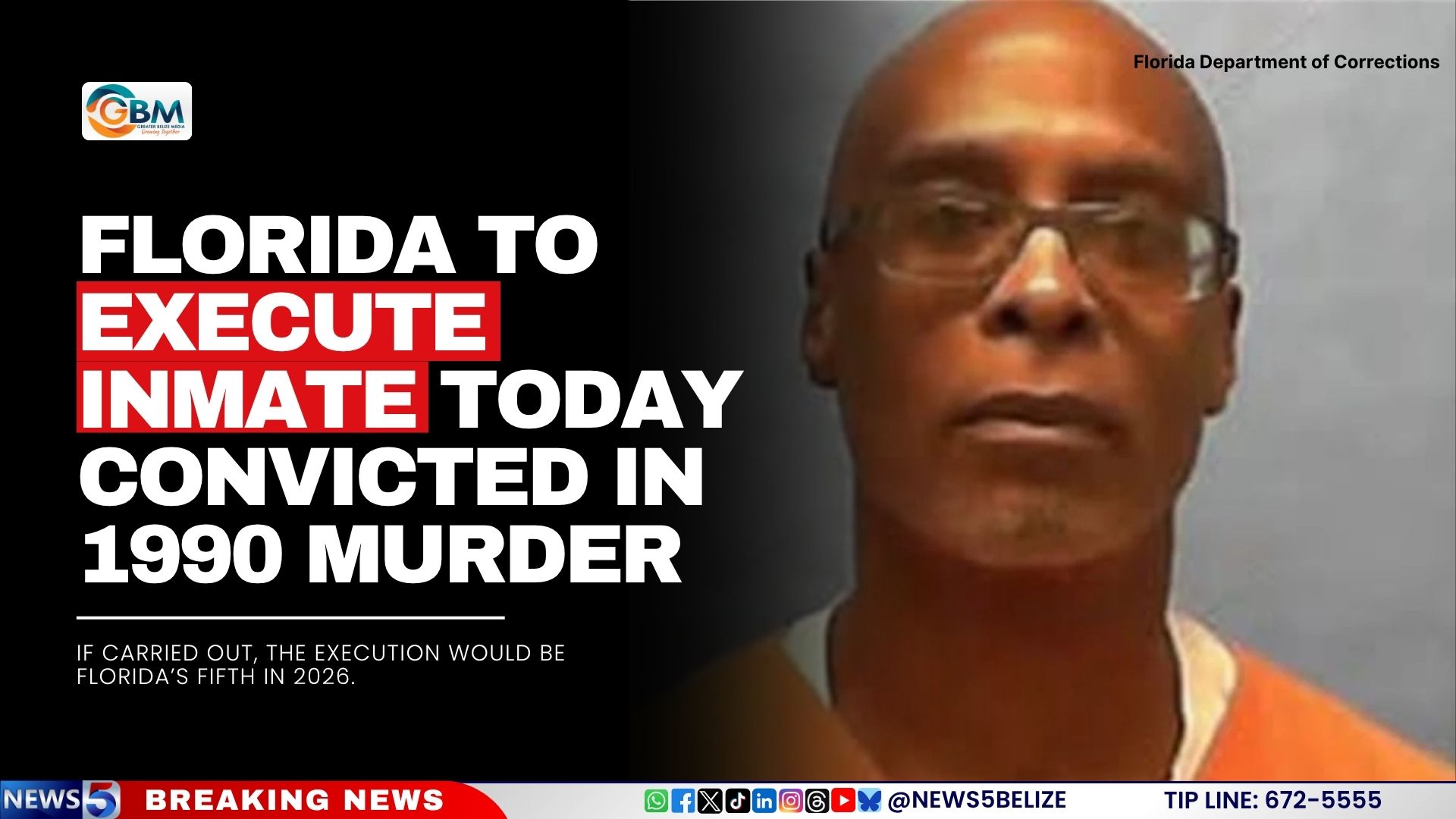
On the evening of April 21, 2026, the U.S. state of Florida is set to carry out the execution of 58-year-old Chadwick Scott Willacy, a man convicted of a brutal 1990 homicide that shook the community of Palm Bay. The convicted inmate will receive a lethal injection at Florida State Prison, located near Starke, at 6:00 p.m. local time, marking the fifth state-sponsored execution in Florida this year.
Willacy’s conviction dates back to 1991, when a jury found him guilty on four counts: first-degree murder, residential burglary, robbery, and arson. Initially, the jury issued a 9-3 recommendation for the death penalty, which the court handed down. Following a court-ordered re-sentencing in 1995, a second jury reaffirmed the capital punishment verdict with an 11-1 vote in favor of death.
Court documents lay out the gruesome details of the crime that took Willacy’s victim, 50-year-old Marlys Sather, in September 1990. Sather, a local resident, returned to her Palm Bay home midday during her lunch break and interrupted Willacy mid-burglary. Prosecutors’ case files show Willacy attacked Sather immediately, striking her skull with a blunt object that caused a fatal fracture. He then bound her hands and feet, attempted to strangle her with a telephone cord, before dousing her body in gasoline and setting her on fire. An official autopsy later confirmed Sather was still alive when the fire was ignited, and her official cause of death was listed as smoke inhalation.
After the attack, authorities say Willacy fled the scene with Sather’s vehicle, multiple personal belongings, and her ATM card, which he used to withdraw cash from her bank account. Sather’s body was not discovered until hours later, when concerned family members went to check on her after she failed to return to her job after lunch.
In the lead-up to the scheduled execution, Willacy’s legal team pursued multiple last-ditch appeals to have the death sentence overturned. The Florida Supreme Court rejected his most recent round of appeals last week, and as of April 21, final appeals were still pending before the U.S. Supreme Court.
This execution comes amid a marked increase in the use of capital punishment in Florida over the past two years. If carried out as scheduled, it will be the fifth execution the state has conducted in 2026. In 2025 alone, Florida put 19 people to death, the highest annual number of executions the state has carried out since the U.S. Supreme Court reinstated states’ right to use capital punishment in 1976.
According to the Florida Department of Corrections, all state executions are carried out via lethal injection using a three-drug protocol: the first acts as a sedative to render the inmate unconscious, the second is a paralytic agent to relax muscle groups, and the third stops cardiac function. Following this execution, Florida already has another lethal injection scheduled for April 30.