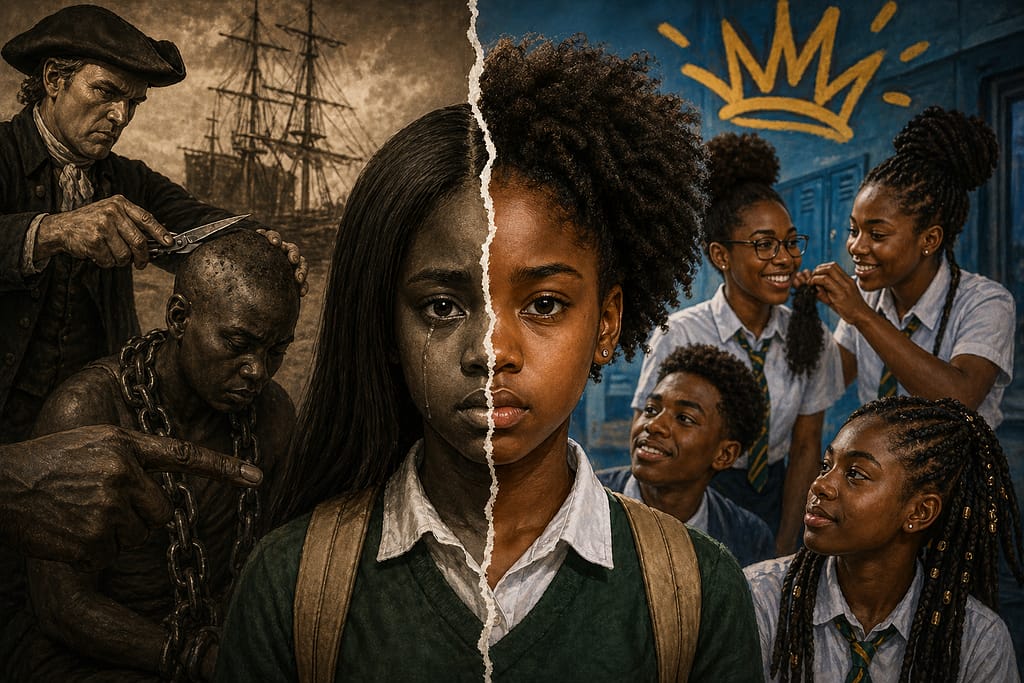
For generations, stigma targeting the natural hair of Black Caribbean children has carried a heavy legacy that stretches directly back to the era of slavery and colonial oppression. Today, young Black people across schools, households, and local communities still face dehumanizing criticism about the natural texture, volume, and traditional styles of their hair. This harmful bias endures through discriminatory school policies, pervasive societal double standards, and internalized negative self-perception, pushing countless young people to reject their natural hair rather than celebrate it as a core part of their identity.
To understand the origins of this stigma, one must look to the deliberate dehumanizing tactics used during the transatlantic slave trade and centuries of chattel slavery. For African peoples, hair had long functioned as a sacred, meaningful marker of tribal identity, social standing, and spiritual connection. But European colonizers and slave owners deliberately framed Afro-textured hair as something less than human, comparing it to animal wool or fur to justify their brutal control. One of their earliest tools of erasure was forced shaving: stripping enslaved people of their hair to strip them of their freedom, dignity, and individual identity. Centuries later, this colonial logic persists in modern school policies that demand children cut their natural hair to meet arbitrary standards of “tidiness” and “neatness”. In far too many cases, students are even barred from entering classrooms and accessing education simply because their hair does not conform to these slavery-influenced rules.
Beyond explicit school policies, persistent ideological control has shaped modern beauty standards that perpetuate bias against natural Black hair. This double standard is impossible to ignore: when a Black person wears their natural textured hair grown out, it is frequently labeled “untidy” or “unprofessional”, but when a white person wears long, unstructured hair, it is widely praised as attractive or healthy. This contradiction exposes how deeply ingrained Eurocentric definitions of beauty and professionalism remain in society: European features are normalized and celebrated, while natural Black hair is constantly policed and unfairly criticized. These biases are not just superficial insults; they shape the self-image of young Black people from childhood, forcing them to alter their hair through cutting, straightening, or chemical processing to fit standards that were never created to include them.
The long history of this oppression has also left a lasting mark on internalized self-perception: many Black people continue to struggle with self-acceptance of their natural hair, even as younger generations begin to embrace their natural textures with pride. Decades of societal pressure and negative stereotyping have made it all too easy to perpetuate the stigma by conforming to outdated biased rules, extending the ideological control that originated in the holds of slave ships centuries ago. Advocates argue that this cycle must be broken. Stigma against natural Black hair should be actively challenged, not carried forward. Schools, communities, and broader society must commit to rethinking biased policies and norms, and respecting all hair textures as equally valid without discrimination.