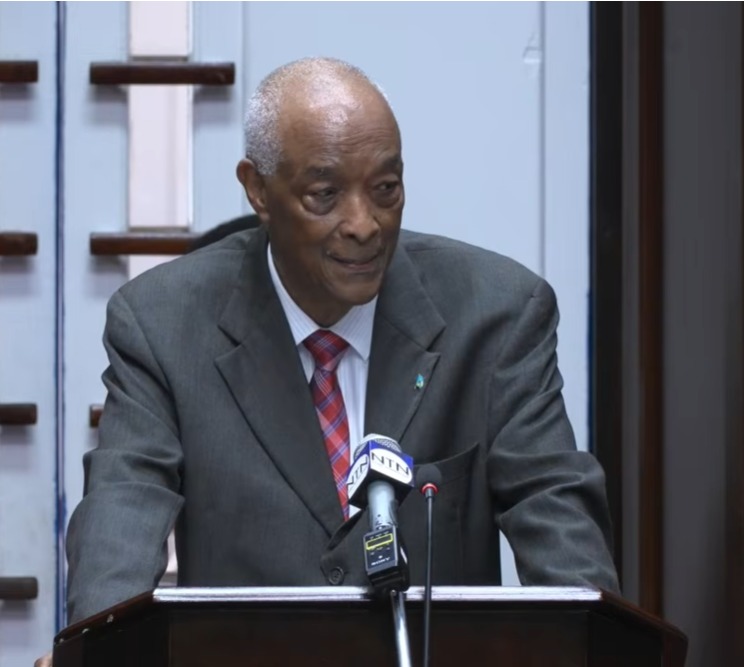
Less than 24 hours ahead of Prime Minister Philip J. Pierre’s annual Budget Address, the government of Saint Lucia has unveiled its sweeping policy priorities for the incoming term, delivering the first Throne Speech since the administration’s re-election. The ceremonial address was delivered on behalf of the Governor General by Deputy Governor General His Excellency Felix Finisterre, covering five core policy domains that span institutional reform, social development, public health, climate action, and economic infrastructure.
Opening the governance and institutional reform package, Finisterre announced that the administration will ramp up national discussions on constitutional reform, including a formal review of Saint Lucia’s current Head of State governance arrangements. The government will also redraw constituency electoral boundaries to ensure fairer political representation, and continue ongoing audits of the country’s popular Citizenship by Investment Programme, with the explicit goal of keeping the scheme aligned with global transparency, accountability, and compliance standards. A long-awaited milestone is scheduled for this year: the operationalization of the national Sovereign Wealth Fund, which received legislative approval in 2023. The fund will be directed toward two core priorities: climate change mitigation and adaptation projects, and broad-based national economic development. To modernize standards for public officials, the government will also revise the existing Integrity in Public Life Act to bring it in line with contemporary global best practices for government transparency.
On the social and people-centric policy front, the administration outlined targeted changes to address gaps in access and opportunity. The Education Act will undergo a full review, with a specific focus on tackling chronic student absenteeism, boosting school retention rates, and expanding provisions for early childhood education and special education needs. Updated national building codes will also be drafted to remove longstanding accessibility barriers for Saint Lucia’s disabled community. After years of discussion, a national Diaspora Bill will move forward in 2024, with formal legislative negotiations set to begin this year to advance the bill toward final enactment. Additional public resources will also be allocated to grow the youth economy and create more opportunities for young workers.
To expand and improve Saint Lucia’s public healthcare system, the government will introduce three landmark pieces of legislation this term: the Universal Health Coverage Bill, the Mental Health Bill, and the Medical Laboratories Bill, all designed to expand access to care and lower out-of-pocket costs for patients. Work will also continue on the long-delayed completion and commissioning of the new St Jude Hospital.
Climate action and agricultural transformation form another core pillar of the administration’s agenda. New legislation will be introduced to crack down on illegal dumping and the unregulated construction of unsightly roadside structures across the island. Lawmakers will also debate bills targeting fossil fuel consumption and scaling up alternative renewable energy development, with the Electricity Supply Bill scheduled for final enactment this year. The National Hydro-meteorological Services Bill will also be introduced as part of the 2024 legislative agenda, to improve the country’s ability to monitor and respond to extreme weather events. To boost water security, the government will ramp up public education campaigns to encourage wider adoption of residential and commercial rainwater harvesting. A full overhaul of national agricultural policy is also planned to strengthen Saint Lucia’s domestic food security and reduce reliance on imported food staples.
To strengthen the country’s justice and legal sector, Finisterre confirmed that a broad package of justice reform legislation will be enacted, covering a wide range of modernization priorities. The legislative package includes the Witness Protection (Special Measures) Bill, Fingerprints Bill, Plea Bargaining Bill, Electronic Crimes Bill, Anti-Criminal Organisation Bill, Status of Children Bill, Justice of the Peace Bill, and Forensic Evidence (DNA) Bill. Both the long-outdated Criminal Code and the Evidence Act will also undergo comprehensive revisions to align with modern legal practices.
For economic governance, the government will update the Public Procurement Act to better match the unique needs of Saint Lucia’s current domestic economic climate. In response to ongoing global volatility driven by geopolitical conflicts that have pushed up global crude oil prices, Finisterre confirmed that the administration is preparing targeted policy measures to offset the negative impact of rising costs on household essentials, including transport fuel, cooking gas, and staple food products.
On the infrastructure and development front, the government laid out a clear timeline for several major national projects. The new Halls of Justice complex is on track to be completed by 2025, while the long-planned redevelopment of Hewanorra International Airport, Saint Lucia’s primary gateway for international tourism, is scheduled to break ground this year. Bid submissions for the airport project are already complete and currently under evaluation by government authorities. To address the growing national shortage of affordable housing, the National Insurance Scheme will launch a new housing development project in Roseau. Planning work is already well advanced, with final road layouts and lot mapping underway, and required environmental and social impact assessments already completed. Work is also set to begin on the new Vieux Fort Administrative Complex and Amphitheatre, with revised architectural designs already finalized.