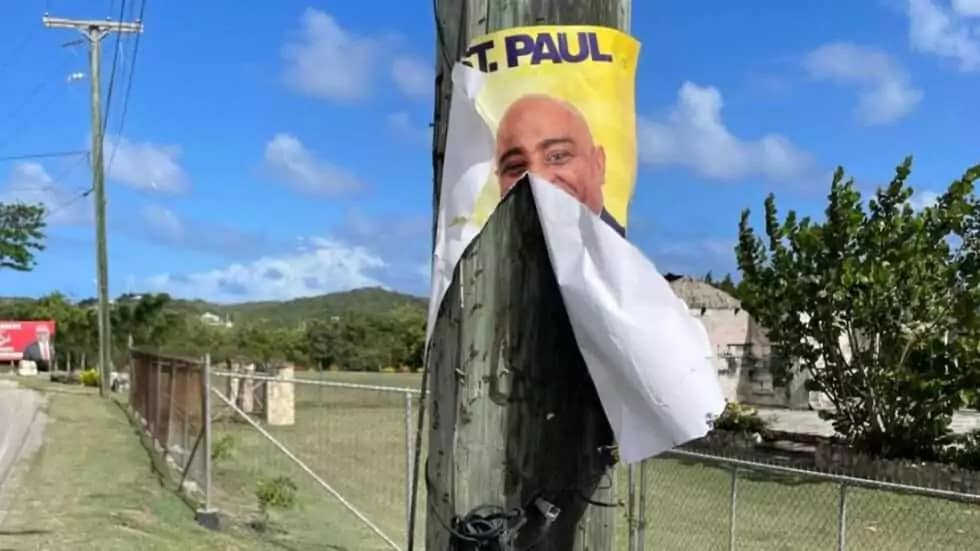
As pre-election political tensions rise across Antigua and Barbuda, a prominent political figure has sounded the alarm over a recent act of destructive vandalism in Freeman’s Village, calling for immediate, widespread condemnation of the attack on a political billboard. In an open letter addressed to the press, Glenford Peters framed the incident as far more than a minor case of property destruction, arguing that it strikes at the core of the island nation’s long-held democratic values.
Peters emphasized that acts of vandalism targeting campaign materials, which have become increasingly common during this heated election cycle, pose a direct threat to the fundamental democratic right to free expression. Antigua and Barbuda, he noted, built its national identity on a legacy of resilience, grassroots struggle, and the hard-won right to self-determination. That history, he argued, creates a binding obligation for political opponents to treat one another with basic respect, even when their ideological positions diverge sharply.
Contrary to the idea that democratic participation demands uniform political alignment, Peters pointed out that the system is built on tolerance, open dialogue between competing camps, and the maturity to accept that other people and groups have every right to hold perspectives that differ from one’s own. What makes the current wave of vandalism so concerning, he added, is that it signals a worrying departure from the tradition of healthy, respectful political competition the nation has worked to build, shifting the political landscape toward open hostility and deep, unnecessary division.
Destroying opposing parties’ campaign materials, silencing alternative political voices, and intimidating supporters of rival candidates does nothing to strengthen any political cause, Peters stressed. Instead, it erodes the integrity of the democratic process for every citizen, regardless of political affiliation. He called on all political actors and ordinary voters across the country to reject these destructive acts of intimidation, and instead work collectively to build a national political culture rooted in mutual respect.
Peters argued that it is entirely possible for citizens and politicians to hold firm to their own political beliefs while still upholding the right of others to advocate for their own positions. Disagreement, he noted, is a healthy and inevitable part of democracy, but that does not require personal or destructive conflict between opponents. At this pivotal juncture in Antigua and Barbuda’s national development, Peters urged the entire nation to come together, setting aside conflict in favor of unity, mutual understanding, and a shared commitment to the democratic values that unite all citizens of the country.