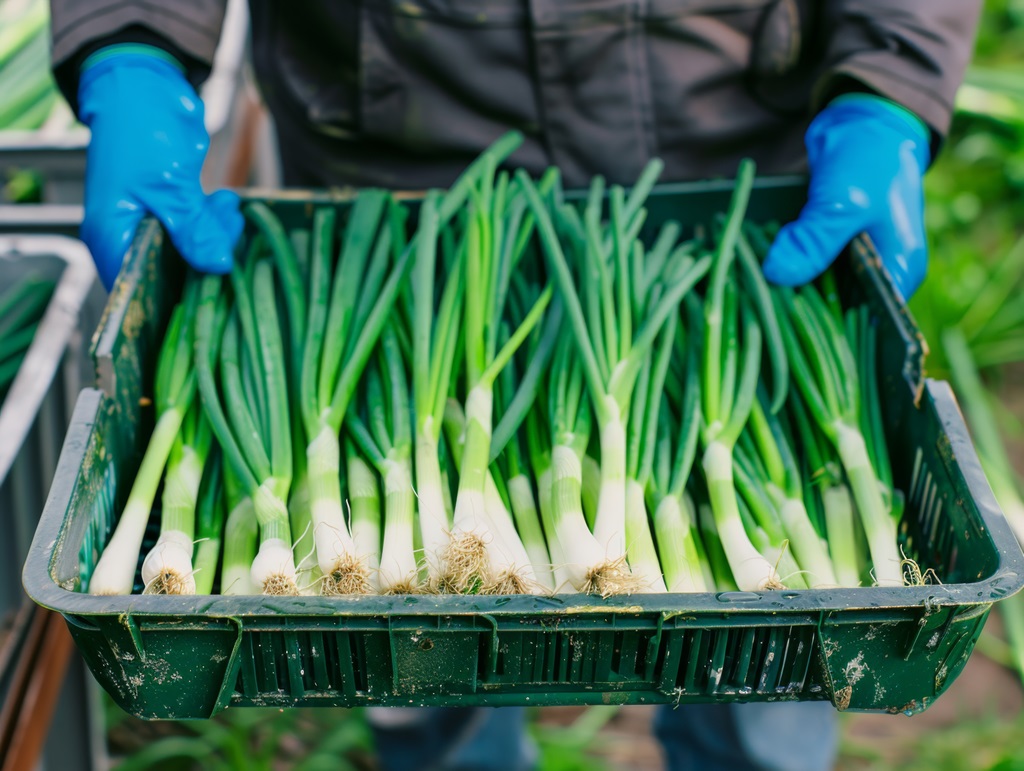
Escallion producers across South Manchester and South St Elizabeth in Jamaica are set to receive targeted government intervention after a sudden glut of the popular crop left farmers grappling with plummeting market demand and unsold inventories. Jamaica’s Ministry of Agriculture, Fisheries and Mining has moved quickly to coordinate a whole-sector response after receiving formal reports of the growing crisis, which has left small-scale and commercial producers alike scrambling to secure stable outlets for their harvest.
Officials from the ministry confirmed they are fully aware of the current oversupply situation, noting that major institutional buyers including Grace Agro Processors – a subsidiary of leading Jamaican food conglomerate GraceKennedy Foods and Services Limited – have slowed purchases due to the accumulated volume of unsold produce. The backlog has sparked growing anxiety among farming communities, whose livelihoods depend on consistent off-take for their perennial crop.
In an official statement outlining the response, the ministry said it has already opened direct negotiations with two of Jamaica’s largest food processors, Grace Agro Processors and Walkerswood Caribbean Foods Limited. The talks center on restructuring purchasing agreements to absorb more existing inventory and secure the long-term place of local escallion producers in national supply chains. Beyond major processors, the government has also partnered with two leading industry bodies – the Jamaica Manufacturing and Exporters Association (JMEA) and the Jamaica Agro Processing Association (JAPA) – to mobilize their member networks to purchase surplus escallion immediately. Early feedback from these organizations has been overwhelmingly positive, with increased off-take scheduled to launch as early as next week.
To ensure interventions are grounded in on-the-ground realities, the ministry’s chief technical director traveled to New Forest, Manchester on April 2, 2026, to hold face-to-face meetings with affected farmers. The visit allowed officials to directly assess the scale of the oversupply and walk producers through the full slate of support measures being rolled out.
The government has expanded its collaboration to include a range of additional stakeholders to boost processing capacity and cut the risk of harvested escallion spoiling before it can be sold. New partners include regional food producer Spur Tree Spices, fresh produce supplier Southern Fruits & Food Processors, the national Scientific Research Council (SRC), and Ebony Park Heart Academy. A core focus of these partnerships is converting surplus fresh escallion into high-value value-added goods such as escallion mash and dehydrated powder, creating alternative market channels that take pressure off fresh produce markets.
To remove logistical barriers to getting crop to processors, the ministry will cover transportation costs to move escallion from farmgate to processing facilities. This support eliminates one of the biggest bottlenecks farmers face in moving surplus harvest, ensuring that as much produce as possible is put to productive use rather than going to waste.
The ongoing talks are also addressing longer-term solutions to prevent recurring oversupply crises. Proposals currently under discussion include upgrading national cold storage capacity to buffer excess production during peak harvest windows. Already, several established processors have announced plans to expand their own production capacity specifically to handle temporary periods of oversupply in the escallion market.
Moving forward, the ministry said it will continue scouting new domestic and international market opportunities for Jamaican escallion, both through expanding existing distribution networks and opening up entirely new sales channels. Officials are also evaluating direct government purchasing programs that would provide immediate financial relief to producers affected by the current glut.
The Jamaican government reaffirmed its commitment to continued close collaboration with producers, processors and major buyers to resolve the current oversupply challenges. The overarching goal of the intervention is to protect the livelihoods of escallion farmers and maintain long-term stability across the entire escallion industry, the statement added.