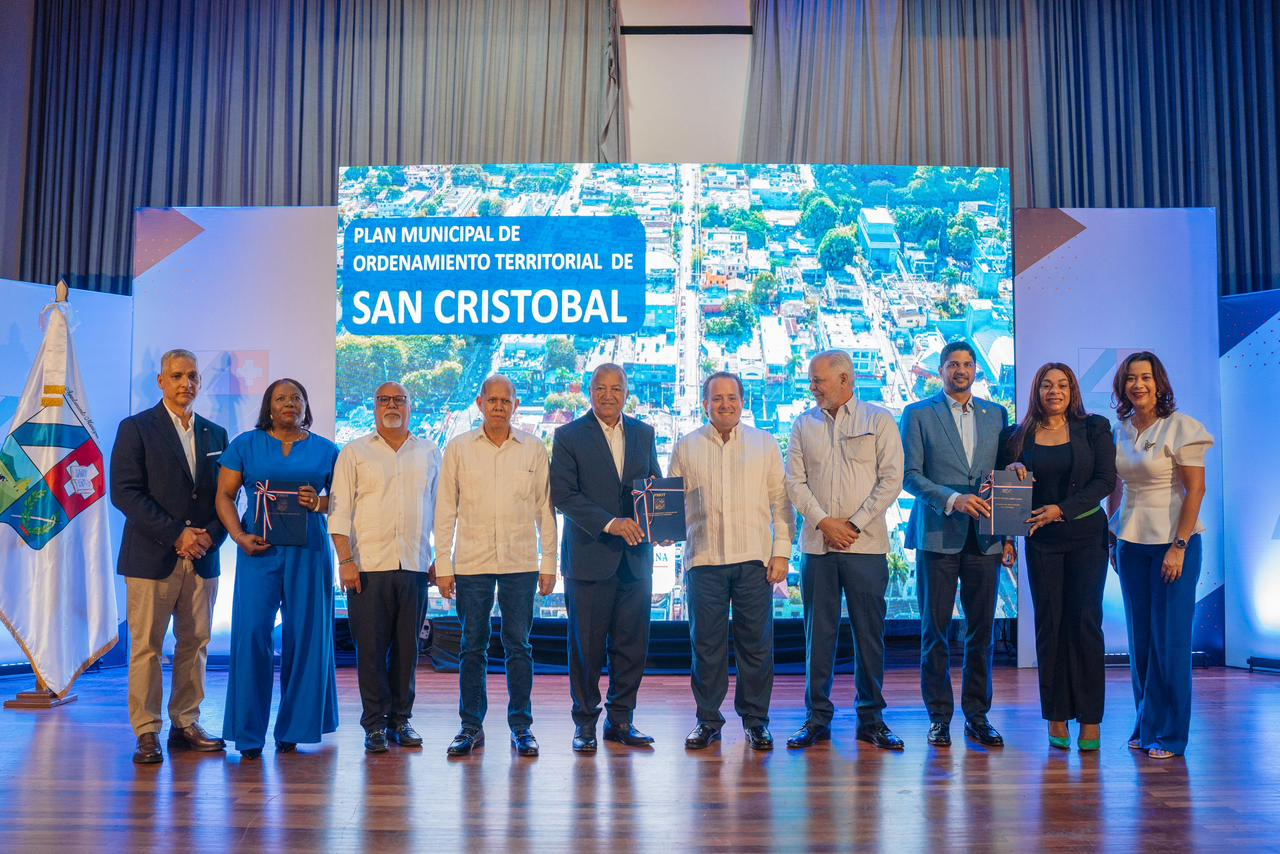
In a formal event held at the Loyola Polytechnic Institute in the Dominican Republic, Administrative Modernization Minister José Ignacio Paliza officially launched the long-awaited Municipal Territorial Planning Plan for San Cristóbal. This strategic initiative is designed to bring structured order to the municipality’s urban expansion while safeguarding ecologically critical natural resources through a transparent, clearly defined framework of land-use regulations.
The San Cristóbal project is not an isolated policy effort. It forms a core part of a nationwide government push to roll out approximately 60 comprehensive territorial planning projects across the country, all carried out in compliance with the national Territorial Planning Law 368-22. This broad program represents a major step forward in institutionalizing systematic spatial development management across the Dominican Republic.
Government officials emphasized that the plan delivers tangible dual benefits for both private investors and local residents. By codifying explicit rules for what types of development are permitted on different parcels of land, the framework eliminates regulatory uncertainty, cuts red tape for construction and environmental approval processes, and creates a stable environment that encourages responsible investment while protecting community interests. Before the plan is finalized and formally approved, it will enter a period of open public consultation, a requirement that ensures local community members have a direct voice in shaping the long-term trajectory of their municipality.
A key defining feature of the plan is its commitment to controlled, sustainable urban growth. Rather than allowing sprawling unregulated development into undeveloped natural and agricultural lands, the policy concentrates new urban expansion primarily on existing already-developed areas. Under the final zoning layout, only 10 percent of the municipality’s total land will be classified for urban use, leaving the vast majority of territory reserved for agricultural production, forest conservation, and permanent environmental protection. The plan lays out a 20-year developmental vision extending to 2036, with the goal of establishing San Cristóbal as a national model for sustainable, climate-resilient territorial development. Parallel to this planning initiative, the Dominican government is also advancing separate targeted conservation projects in the region, most notably the ongoing preservation effort for the historically and ecologically significant Pomier Caves system.