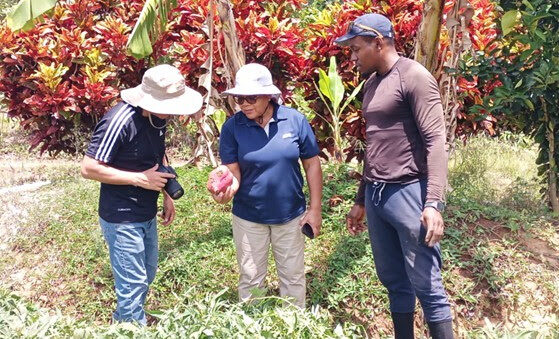
Across five Caribbean nations, a collaborative regional initiative focused on upgrading sweet potato cultivation and protecting critical plant genetic resources is hitting key milestones, bringing farmers, researchers, and agricultural authorities together under a shared framework for climate-resilient food production. The Next Generation Sweet Potato Production in the Caribbean Project, now in its fourth year of implementation, has built an expanding Community of Practice uniting stakeholders from Antigua and Barbuda, Barbados, Saint Lucia, Jamaica, and Trinidad and Tobago, with ongoing technical guidance from leading global agricultural experts. The project is led by the Inter-American Institute for Cooperation on Agriculture (IICA), in formal partnership with national agriculture ministries across three participating countries and the Caribbean Agricultural Research and Development Institute (CARDI).
A core recent achievement of the initiative has been the completion of a comprehensive multi-session training program designed to build technical capacity among regional agricultural professionals. Delivered jointly with the International Potato Center (CIP), the program combined theoretical virtual learning and in-person field practicals, engaging 73 participants drawn from academic institutions, government technical agencies, and both public and private agricultural enterprises. The training curriculum centered on building proficiency in three key skills: accurate identification of distinct sweet potato varieties, formal classification of genetic variants, and standardized documentation of genetic accessions for long-term conservation. This training forms a foundational pillar of the project’s broader regional strategy, which aims to reinforce genetic diversity of sweet potato populations, upgrade regional seed distribution systems, and enhance the climate resilience of Caribbean sweet potato farming operations.
Participants completed five interactive virtual modules that covered the 30 globally standardized descriptors used to differentiate key agronomic traits in sweet potatoes, ranging from leaf and vine morphology to root structure and nutritional characteristics. Following the virtual coursework, trainees applied their new knowledge in hands-on field exercises held across four participating countries, bridging the gap between academic learning and on-the-ground agricultural practice. In Antigua and Barbuda, national agricultural authorities have already documented 73 unique sweet potato genetic accessions through the project, with 19 additional improved varieties set to be introduced via collaboration with CIP to expand the country’s genetic resource base.
Beyond technical training and genetic mapping, the initiative prioritizes long-term capacity building for regional agricultural workforces, equipping professionals with the tools to properly identify and preserve valuable plant genetic material for future use. For smallholder and commercial farmers across the region, the project supports adoption of improved, climate-resilient sweet potato varieties that deliver more consistent yields and better agronomic performance under changing climate conditions. When combined, these interconnected efforts are projected to significantly strengthen regional food and nutrition security, a critical priority for small island developing states across the Caribbean that face disproportionate climate risk.
Funding for the initiative is provided by the Benefit-sharing Fund of the International Treaty on Plant Genetic Resources for Food and Agriculture, which is administered by the Food and Agriculture Organization of the United Nations (FAO), with additional financial backing from the European Union. As the project enters its fourth year, it continues to foster cross-border collaboration and knowledge sharing, working to establish a durable regional network focused on advancing sustainable sweet potato production across the Caribbean for decades to come.