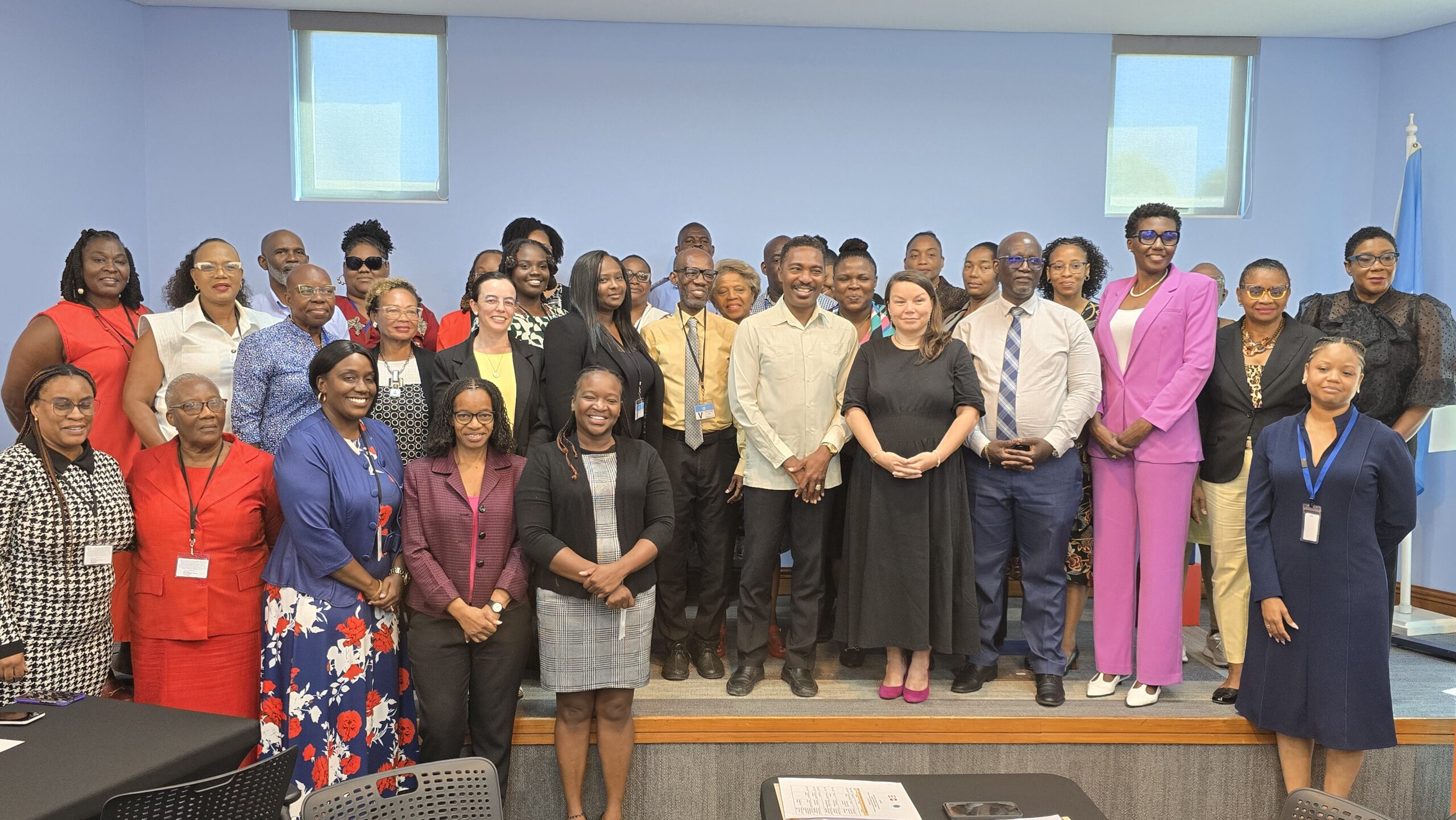
On Monday, the government of Barbados issued a public call for ramped-up, cross-community action to eliminate gender-based violence (GBV), coinciding with the launch of a two-day capacity-building workshop hosted at UN House by the United Nations Population Fund (UNFPA) and Barbados’ Bureau of Gender Affairs. The event centers on strengthening coordination mechanisms for addressing gender-based violence during humanitarian and public emergencies.
Speaking at the workshop’s opening, Minister of People Empowerment and Elder Affairs Adrian Forde emphasized that the battle against GBV requires unwavering effort, no matter the broader social or environmental context. “Gender-based violence permeates every corner of our society, full stop,” Forde stated. “That means our fight has to be consistent and equal, regardless of whether we are confronting a natural disaster or a period of relative stability.”
Forde pointed to data collected after Hurricane Melissa impacted Jamaica as a stark illustration of how crises exacerbate existing gender inequalities. When disasters strike, he explained, women bear a disproportionate burden of harm. “When water infrastructure fails, that creates unique challenges for women. Shortages of food, basic supplies and menstrual hygiene products hit women far harder than any other demographic during a disaster,” he noted.
The minister outlined the progress Barbados has already made in building a coordinated national response to GBV. Back in 2019, the country’s Cabinet approved the formation of a National Committee on Gender-Based Violence, which was given the mandate to draft a comprehensive national action plan to tackle the issue. Operating through the Bureau of Gender Affairs, the committee launched structured stakeholder coordination meetings the same year to strengthen existing response systems, and Forde praised the body’s progress to date.
“Thanks to the committee’s data collection and planning work, we are now in a far stronger position to outline exactly what steps Barbados will take to protect vulnerable community members from harm,” Forde said.
Even as he celebrated progress, Forde stressed that significant gaps remain, particularly in resourcing responses to GBV during emergencies tied to the climate crisis. He framed equitable resourcing for women in crises as a matter of climate justice, noting that there is an urgent need to get mitigation and adaptation resources directly to women when disasters strike.
“This is a fair and entirely just demand,” Forde said. “This government is committed not just to listening to the painful cries of women across our country, but to delivering concrete action that responds to their needs.”
Beyond policy and systemic change, Forde made clear that eliminating GBV requires a whole-of-society approach that engages every member of the public. Every person has a role to play as an active participant in the fight, he argued: when abuse is witnessed, community members cannot stay silent. “If you see someone being abused, you have to do more than just notice it. You have to speak up, alert authorities, and offer help when it is safe to do so,” he said. “That same selfless, proactive approach matters just as much when our country is facing a natural disaster.”
Forde added that the government is also working to strengthen the country’s legislative framework to ensure courts handle GBV cases with appropriate firmness. Legislative reform is a critical pillar of the national response, he explained, because strong laws must underpin all efforts to combat violence. “The message we send can’t just come from ministers and stakeholders at the table. It has to be backed by our legal system,” he said. “We are committed to making sure that cases of gender-based violence are met with the full force of the judicial system.”