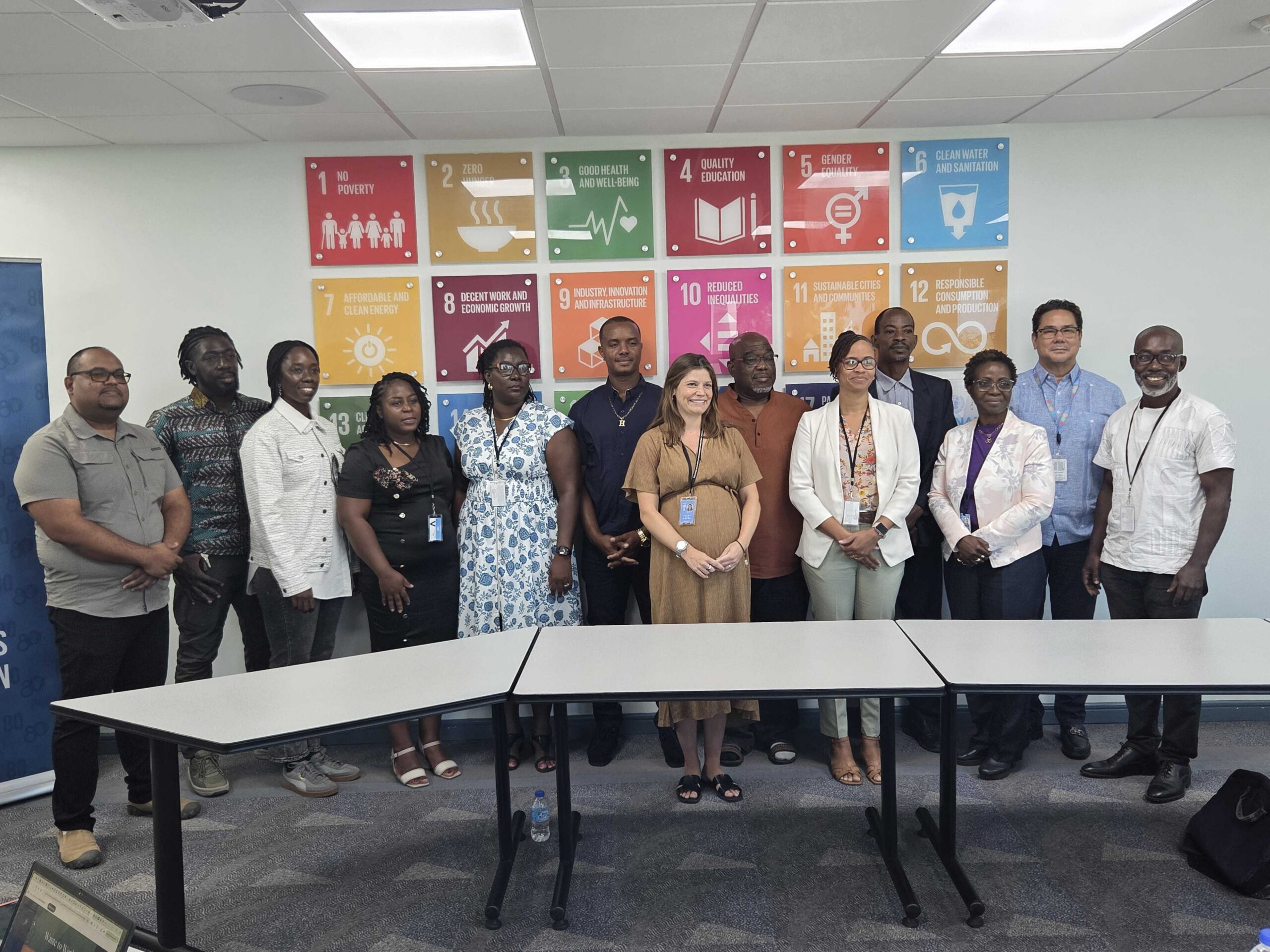
A senior delegation of fisheries industry stakeholders from Saint Lucia has arrived in Barbados to kick off a six-day peer-to-peer learning exchange centered on a groundbreaking local fish silage initiative that is redefining sustainable blue economic growth across the Caribbean.
The core goal of the visit is for the visiting delegation to gain a full, actionable blueprint to replicate Barbados’ innovative model, which converts discarded fish processing byproducts into two high-value agricultural goods: nutrient-dense animal feed and organic bio-fertilizer. By diverting thousands of tons of organic waste from overcrowded landfills and cutting regional reliance on costly imported feed stocks, the project has been widely recognized as a game-changing foundation for expanding the Caribbean’s sustainable blue economy.
At the official opening ceremony held at UN House in Hastings, Yvette Diei-Ouadi, a fisheries and aquaculture officer with the Food and Agriculture Organization’s (FAO) Subregional Office for the Caribbean, formally welcomed the Saint Lucian team, outlining that the visit is structured around three key priority objectives. While mastering the technical process of turning fish waste into silage remains the central focus, the agenda also dedicates significant time to addressing a pressing market access barrier currently facing Saint Lucia. As Diei-Ouadi explained, Saint Lucia currently holds a ban on exporting fish and fish-based products to the United States, a restriction Barbados successfully overcame after years of targeted work. The island’s accumulated experience in lifting this trade barrier offers critical actionable lessons for Saint Lucia to follow.
Diei-Ouadi emphasized that Barbados’ trade success was not the outcome of a single standalone project, but the result of a coordinated sequence of targeted interventions launched all the way back in 2018. “It was never one single project – it was a whole suite of connected initiatives that brought us to where we are today,” she noted. “We started with very modest seed funding through FAO’s Technical Cooperation Programme (TCP), a small grant delivered at the formal request of the government of Barbados.”
The economic imperatives driving the fish silage model are impossible to ignore for Caribbean nations: imported animal feed makes up more than 70% of total livestock production costs across the region. By scaling local production of fish silage feed, Barbados has built a critical buffer against volatile global commodity market shocks, most notably the dramatic feed price spikes that followed the outbreak of the Russia-Ukraine conflict. Diei-Ouadi pointed out that the timing of the initiative put it in the spotlight exactly when regional actors needed it most. “Our project gained widespread attention when the Russia-Ukraine conflict sent grain and feed prices skyrocketing, and producers across the Caribbean were struggling with cost increases,” she said. “We were able to show that we had already developed a local solution that was completely insulated from global instability halfway across the world.”
Beyond its economic benefits, the project also tackles a pressing environmental challenge facing Barbados. Every day, hundreds of tons of fish waste are dumped in the island’s landfills, where anaerobic decomposition releases methane – a greenhouse gas more than 20 times more potent than carbon dioxide at trapping heat in the atmosphere. Diverting this waste to fish silage production eliminates these harmful emissions while creating economic value from material that would otherwise be discarded.
Wayne Smith, executive director of Barbados Ruminants Farm Services, detailed how a cohort of young agricultural entrepreneurs repurposed an abandoned facility donated by the Ministry of Agriculture into a central production hub for the initiative. A key innovation that makes the model accessible to small local producers is its adoption of a biological silage production process that uses locally sourced molasses from Barbados’ domestic sugar industry, rather than relying on imported chemical acids to preserve the silage.
“It became clear very early that the biological method was the right path for our smallholder farmers,” Smith explained. “The acid-based process required importing key inputs, which drove up costs and created supply chain risks. The biological method gives small producers far more flexibility and control over their production.” Diei-Ouadi added that the choice to adapt the model to use local inputs proved its worth during the COVID-19 pandemic, when global supply chain disruptions made importing any inputs nearly impossible – leaving the local biological pathway as the only viable option to keep the project running.
The learning exchange also addresses a less technical but equally critical challenge: shifting entrenched mindsets within the regional agricultural sector. Discussions during the opening session revealed that some established veterinary services have been slow to embrace locally produced fish silage, continuing to prioritize more expensive imported commercial feed concentrates. Smith noted that multinational feed companies invest heavily in marketing to maintain market share, making it harder for local alternatives to gain traction. “When 70% of your total production cost goes to feed, you have no choice but to build local systems that bring that number down,” he emphasized.
The success of Barbados’ fish silage initiative has already spurred follow-on development, including the launch of the Youth Agribusiness Incubator Centre, which Diei-Ouadi described as a regional center of excellence for sustainable agricultural innovation across the Caribbean. The project has also built lasting community connections: a permanent WhatsApp coordination group created for fishers and producers remains one of the most active professional networks in the sector. Diei-Ouadi added that the initiative is already driving long-term change for fisheries governance: Barbados’ Ministry of Agriculture is now reallocating budget resources that previously covered fish waste removal costs to other high-priority fisheries development activities, since fishers now retain their processing waste to contribute to silage production.
As the Saint Lucian delegation prepares to begin hands-on technical training this week, the cross-island learning mission stands as a powerful example of targeted cooperation within the Caribbean Community (Caricom) as member states work toward the shared goal of cutting extra-regional food imports by 25% by 2030.