Torrential rainfall that hit several northern and central provinces of the Dominican Republic Saturday night has triggered devastating flash flooding, leaving hundreds of residents displaced and disrupting critical infrastructure across the affected region, the nation’s Emergency Operations Center (COE) confirmed in an official update Sunday morning.
In its latest situation bulletin, the COE detailed the widespread human and material toll of the disaster: across the hard-hit provinces of Puerto Plata, Monte Plata, Valverde, and María Trinidad Sánchez, the flooding has damaged 145 residential properties, forced 725 people from their homes, and left 167 residents taking temporary refuge in government-run emergency shelters. Twelve entire communities remain cut off from surrounding areas, blocked by floodwaters that have made local roads impassable.
Beyond housing and displacement, the disaster has also triggered a major public health crisis by cutting off drinking water access for more than 113,000 users across the affected region. Seventeen regional aqueduct systems have been knocked out of commission by the heavy rains and flood damage, leaving vast swathes of the impacted population without access to safe running water.
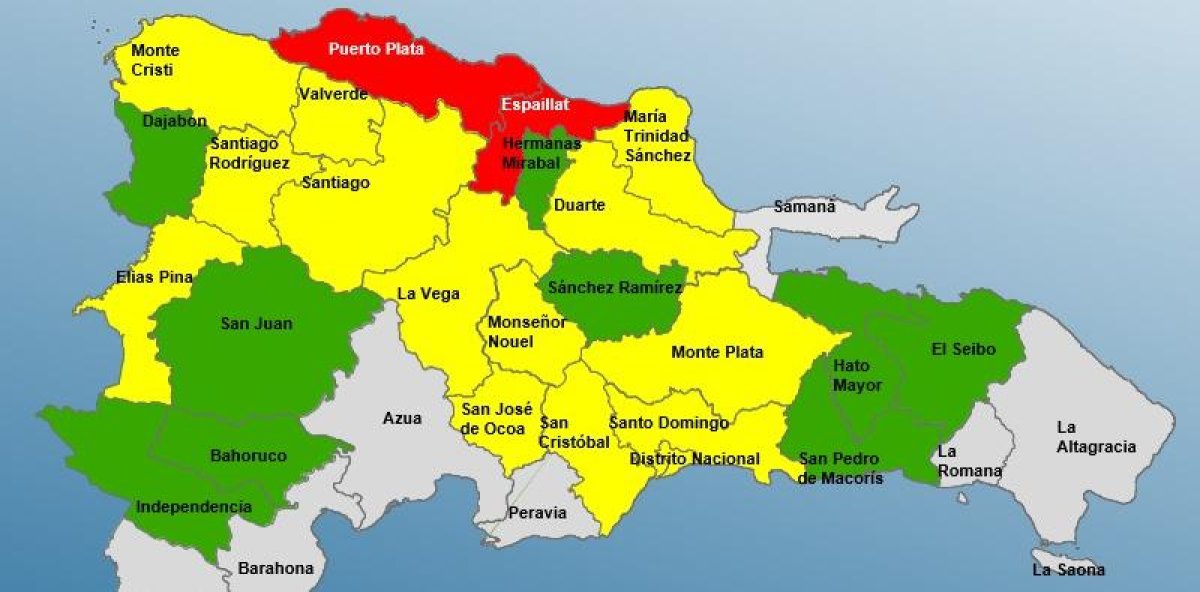
In response to the ongoing hazard, the COE has activated its highest-level red alert for four of the most severely impacted provinces: Puerto Plata, Espaillat, María Trinidad Sánchez, and Valverde. The alert bars non-essential travel and mandates emergency response teams to remain on standby for rapid rescue and relief operations.
An additional 15 provinces and administrative areas remain under lower-level yellow alert, warning residents of ongoing risks of flooding and landslides. The areas under yellow alert include Monseñor Nouel, Sánchez Ramírez, Santiago, La Vega, Monte Cristi, Elías Piña, Samaná, Santiago Rodríguez, San Cristóbal, Santo Domingo Province, the National District, Monte Plata, San José de Ocoa, Duarte – with particular focus on the high-risk Bajo Yuna region – and Hermanas Mirabal.