Debate over Jamaican legal policy regarding sexual relations between minors has intensified, as a prominent faith-based advocacy organization has drawn a line in the sand against any adjustments to existing law, urging policymakers to target the root causes of risky adolescent behavior instead.
The Jamaica Coalition for a Healthy Society (JCHS), a pro-Christian advocacy group, laid out its firm position during last Thursday’s deliberations of parliament’s joint select committee, which is currently conducting a review of the nation’s Child Diversion Act. The ongoing review centers on identifying effective strategies to cut the number of young people entering the country’s formal justice system, with stakeholders across the political and civil society spectrum weighing in on competing priorities.
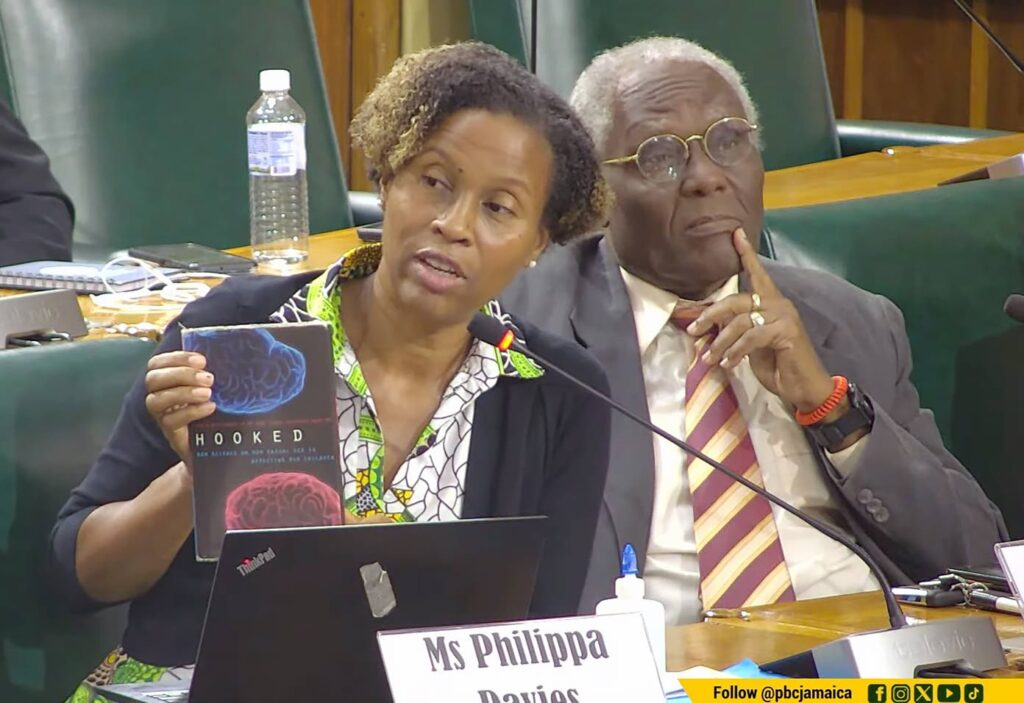
JCHS Advocacy Officer Philippa Davies told the committee that while legislative overhauls often draw the most attention during policy reform processes, the core challenge goes far beyond changing statutory language. Instead, she argued, policymakers must first unpack why minors engage in conduct that puts them at odds with the law, pointing to early sexual activity as one of the most critical contributing factors. Davies warned that efforts to normalize underage sexual relationships, or to carve out new legal exceptions for close-in-age encounters, would create cascading long-term harms for Jamaican youth.
“We strongly object to this suggestion [of close-in-age sex legislation] and to the notion that minors can consent to sex, whether with each other or with adults,” Davies told the committee. “We also disagree with the suggestion that adolescent sex is to be deemed as normal, mere exploration, and unharmful. This is so far from the truth. Sex is more than a physical act. It carries long-term psychological consequences.”
Davies grounded her organization’s position in existing research on adolescent brain development, noting that young people lack the fully developed neurological capacity to make high-stakes decisions that carry lifelong impacts. The prefrontal cortex, the region of the brain responsible for impulse control, long-term planning, priority-setting, and complex decision-making, does not finish maturing until a person reaches between 25 and 30 years of age. “Even if adolescents understand that something is dangerous, they may still engage in risky behaviour,” she explained. Her argument was further bolstered by Jamaican national data showing that a large share of young people’s first sexual encounters do not involve full, freely given consent, directly undermining the widespread assumption that all underage sexual relationships are harmless consensual encounters.
The JCHS’s formal submission to the committee comes as a growing number of advocacy and policy groups have pushed for the introduction of “close-in-age” exemptions to Jamaica’s current law, which criminalizes sexual relations between minors.
JCHS President Dr. Wayne West clarified that the group does not advocate for unnecessarily criminalizing young people who engage in underage sexual activity. Instead, he stressed, the existing law serves a critical normative purpose as a guide for acceptable social behavior that must remain intact. “We are not saying that if persons are caught in sexual activity at their age, that they should be criminalised. We say we keep the law as is, because the law is a teacher, and we don’t want the law to be used to teach something else,” West explained. “We are not denying that things do happen. But what we are saying is that the law is a teacher, and there is a consequence to activity. So we don’t want the law to teach people that there is no consequence to activity.”
Alongside its call to keep the current law unchanged, the coalition is pushing for a broader preventative public health and education approach that includes expanded comprehensive education, greater parental involvement in youth development, and targeted outreach to encourage healthier behavioral choices among Jamaican adolescents.
Committee chairman and Justice Minister Delroy Chuck acknowledged the deeply complex nature of the issue, noting that rigid, one-size-fits-all application of the current law can leave lifelong, damaging marks on young people who engage in consensual underage sexual activity. Chuck pointed to ongoing requests for criminal record expungement from former farm workers who pleaded guilty to consensual underage sex as teenagers, noting that the conviction continues to block opportunities decades later. “Because, if a person is actually convicted when they are a teenager for consensual sex, it follows them for the rest of their lives, to be frank with you,” he said.
Chuck raised questions about whether greater discretionary power within the justice system could create a workable middle ground, particularly for cases involving minors close in age, and suggested many of these cases could be diverted out of the formal court system through existing alternative mechanisms. The JCHS has signaled it supports diversion for these cases, but has reiterated that this support does not extend to changing the underlying text of the law itself.
State Minister for Justice Marisa Dalrymple-Philibert also shared her perspective on the debate, acknowledging that robust moral guidance for young people is a critical public priority, but warning that an overly rigid legal framework can permanently derail the future prospects of youth who make early mistakes. She noted that many productive, upstanding adult Jamaican citizens and community leaders engaged in underage sexual activity during their adolescence, and argued that these early mistakes should not define their entire lives.
Pointing to the widespread employment barriers faced by people with juvenile criminal convictions, Dalrymple-Philibert argued the justice system must strike a careful balance between accountability and rehabilitation, especially for young people who acted without the full cognitive maturity to understand the consequences of their choices. “You’re correct, we need to teach children all the good values,” she said. “But I hold strongly to the fact that it happened to people who are excellent adults and leaders in society now that made mistakes as young people, sex with women underage, between minors. We are saying at this point, when it happens, there must be a way not to criminalise them, help them through the Child Diversion Programme.”
First introduced to give justice system officials alternatives to prosecution for children who come into contact with the law, the Child Diversion Act under review centers on rehabilitation rather than punishment, connecting young people to counseling, mentorship, and targeted support services instead of formal court processing and criminal conviction.