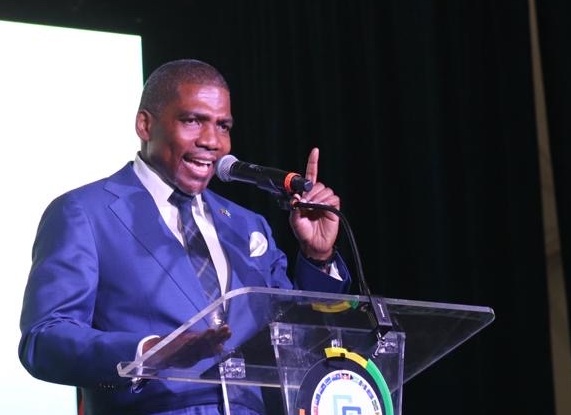
A brewing internal dispute within the Caribbean Community (CARICOM) has moved into the public eye, with CARICOM Chairman and St Kitts and Nevis Prime Minister Dr. Terrance Drew issuing a detailed public refutation of Trinidad and Tobago’s claims surrounding the recent reappointment of the bloc’s Secretary General on Saturday evening. The core of the conflict centers on two key claims from Trinidad and Tobago: that its Foreign Minister Sean Sobers was deliberately disinvited from a critical leaders’ retreat focused on the Secretary General appointment, and that the reappointment process violated CARICOM’s foundational governing treaty.
Addressing the first allegation head-on, Drew laid out a timestamped timeline of communications to back the bloc’s position that Sobers voluntarily opted out of the February 26 off-site retreat due to pre-existing seasickness. According to Drew, after Trinidad and Tobago Prime Minister Kamla Persad-Bissessar departed the broader CARICOM conference hosted in St Kitts and Nevis on the evening of February 25, Sobers reached out to incumbent CARICOM Secretary General Dr. Carla Barnett via WhatsApp at 10:33 PM that same night to ask if he could attend the retreat in Persad-Bissessar’s place. Barnett confirmed that foreign ministers routinely stand in for absent heads of government, clearing the way for Sobers to participate. In that same exchange, Drew said, Sobers noted that the retreat required a boat ride to reach its venue, and his chronic seasickness made attendance uncomfortable, leaving his participation uncertain. By 10:55 PM that night, Barnett forwarded the exchange to Drew, noting that Trinidad and Tobago would likely go unrepresented at the next day’s retreat. In a follow-up message sent at 12:37 AM on February 26, Barnett told Sobers that the CARICOM chair would fully understand his decision to skip the event if the boat trip would trigger illness. Drew emphasized that Sobers never sent any follow-up communication to either the chair or the Secretary General indicating he had changed his mind and was able to attend. This directly contradicts Trinidad and Tobago’s claim that Sobers was uninvited to the closed-door meeting.
Drew also pushed back on Trinidad and Tobago’s second claim that the Secretary General appointment was never placed on the retreat’s formal agenda. He confirmed that the reappointment of incumbent Dr. Barnett for a second five-year term was discussed under the retreat’s existing “Financing and Governance of the Community” agenda item. The discussion was held in accordance with the provisions laid out in Article 24 of the Revised Treaty of Chaguaramas, CARICOM’s core governing document, and Barnett stepped out of the room during the deliberations to avoid any conflict of interest. After regional leaders reached a consensus to approve Barnett’s reappointment, Drew explained that the bloc intentionally delayed the public announcement as a courtesy to inform CARICOM heads who were not present at the retreat before making the decision official. However, repeated attempts to contact Persad-Bissessar via both email and phone went unanswered, and Drew was ultimately tasked with notifying Sobers of the outcome.
Trinidad and Tobago has rejected the legitimacy of the process, arguing that the appointment violated the Revised Treaty of Chaguaramas. While the country has ruled out a full exit from CARICOM, it has announced that it will cut all financial contributions to the regional bloc until the dispute is resolved to its satisfaction. So far, at least two CARICOM member states — Guyana and Belize — have publicly expressed their support for the reappointment process that led to Barnett’s second term. Barnett made history as the first woman to hold the post of CARICOM Secretary General. The dispute also spilled over into an April 10 virtual summit called to address Trinidad and Tobago’s concerns about the reappointment, which Trinidad and Tobago boycotted entirely. Drew confirmed that neither the prime minister nor any other representative from the country attended the scheduled meeting.