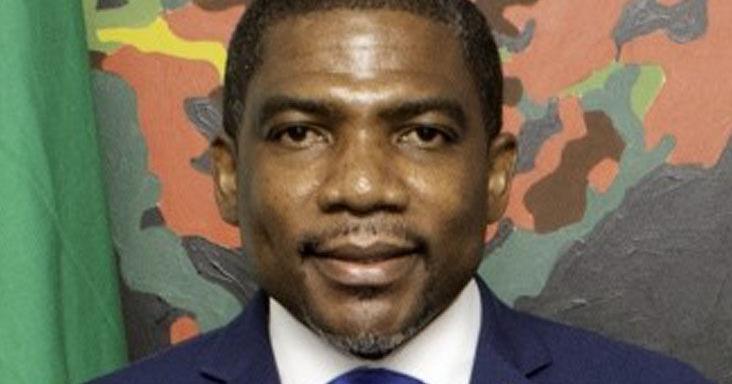
A deep procedural rift has erupted within the Caribbean Community (Caricom) after Trinidad and Tobago’s Foreign and Caricom Affairs Minister Sean Sobers publicly rejected a response from Caricom chairman and St Kitts and Nevis Prime Minister Dr Terrance Drew, dismissing it as inadequate to address the country’s concerns over the contentious reappointment of Secretary-General Dr Carla Barnett.
Sobers made the announcement during a post-Cabinet media briefing held Tuesday at the Diplomatic Centre in St Ann’s, laying out the full timeline of the dispute that has thrown a spotlight on long-simmering frustrations over decision-making transparency within the regional bloc.
The controversy dates back to a February Caricom heads of government retreat held in Nevis. At that closed-door meeting, Drew announced in a March 25, 2026 statement that a “required majority” of member state leaders had approved a second five-year term for Barnett, set to begin in August 2026 when her current tenure expires. But from the start, Trinidad and Tobago challenged the legitimacy of the process: the country was not present at the retreat, and the reappointment was never listed as a formal agenda item for the gathering, a direct violation of the Revised Treaty of Chaguaramas that governs Caricom operations.
In response to the announcement, Sobers sent an official letter to Drew demanding a formal explanation, followed by additional correspondence to Barnett herself and Janice Miller, Chef de Cabinet in the Secretary-General’s office, seeking clarification on the irregular process. Two weeks after sending the initial query, Sobers confirmed Tuesday that Drew had finally sent a response to the Office of the Prime Minister of Trinidad and Tobago — but the reply failed to resolve the core issues raised by the country.
“Respectfully, no. It did not address the concerns we raised,” Sobers told reporters when asked if the response was satisfactory. “Although we are grateful to receive the correspondence, it took longer than expected, and we have now prepared a new formal letter that was dispatched today. There are extremely relevant and important issues that require a full response that we have not yet received.”
Pressed by reporters from the *Trinidad and Tobago Express* on whether Trinidad and Tobago is pushing to have the entire reappointment process declared invalid and restarted from scratch, Sobers said the country’s immediate priority remains securing clear answers to outstanding questions. “We have certain questions that remain unanswered. As soon as we get those responses, we can move forward to determine what our next steps will be,” he said, adding that the Revised Treaty of Chaguaramas clearly outlines procedural requirements for the reappointment that were not followed in this case.
Sobers also moved quickly to dismiss widespread speculation that the dispute signals a push by Trinidad and Tobago to exit the regional bloc. “Fear not, and perish that thought,” he said, emphasizing that the country has no issue with Caricom as an institution — its criticism is targeted at deep flaws in the bloc’s day-to-day operations, effectiveness and decision-making efficiency.
The current controversy, he argued, is just the most visible example of a systemic problem. As the largest contributor to Caricom’s annual budget, covering 22% of total expenditures, Trinidad and Tobago has long been denied basic procedural courtesy in key decisions, he said. He also backed recent comments from opposition Prime Minister Kamla Persad-Bissessar, who has called for full transparency and announced a national re-evaluation of Trinidad and Tobago’s financial contribution to the bloc.
“I think that is a fair retort to the discourteous behaviour that has been meted out to Trinidad and Tobago,” Sobers said. “The situation unravelled the way it did: we only got a last-minute telephone call about an issue that was never an agenda item, and it was pushed through at a retreat we didn’t even attend. Something has to happen, something has to change. It cannot be business as usual.”
Sobers stressed that Trinidad and Tobago has no personal stake in the race for the Secretary-General position, saying the country has no candidate of its own and Cabinet has not yet taken a formal position on whether it would support Barnett’s reappointment. The core of the dispute, he repeated, is the underhanded, clandestine process used to push through the decision.
He also noted that Barnett’s current term does not end until August 2026, giving the bloc ample time to consider the reappointment at two already scheduled upcoming leadership meetings: a virtual heads of government gathering set for April, and an in-person meeting in St Lucia in July. There was no justification for rushing the decision through at an unscheduled retreat that Trinidad and Tobago could not attend, he argued.
When asked about recent comments from Guyanese President Dr Irfaan Ali stating that the reappointment process was bona fide, Sobers said Ali was entitled to his perspective as the leader of a sovereign nation, just as Trinidad and Tobago is entitled to its own position as an independent member state. “In terms of procedure, consensus has not been reached,” Sobers said. “What consensus essentially means, as it is articulated by the treaty, is that all countries should agree.”
He closed with a sharp rebuke of the handling of the process, saying: “We have a problem when people don’t obey the revised treaty. We have a problem when people move surreptitiously, clandestinely, when they are disobedient, when they treat us with scant courtesy and disrespect; and then they leak things, allegedly, to members of the Opposition to cast suspicions on the operations of the Government.”