As Trinidad and Tobago navigates a fragile, transitional economic period marked by rising business failures and persistent systemic headwinds, two leading regional chamber of commerce presidents are calling on local enterprises to hold out through 2026, framing 2027’s incoming gas sector monetization as the likely turning point for broader economic recovery.
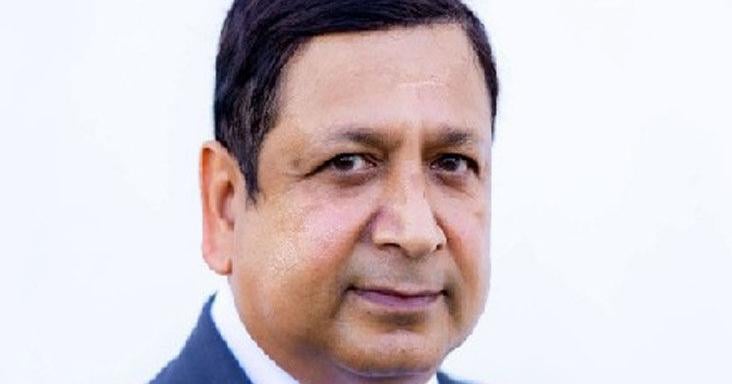
Kiran Singh, president of the Greater San Fernando Chamber of Commerce, laid out this rallying cry in comments this week, pointing to upcoming large-scale gas projects — including Shell’s Dragon and Manatee fields and other regional energy initiatives led by major international energy firms — as the catalyst that will unlock broader growth once they begin production and revenue generation.
“Our members are excited about the projected increase in gas supply in the coming years and its vital role in stimulating economic recovery. Developments such as the Dragon and Manatee fields and other regional gas initiatives by Shell and other international energy corporations are essential to economic recovery,” Singh stated.
Singh’s remarks come on the heels of a recent *Express* report documenting a rising wave of business branch closures and operational restructurings across the country, driven by a broadly contracting domestic economy. Acknowledging that the benefits of new gas development are still 18 months out, Singh stressed that the immediate priority for local private sector operators is simply to endure ongoing economic pressures to reach that turning point. “The responsibility of the private sector is to survive 2026, knowing that next year we will start to benefit from the monetisation of said gas fields,” he said.
He outlined the multiple overlapping challenges currently squeezing local businesses: growing competition from digital online retailers, depressed consumer spending amid broader economic weakness, and a persistent shortage of foreign exchange that has crippled import-reliant sectors. “The shortage of foreign exchange continues to severely impact import-dependent businesses, limiting their ability to restock inventory and maintain operations. Additionally, increases in taxes and regulatory burdens have compounded these difficulties, particularly for sectors such as retail, hospitality and manufacturing,” Singh explained.
To prevent further unnecessary business failures before the gas sector gains materialize, Singh called on the government to roll out targeted, immediate support measures in the upcoming mid-year fiscal review. These include expanded, more equitable access to foreign exchange for small and medium-sized enterprises (SMEs), targeted fiscal relief for the ecotourism sector, and broad regulatory reforms to cut red tape and simplify doing business. “The Minister of Finance can use the upcoming mid-year review to devise fiscal measures to address these concerns,” he said. “The SME sector should have more equitable access to foreign exchange. There is a need for targeted fiscal relief in the ecotourism sector, particularly for small and medium enterprises, including temporary tax adjustments or incentives to encourage business continuity and investment.”
Singh emphasized that while long-term macroeconomic recovery plans are important, short-term support is critical to stopping further business collapse. He called for cross-stakeholder collaboration between government, the private sector, and civil society to build practical, timely solutions that respond to on-the-ground economic realities. “Economic recovery must be inclusive and responsive to the realities on the ground,” he noted.
Baldath Maharaj, president of the Chaguanas Chamber of Industry and Commerce, offered a complementary perspective, framing the current period as a complex, delicate economic transition rather than a single solvable crisis. Maharaj noted that Finance Minister has to navigate overlapping challenges, including post-pandemic global supply chain volatility, unstable global energy markets, and a structural foreign exchange gap where the country only generates roughly 70% of the foreign currency it needs annually.
Maharaj pointed out that the wave of traditional business closures is being partially offset by the emergence of new enterprises, mostly in the fast-growing digital economy. But he added that these new small digital firms have not yet grown large enough to replace the tax revenue and jobs lost from shrinking traditional enterprises, creating a near-term gap that policymakers must address. “These new openings often represent a shift toward the digital economy. The challenge for the State is that these new, smaller entities do not yet have the tax base or employment capacity of the larger, older firms that are reducing their operations,” he explained.
Acknowledging that the government is working to balance fiscal sustainability with private sector growth amid competing pressures, Maharaj said policy responses must be carefully tailored to fit the country’s constrained fiscal and currency context. He argued that non-cash interventions, particularly cutting bureaucratic red tape that slows both business openings and closures, offer a low-cost way to speed up the transition to a more diversified economy. “If we can reduce the time and cost it takes for a new business to become fully compliant and operational, we can accelerate the rate at which these new openings begin to meaningfully contribute to the GDP,” he said.
Looking ahead, Maharaj echoed Singh’s view that upcoming gas developments are critical to medium-term growth, but stressed that these projects face significant geopolitical and technical hurdles that complicate timely market entry. He framed the current wave of business closures as a painful but inevitable part of the country’s shift away from overreliance on traditional economic models toward a more diversified future. “The financial state of the economy is one of staged recovery. We are moving away from total dependence on historical models and toward a more diversified future. The closures we see today are, in many ways, the painful friction of that transition,” he said.