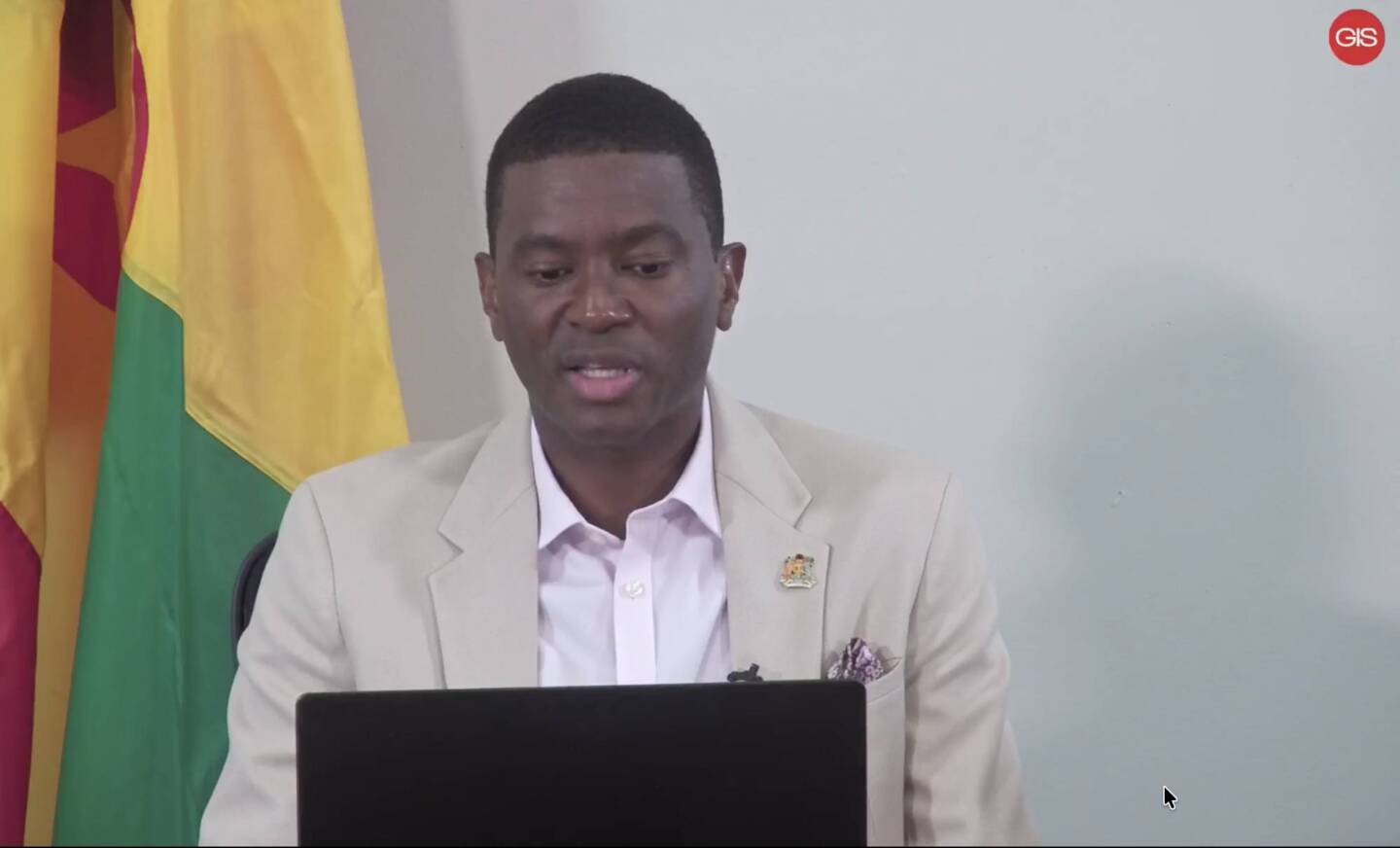
In a recent post-Cabinet briefing, Grenada’s Prime Minister and Minister for Infrastructure Dickon Mitchell delivered a comprehensive update on the country’s ongoing national infrastructure initiatives, laying out clear completion timelines for major projects, addressing unforeseen challenges that have caused delays, and outlining new governance measures to boost public transparency and engagement.
Among the most advanced projects is the long-delayed Cliff Road rehabilitation, which Mitchell confirmed is on track to hit a critical milestone by the end of April. According to Mitchell, the route will be open for motor vehicle traffic by the end of this month, with all ancillary surrounding works scheduled for full completion by the end of May, with visible construction progress already evident at the site. For the Clozier region, where a major landslip upended original project plans, full redesign work has been finalized, and contractor negotiations launched in March, with construction set to resume within just a few weeks.
Another key road project, the Willis Road rehabilitation, was previously stalled due to contractor issues and unanticipated setbacks, but has now restarted. The contract has been awarded to Construction and Industrial Equipment Limited, commonly known as Rayneau, and work is already proceeding, with a full completion target set for the end of 2026. Outside of transportation infrastructure, the flagship Simon Cultural Centre public facility project remains on schedule for completion by June 2026.
Mitchell also drew attention to urgent coastal erosion risks in St Patrick parish, particularly in the Mount Rodney area. While the full Sauteurs Coastal Protection Project is still awaiting final approvals, the government has moved forward with interim protection measures. “We recognise that because of the damage being done to the coastline in St Patrick… we can’t wait on the main breakwater project itself,” Mitchell explained, confirming that a contractor has already been mobilized to begin protective works for Mount Rodney residents.
Looking ahead to upcoming projects, Mitchell confirmed that St John’s River Road rehabilitation is scheduled to begin in the second quarter of 2026, though he acknowledged long-standing capacity constraints in Grenada’s infrastructure sector. Until recently, the country only had one local contractor capable of completing large-scale asphalt paving works. To address this gap, the government has adopted a new segmented delivery model: smaller local contractors will handle civil works, while larger specialist firms manage asphalt paving across multi-segment projects running from Perdmontemps to Vincennes. The government will also implement upgraded road standards, including the application of durable plastic pavement markings.
Design work for the Woolwich Road project is fully complete, and bid invitations have already been issued. Mitchell encouraged greater participation from local contractors, noting that all government tender opportunities, including requests for proposals, expressions of interest, and bid invitations, are publicly posted on the central procurement unit’s website. He also urged smaller local firms to form joint ventures to boost their competitiveness for large contracts.
Multiple large road packages are being advanced under a new finance-design-build model, where contractors cover upfront project costs before receiving incremental reimbursement from the government after work milestones are completed. These projects include routes from Cliff Junction to the Maurice Bishop Highway, the Mabuya landslip area to Mt Kumar, and additional corridors across St David and St George parishes. Multiple bridge projects, including the replacement of the Marquis Bridge, are scheduled to launch by mid-2026, after a temporary bypass route is installed.
Beyond transportation and cultural infrastructure, upgrades to public safety facilities are also underway across the country. Mitchell announced that the full demolition of the current Grenville police station is targeted for June 2026, while construction work on the new Union Police Station will begin this month. In the education sector, multiple school rehabilitation projects are progressing on schedule, with the Grenadian Christian Academy set to reopen in time for the 2026 September school year.
To close the briefing, Mitchell reaffirmed the government’s commitment to greater transparency and public engagement around infrastructure delivery. “We are committed to being as transparent as we can and to updating the public on what is taking place,” he said. As part of this commitment, the government will expand the Ministry of Infrastructure’s official website to add dedicated sections for procurement notices, real-time project updates, and a new public complaints system to address community concerns more efficiently.