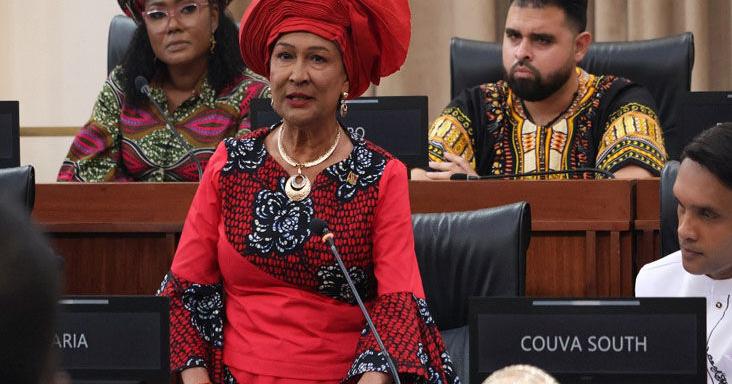
A political confrontation has erupted in Trinidad and Tobago over the government’s controversial school policing program, with Opposition Leader Pennelope Beckles delivering a sharp critique of Prime Minister Kamla Persad-Bissessar’s leadership approach. The dispute centers on the Schools-Oriented Policing Programme implemented by the ruling UNC government.
Beckles utilized social media platforms to challenge the Prime Minister directly, stating that the nation’s children deserve substantive policy rather than “hot air in a plastic bag” and social media rants. This response came after Persad-Bissessar accused the opposition PNM party of attempting to remove police protections from schools, describing their actions as demonstrating “neglect and hatred of our nation’s children.”
The controversy stems from parliamentary debates initiated by former education minister Dr. Nyan Gadsby-Dolly, who characterized the armed police initiative as “poorly thought out” and “unsustainable.” During Friday’s parliamentary session, Education Minister Dr. Michael Dowlath and Homeland Security Minister Roger Alexander faced scrutiny over the program’s implementation details and alleged lack of stakeholder consultation.
Beckles asserted that the policing initiative has proven ineffective, noting that “We cannot police our nation’s youth into righteousness.” She emphasized that school violence represents a complex societal issue requiring comprehensive solutions rather than reactive measures. The Opposition Leader particularly criticized the reduction of critical support staff including guidance counselors and school social workers while simultaneously deploying police officers without clear operational frameworks.
The Opposition Leader called for evidence-based strategies addressing root causes of school violence, accusing the government of focusing exclusively on expulsions and arrests without developing preventive measures. Beckles condemned the Prime Minister for presiding over what she described as a failed initiative that has not reduced school violence, while highlighting the government’s responsibility to manage the education sector effectively.
This political clash reflects deeper divisions regarding public safety approaches and educational policy in Trinidad and Tobago, with both leadership figures presenting contrasting visions for addressing school security concerns.