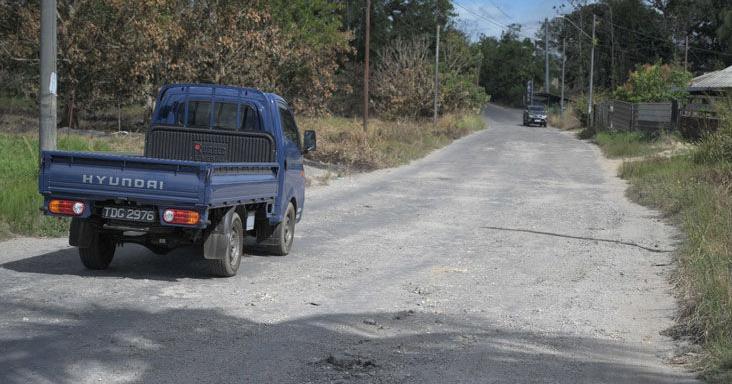
The Ravine Sable community in Longdenville, Central Trinidad, faces an infrastructure crisis of such severity that it has fundamentally disrupted both life and death. The community’s main access road has deteriorated into an impassable hazard, recently forcing a funeral home to refuse hearse service. This left grieving residents unable to bring a deceased neighbor home for a final farewell, compelling them to hold services in a distant town center instead.
This incident epitomizes a decades-long neglect. Senior citizen Madho Siew, a 30-year resident, confirmed the road was last properly paved in 1995. The situation has been severely exacerbated by over 50 daily ten-wheeler trucks accessing a local sandpit, traffic for which the road was never engineered. These heavy vehicles systematically destroy the pavement and generate suffocating dust clouds.
The consequences are multifaceted and severe. Resident Sukdai Jogie, 72, suffers from chronic dust-induced coughing, a diagnosed medical condition directly attributed to her proximity to the road. The financial burden on residents is crushing; one newcomer reported spending nearly $30,000 on six separate vehicle repairs in just over a year. Local mechanic Darrion’s Automotive Mechanical Services confirms 75% of community vehicles require frequent suspension repairs, costing between $8,000-$15,000, leaving many cars abandoned as unaffordable fixtures.
Public transport offers little relief. Taxis frequently refuse the route, and those that do charge exorbitant fares up to $50 for a single trip after dark. In the absence of government action for nearly a decade, community contractor Donny Parasram Sookdeo has become an unlikely guardian. He has personally absorbed thousands in costs to conduct patchwork repairs and clear overgrown vegetation, calling it his way of “giving back.”
Residents now pin their hopes on a new government and their active MP, Dr. Rishad Seecheran, pleading for a permanent solution that will restore not just their road, but their dignity, health, and financial stability.