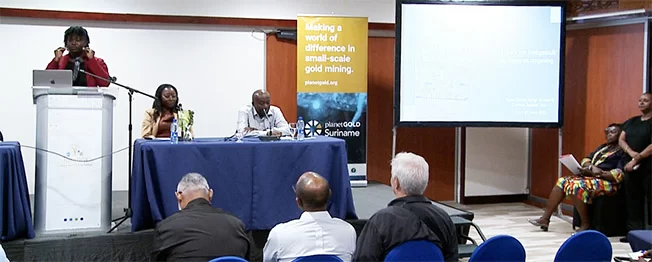
Suriname’s journey toward establishing an environmentally conscious and ethically responsible gold mining industry demands enhanced collaboration, public awareness, and the active participation of women and youth. This central message emerged from Friday’s Community Congress held in Torarica, which convened policymakers, industry experts, and community representatives to address the sector’s environmental impact and necessary reforms.
The gathering highlighted that sustainable development within the gold industry can only be achieved through the inclusive engagement of all stakeholders—including the informal sector. According to Natural Resources authorities, behavioral transformation across the sector remains paramount. Participants emphasized the urgent need to transition toward eco-friendly mining practices that prioritize water conservation, public health, and community wellbeing.
Congress discussions particularly underscored women’s pivotal role as change agents within mining communities and the broader sector. Meanwhile, youth were identified as essential contributors to building a resilient and future-ready gold industry. Through structured workshops and dialogue sessions, attendees collaborated to develop practical solutions and cooperative frameworks.
These outcomes are expected to inform policy development and implementable strategies for responsible gold management. The congress ultimately demonstrated that reforming Suriname’s gold sector transcends technical adjustments—it represents a societal imperative where inclusivity and shared responsibility must take center stage in shaping the industry’s sustainable future.